


uPVC Windows
Pava
The PAVA system combines innovative design with energy efficiency, offering advanced Tilt and Turn functionality. Discover the unique features that make PAVA the ideal choice for modern, energy-conscious homes.


Pixel
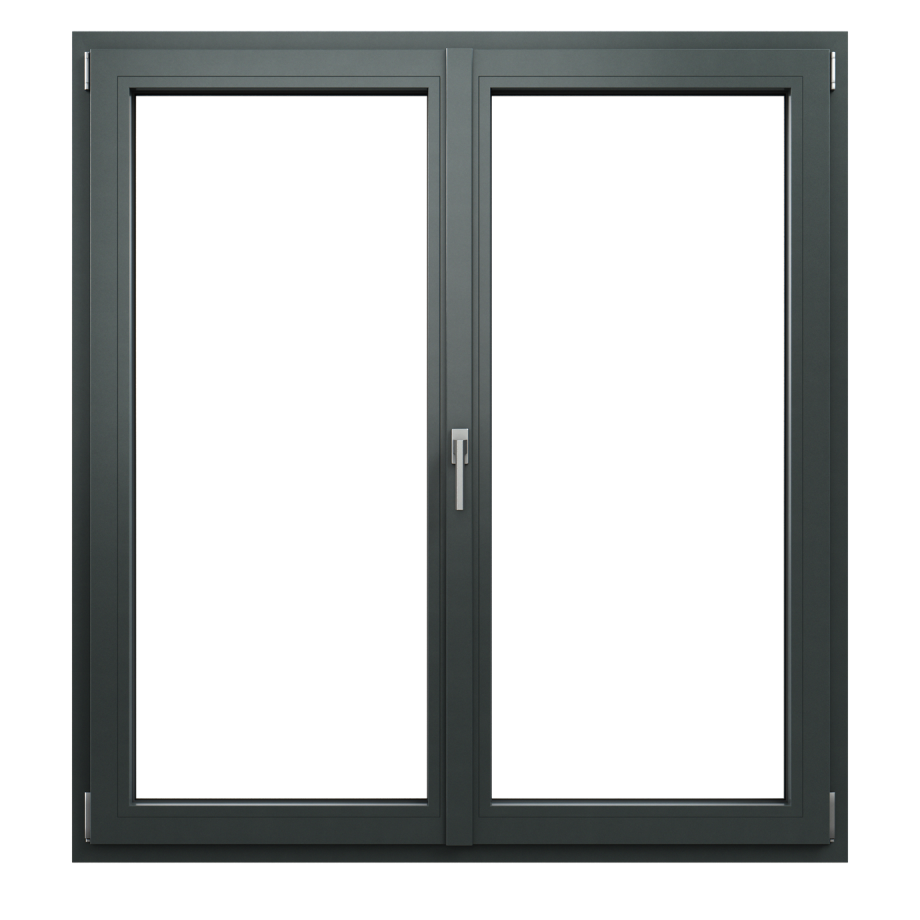
PIXEL windows by OKNOPLAST combine a slim, elegant design with innovative Tilt and Turn functionality. The narrow movable mullion and symmetrically placed handles enhance aesthetics, while the sharp-edged profile maximizes natural light.


Let’s talk about your project!
Request a quote, discuss specifications, or get help choosing the right system
Send a request
"*" indicates required fields
uPVC Windows – Energy Efficient, Low Maintenance & Customizable
OKNOPLAST uPVC windows are multi-chamber, steel-reinforced profile systems manufactured in Poland, carrying NFRC certification with U-Factor values ranging from 0.14 to 0.29 BTU/hr·ft²·°F depending on glazing configuration and frame size. The PAVA system serves the U.S. market in three configurations: PAVA (triple-pane, U-Factor 0.14-0.26, for cooler northern regions and high-performance projects), PAVA Light (double-pane, U-Factor from 0.25, lighter sash for moderate and warm climate regions), and PAVA Impact (structurally bonded laminated impact glass, HVHZ Zone 4 certified for Miami-Dade and Broward Counties, Florida Product Approval). The PIXEL system (70 mm / 2¾” profile depth, 6-chamber frame, U-Factor 0.16-0.29) is the fourth option. All systems carry a Design Pressure rating of DP-80. Triple-pane configurations achieve up to 40 dB sound reduction (STC 32-46 / OITC 26-39). The PAVA triple-pane system carries a PHIUS Passive House recommendation for Climate Zones 3-8. Maximum sash height is 102½”; maximum sash width is 56″. Lead time to U.S. delivery sites is 8-10 weeks from order confirmation.
What Are uPVC Windows?
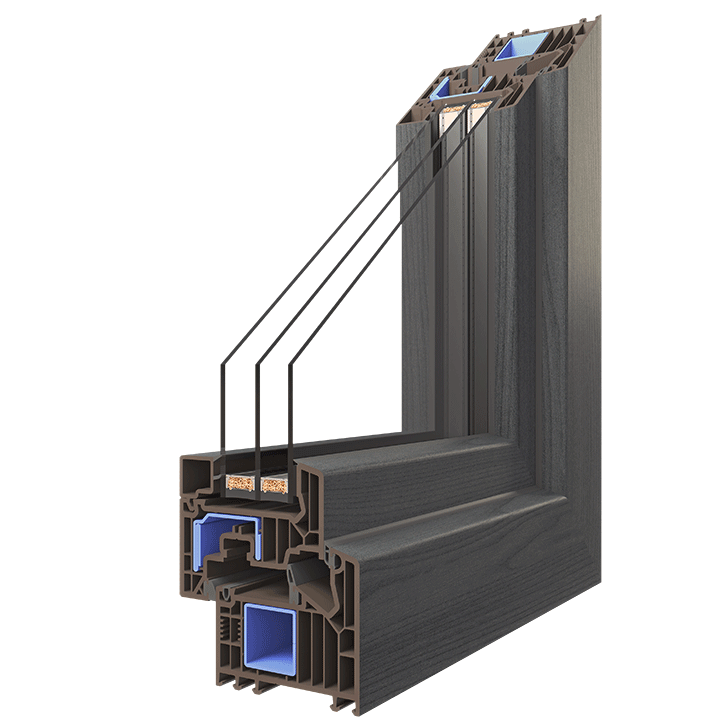
uPVC (unplasticized polyvinyl chloride) windows are the material foundation of OKNOPLAST’s Tilt and Turn Windows, built around rigid multi-chamber profiles – seven chambers in OKNOPLAST’s PAVA model, six in the PIXEL – reinforced with galvanized steel inserts that deliver structural strength without creating thermal bridges. To put the insulation difference in perspective, uPVC conducts heat at just 0.17 W/(m·K), compared to aluminum’s 160 W/(m·K), making multi-chamber frames inherently far better insulators. Oknoplast.us produces every frame to millimeter precision, with factory foil-laminated finishes backed by a 10-year color finish warranty – no repainting needed.
What sets uPVC apart from standard flexible PVC is the absence of plasticizer additives, resulting in a dense, dimensionally stable polymer that resists warping under UV exposure and temperature swings. That rigidity is what allows it to function as a self-supporting structural frame rather than a flexible outer layer.
The multi-chamber cross-section works by trapping stacked air pockets throughout the frame’s depth, each sealed cavity interrupting the path of conductive heat transfer. PAVA’s seven-chamber layout and PIXEL’s six-chamber design both outperform solid or single-chamber profiles in this regard.
Galvanized steel reinforcement runs through the interior chambers, handling wind load and sash weight while keeping the frame rigid – all without compromising the profile’s thermal performance.
The tilt and turn hardware adds another layer of functionality, operating from a single handle with three distinct positions: closed and locked, tilted for secure top-vent airflow, or fully turned inward for easy interior glass cleaning. This dual-function mechanism isn’t found on double-hung or standard casement windows. Factory foil-laminated finishes – available in white, anthracite, and golden oak woodgrain – are backed by a 10-year color finish warranty, and custom sizing ensures a precise fit rather than relying on a fixed grid. OKNOPLAST doesn’t hold ENERGY STAR certification and does not participate in the §25C Federal Tax Credit program.
Benefits of uPVC Windows
OKNOPLAST uPVC windows pack an impressive range of measurable advantages into a single product line. Highlights include a frame U-Factor (Uf) of 0.14-0.26 BTU/(hr·ft²·°F), NFRC-tested air leakage at ≤ 0.10 cfm/ft², STC 47 (laminated glazing) / STC 40 (standard glazing) per OKNOPLAST system certification, RC1/RC2 security hardware, and a frame built for decades of service without painting or corrosion maintenance. Continental US shipping is arranged through customer support.
On the thermal side, the PAVA line achieves a frame U-Factor (Uf) of 0.14-0.26 BTU/(hr·ft²·°F), per OKNOPLAST system certification, with triple-pane glazing filled with argon and fitted with dual low-E coatings contributing to overall thermal performance; PAVA is recommended by PHIUS (Passive House Institute US) for Passive House projects.
Airtightness is where these windows really pull ahead. NFRC testing confirms leakage at ≤ 0.10 cfm/ft², compared to the 0.20-0.30 cfm/ft² common in double-hung windows with pile weatherstripping. Perimeter compression gaskets create a uniform seal around each sash and hold up far better over time than pile fibers, which compress and deteriorate with repeated use.
For noise reduction, the PAVA system achieves STC 47 with laminated glazing (STC 40 with standard glazing), per OKNOPLAST system certification, cutting through traffic and outdoor noise via the multi-chamber uPVC profile.
Security is handled by RC1 and RC2-rated hardware with multi-point espagnolette locking across 4-6 contact points per sash – classifications that reflect tested resistance to forced entry under progressively demanding tool and time conditions.
Longevity is another strong suit. The uPVC frame resists painting, rotting, or corroding over decades of service, and EPDM gaskets are designed to hold their compression without hardening or cracking; OKNOPLAST backs manufacturing defects with a 10-year warranty. Galvanized steel reinforcement keeps larger sash sizes from racking under weather stress, and day-to-day upkeep is as simple as water and mild detergent.
PAVA, PAVA Light, PAVA Impact, and PIXEL System Specifications
The PAVA system (82 mm / 3¼” frame depth, 7-chamber construction) serves three distinct application scenarios through three glazing configurations: PAVA with triple-pane glazing (NFRC-certified U-Factor 0.14-0.26 BTU/hr·ft²·°F, for cooler northern regions and PHIUS passive house projects), PAVA Light with double-pane glazing (U-Factor from 0.25 BTU/hr·ft²·°F, lighter sash for moderate and warm climate regions and wood-frame construction), and PAVA Impact with structurally bonded laminated impact glass (HVHZ Zone 4 certified, DP-80, for Florida impact applications). The PIXEL system (70 mm / 2¾” frame depth, 6-chamber construction, NFRC-certified U-Factor 0.16-0.29 BTU/hr·ft²·°F) completes the OKNOPLAST uPVC Tilt and Turn range. All four share DP-80 structural rating and the same maximum sash dimensions of 102½” height and 56″ width.
PAVA System Specifications – Triple-Pane Configuration
The PAVA system in its triple-pane configuration carries the following NFRC-certified specifications: profile depth 82 mm (3¼”), 7-chamber frame construction with 6-chamber sash, triple glazing (Low-E, argon-filled) as standard, U-Factor range 0.14-0.26 BTU/hr·ft²·°F (SHGC is configuration-dependent – verify NFRC label at time of specification), acoustic rating 32-46 STC / 26-37 OITC, Design Pressure DP-80, maximum sash height 102½”, maximum sash width 56″. The system includes STV Static/Dry Glazing technology as standard, galvanized or stainless steel reinforcement inserts in all load-bearing chambers, IFT Quality Mark certification (ID 190-6038531-8), CEKAL IGU certification, PHIUS Passive House recommendation for Climate Zones 3-8, and a 10-year product guarantee.
The PAVA triple-pane system achieves U-Factor as low as 0.14 BTU/hr·ft²·°F with an optimized 4/18/4/18/4 configuration using a warm-edge spacer and krypton fill. For high-performance cold-climate applications – Climate Zones 5-8, PHIUS passive house, and near-passive construction – the relevant operating sub-range is approximately 0.14-0.20 BTU/hr·ft²·°F, where the system delivers the thermal performance required for winter comfort and energy efficiency. For standard triple-glazed configurations with argon fill across typical production sash sizes, the range 0.20-0.26 is more representative. This configuration additionally offers broader acoustic isolation potential: with appropriate IGU selection, it reaches STC 40-46 / OITC 34-37 – the highest acoustic rating in the OKNOPLAST uPVC window range.
PAVA Light Specifications – Double-Pane Configuration
The PAVA Light configuration uses the same 82 mm / 3¼” 7-chamber frame and STV Static/Dry Glazing technology as the standard PAVA, but with double-pane glazing instead of triple-pane – producing a lighter sash with U-Factor starting at 0.25 BTU/hr·ft²·°F, with a typical range of approximately 0.25-0.27 depending on glazing specification (SHGC is configuration-dependent – verify NFRC label at time of specification). Design Pressure DP-80, maximum sash height 102½”, maximum sash width 56″. Acoustic performance reflects double-pane construction – confirm STC / OITC values with NFRC product data at time of specification. IFT Quality Mark certification (ID 190-6038531-8), CEKAL IGU certification, and a 10-year product guarantee apply.
The reduced sash weight of the double-pane configuration is the primary engineering rationale for PAVA Light: triple-pane PAVA sashes at larger formats can exceed the load limits of lighter wood-frame and light-gauge steel framing common in U.S. residential construction – particularly in the South and Southeast where wall sections are thinner and structural loads are specified for lower wind and seismic requirements. Double-pane glazing reduces sash dead weight while maintaining the same profile rigidity and DP-80 structural rating, translating to easier daily operation and reduced long-term stress on hardware, hinges, and frame anchors.
PAVA Light also performs well in high wind exposure zones where structural stability and airtightness are the primary specification criteria rather than minimum U-Factor. The DP-80 structural rating – identical to the triple-pane PAVA – provides the same wind pressure resistance in both configurations. Multi-point Tilt and Turn locking delivers air infiltration below 0.10 CFM/ft² at 25 Pa (ASTM E283) regardless of glazing type, meaning PAVA Light achieves the same envelope airtightness performance as PAVA triple-pane at the frame and hardware level. For projects in coastal and high-wind zones where U-Factor 0.25-0.27 meets code and the priority is structural integrity and airtightness, PAVA Light is the appropriate specification.
PAVA Light is designed for moderate and warmer U.S. climate regions – Climate Zones 1-5 – where U-Factor 0.25-0.27 meets IECC 2021 requirements and where the thermal performance of triple glazing is not required. In Zones 5-6 (max IECC U-Factor 0.27), selected PAVA Light configurations at the lower end of the 0.25-0.27 range may comply; verify with NFRC product label at time of specification. PAVA Light is not specified for Climate Zones 7-8 (Alaska, northern Montana, northern Minnesota), where the IECC 2021 maximum of 0.22 requires the triple-pane PAVA configuration.
PAVA Impact: Florida Product Approval and HVHZ Zone 4 Certification
The PAVA Impact configuration achieves Design Pressure up to 80 psf (DP-80), holds Florida Product Approval (FPA) and HVHZ Zone 4 certification for Miami-Dade and Broward Counties under the Florida Building Code, and is the only OKNOPLAST uPVC system tested per TAS 201 (large missile impact), TAS 202 (uniform static air pressure), and TAS 203 (cyclic wind pressure loading). It is OKNOPLAST’s uPVC Tilt and Turn product for HVHZ applications and for any Florida project where impact-rated fenestration is required by local wind zone or insurance mandates.
PAVA Impact uses structurally bonded laminated impact glass – a unit of three physical glass sheets and one sealed air cavity. The outer layer is a laminated glass pane (two sheets bonded with a PVB interlayer) that forms the impact-resistant “third pane”; paired with a standard inner pane across the single sealed air space, the assembly is thermally classified as double-glazed, explaining the U-Factor measurements referenced with double glazing in OKNOPLAST product data. The structural bonding via STV dry-glazing technology transfers wind load directly through the glass-sash composite assembly to the frame and anchorage, achieving Design Pressure up to 80 psf (DP-80). The unit meets TAS 201 (large missile impact), TAS 202 (uniform static air pressure), and TAS 203 (cyclic wind pressure loading) testing requirements for HVHZ product approval.
PAVA Impact specifications (per OKNOPLAST product data): fixed single sash maximum 60″ × 120″; operable Tilt and Turn sash maximum 41″ × 96″; coupling mullions up to 120″ length at DP-80; integrated mullions up to 96″. U-Factor from 0.24 BTU/hr·ft²·°F (fixed) and from 0.25 BTU/hr·ft²·°F (Tilt and Turn) with double glazing – NFRC-certified. SHGC from 0.20 (fixed) and from 0.17 (Tilt and Turn). Acoustic rating STC 42 / OITC 34. Triple gasket system provides water tightness up to 12 psf. Installation methods available: nailing fin, fixing clips, or direct bolt. Available in 50+ color options.
The operable Tilt and Turn sash, at a maximum of 41″ × 96″, is more constrained than the standard PAVA system maximum of 56″ × 102½” (width × height), because the laminated impact glass carries substantially higher dead weight than a standard IGU and the HVHZ certification is tested at this specific sash geometry. Fixed configurations up to 60″ × 120″ are available where Tilt and Turn operation is not required. Florida Product Approval number is not published in this document – contact your authorized OKNOPLAST dealer for current FPA documentation and project-specific compliance verification.
PIXEL System Specifications
The PIXEL system carries the following NFRC-certified specifications: profile depth 70 mm (2¾”), 6-chamber frame construction, standard triple glazing (Low-E, argon-filled), U-Factor range 0.16-0.29 BTU/hr·ft²·°F (SHGC is configuration-dependent – verify NFRC label at time of specification), acoustic rating 32-46 STC / 26-39 OITC, Design Pressure DP-80, maximum sash height 102½”, maximum sash width 56″. The system includes bent-steel reinforcement inserts in all load-bearing chambers, ADA Standards compliance, IFT Quality Mark certification (ID 190-6038531-8), CEKAL IGU certification, and a 10-year product guarantee.
The PIXEL system’s 6-chamber profile with bent-steel reinforcement delivers a 33% narrower movable mullion compared to standard Tilt and Turn profiles of equivalent structural grade – a consequence of the steel insert carrying load that would otherwise require additional profile mass. PIXEL is the specified system for ADA-compliant hardware configurations and for projects where narrow sight lines are a design requirement.
IECC 2021, ENERGY STAR, and PHIUS Compliance: Which U-Factor Thresholds Apply?
OKNOPLAST uPVC windows comply with IECC 2021 Table R402.1.2 U-Factor requirements as follows: the PAVA triple-pane system (0.14-0.26) and the PAVA Light double-pane system (0.25-0.27) comply for Climate Zones 1-5; the PIXEL system (0.16-0.29) complies for Zones 1-4 across its full range, with Zone 5-6 requiring NFRC unit-level verification; only PAVA triple-pane reaches Zone 7-8 (U-Factor ≤ 0.22) in configurations within the 0.14-0.21 sub-range – verified by NFRC-certified unit-level values at time of specification.
IECC 2021 Table R402.1.2 – Maximum U-Factor by Climate Zone
The PAVA triple-pane system (U-Factor 0.14-0.26) complies with the maximum U-Factor of 0.40 in Climate Zones 1-2, 0.30 in Zones 3-4, 0.27 in Zones 5-6, and – in optimized configurations within the 0.14-0.21 sub-range – 0.22 in Zones 7-8 (Alaska, northern Montana, northern Minnesota). The PAVA Light double-pane system (U-Factor from 0.25, typical range 0.25-0.27) complies with Climate Zones 1-2 (max 0.40) and Zones 3-4 (max 0.30); in Zones 5-6 (max 0.27), selected PAVA Light configurations at the lower end of the range may comply – verify NFRC-certified unit-level values at time of specification. PAVA Light does not reach the Zone 7-8 maximum of 0.22. The PIXEL system (U-Factor 0.16-0.29) complies across its full range for Zones 1-4; Zone 5-6 compliance requires NFRC unit-level verification. For Climate Zones 7-8, only the PAVA triple-pane system in optimized configurations achieves the required U-Factor ≤ 0.22.
Note: individual states adopt specific IECC vintages – some jurisdictions reference IECC 2018. Confirm the adopted code year with the local Authority Having Jurisdiction (AHJ). For jurisdictions referencing the IRC directly, IRC Section N1102.5 establishes NFRC certification as the compliance mechanism for residential fenestration – NFRC-labeled products provide the verified U-Factor and SHGC data required by inspectors under IRC Table N1102.1.
ENERGY STAR 2025 – U-Factor Thresholds by Climate Zone
ENERGY STAR 2025 sets maximum U-Factor thresholds of 0.27 (Northern zone), 0.28 (North-Central), 0.30 (South-Central), and 0.32 (Southern) – all within the PAVA triple-pane system’s 0.14-0.26 certified range. The PAVA Light double-pane system (U-Factor from 0.25, typical range 0.25-0.27) falls within Southern (≤ 0.32) and South-Central (≤ 0.30) thresholds across its full range; for North-Central (≤ 0.28) and Northern (≤ 0.27) zone compliance, PAVA Light configurations at the lower end of the range may qualify – verify NFRC unit-level values. In the Northern zone there is no SHGC requirement; in North-Central the SHGC maximum is 0.40; in South-Central and Southern the SHGC maximum is 0.25. The PIXEL system (U-Factor 0.16-0.29) falls within South-Central and Southern thresholds across its full range; for Northern and North-Central compliance, NFRC unit-level verification is required.
ENERGY STAR certification for the PAVA and PIXEL systems has been submitted to the EPA and is currently pending approval. Verify current certification status at energystar.gov before specifying for projects requiring ENERGY STAR compliance.
PHIUS 2021+ Requirements
PHIUS 2021+ specifies peak heating and cooling loads per unit floor area (≤ 4.75 kBTU/ft²·yr heating, ≤ 3.17 kBTU/ft²·yr cooling in mixed climates), total source energy use (≤ 38 kBTU/ft²·yr), and building envelope airtightness (≤ 0.05-0.08 CFM50/ft² of envelope), per PHIUS 2021 Standard documentation. Window U-Factor requirements for PHIUS compliance vary by climate zone, orientation, and window-to-wall ratio; in heating-dominated zones (IECC 5-8), the practical threshold is U-Factor ≤ 0.14-0.20 BTU/hr·ft²·°F – per PHIUS project modeling guidance and LBNL Building Technologies Office fenestration research.
The PAVA triple-pane system – with NFRC-certified U-Factor as low as 0.14 and explicit PHIUS recommendation – is the specified system for PHIUS 2021+ projects in Climate Zones 3-8. The PIXEL system reaches PHIUS-compatible thresholds in Zones 3-6 with glazing configurations in the 0.16-0.20 sub-range. PAVA Light, with U-Factor from 0.25, does not meet PHIUS 2021+ thresholds for heating-dominated zones – specify PAVA triple-pane for all passive house and near-passive applications.
The common assumption among U.S. architects is that uPVC Tilt and Turn systems are exclusively a cold-climate specification – justified in Climate Zones 5-8 by the U-Factor advantage. The SHGC management benefit in South-Central markets is underestimated: at SHGC ≤ 0.25 and U-Factor ≤ 0.30, both achievable across the PAVA and PIXEL systems, the same profile that prevents heat loss in Minneapolis prevents solar gain overload in Nashville or Charlotte – without the thermal bridging penalty that aluminum-frame alternatives carry in those mixed climates.
Which Building Types, Climate Zones, and Project Standards Call for uPVC Tilt and Turn Windows?
uPVC Tilt and Turn windows are specified when the project requires NFRC-certified U-Factor performance below 0.30 (IECC 2021 Table R402.1.2 threshold for Zones 3-6), multi-point air infiltration control below 0.10 CFM/ft² at 25 Pa (ASTM E283), or dual-function sash operation in residential and light commercial settings.
High-performance residential retrofit – Climate Zones 4-7: The dominant specification context in the Northeast U.S. (NJ, NY, PA, MA) is the gut renovation of 1960s-1990s wood-frame or brick-veneer houses where existing single-glazed or double-glazed aluminum sashes are replaced. These projects face two constraints: non-standard rough opening dimensions (requiring made-to-measure units) and state energy code compliance (IECC 2018 or 2021 Table R402.1.2, U-Factor ≤ 0.27 in Climate Zones 5-6). OKNOPLAST uPVC Tilt and Turn units – made-to-order to millimeter tolerances – satisfy both constraints simultaneously. The 8-10 week lead time requires inclusion in the project schedule; rough opening preparation and framing should be complete before the production order is submitted.
Passive House and PHIUS certification projects: Projects targeting PHIUS 2021+ certification require envelope airtightness ≤ 0.05-0.08 CFM50/ft² – a threshold that cannot be achieved with standard U.S. single-hung or casement windows at their typical air leakage rates of 0.30-0.50 CFM/ft² at 25 Pa (ASTM E283). The PAVA system’s PHIUS recommendation positions it as the applicable uPVC specification for PHIUS projects in Climate Zones 3-8. The acoustic performance – up to 40 dB / STC 46 – makes this combination well-suited to urban PHIUS multifamily projects where both energy and acoustic targets must be met under a single fenestration specification.
Mid-rise multifamily new construction – Climate Zones 4-6: For wood-frame or light-gauge steel mid-rise, uPVC Tilt and Turn systems deliver AAMA-equivalent structural grading, NFRC-certified U-Factor performance, and maintenance-free uPVC exterior finish that specification architects require for envelope durability over a 30-50 year building service life. OKNOPLAST’s uPVC brickmould – available in a 4-sided configuration or a 3-sided configuration with sill, with frame depth options from 1⅛” to 4¼” – eliminates the field-fabricated trim detail that commonly introduces air infiltration pathways at the rough opening perimeter.
Florida new construction: OKNOPLAST offers two PAVA configurations for Florida. PAVA Impact – the PAVA system configured with structurally bonded laminated impact glass – holds Florida Product Approval (FPA) and HVHZ Zone 4 certification for Miami-Dade and Broward Counties. Fixed sash configurations reach 60″ × 120″; operable Tilt and Turn sash reaches 41″ × 96″ at DP-80; U-Factor from 0.24 (fixed) / from 0.25 (Tilt and Turn) with double glazing, NFRC-certified; STC 42 / OITC 34. For Florida projects outside HVHZ, PAVA Light and PIXEL – both with DP-80 – provide adequate wind pressure resistance and full IECC compliance across all Florida climate zones. Contact your authorized OKNOPLAST dealer for Florida Product Approval documentation and project-specific configuration guidance.
Specification Decision by Climate Zone
In Climate Zones 1-3 (Florida, Texas, California coastal, Southeast, Mid-Atlantic moderate areas), PAVA Light and PIXEL are the primary specifications – both comply with IECC U-Factor requirements, and PAVA Light’s lighter sash is an advantage in the wood-frame construction prevalent in these regions. Specify PAVA triple-pane in Zones 1-3 when PHIUS certification, STC ≥ 45 acoustic performance, or the lower U-Factor of triple glazing is required for premium projects.
In Climate Zones 4-5 (Virginia, North Carolina, Tennessee, Colorado, Pennsylvania, New Jersey, New York metro), PAVA Light and PIXEL are applicable for projects where U-Factor 0.25-0.27 meets code and comfort requirements. Specify PAVA triple-pane in Zones 4-5 when PHIUS, U-Factor ≤ 0.22, or passive house standards are required, or when the project’s construction type accommodates the heavier triple-pane sash.
In Climate Zones 6-8 (Minnesota, Wisconsin, upstate New York, Montana, Alaska), PAVA triple-pane is the standard specification. Zone 7-8 IECC compliance requires U-Factor ≤ 0.22, achievable only with PAVA in optimized triple-pane configurations (warm-edge spacer, krypton fill). PAVA Light does not reach Zone 7-8 compliance and is not specified for these zones. For extreme cold climates such as Alaska (Zone 8), where energy requirements exceed the range that standard PAVA triple-pane configurations address, more advanced glazing solutions are required – consult your authorized OKNOPLAST dealer for project-specific guidance on the optimal system.
Color Foil Technology, Custom Shapes, and Glazing Options
OKNOPLAST uPVC systems are available in 50+ exterior color options – including anthracite grey (RAL 7016), black (RAL 9005), white (RAL 9003), dark brown, golden oak, and custom RAL shades – in co-extruded co-polymer color foils factory-bonded to the exterior profile surface during the extrusion process. This manufacturing method eliminates UV fading, paint delamination, and surface adhesion failure typical of post-production coatings applied to uPVC. Interior surface options include standard white and wood-grain laminates. For Southern and coastal U.S. climates with elevated UV and salt-air exposure, aluminum cladding is available as an outer shell over the uPVC frame exterior, adding targeted corrosion resistance without affecting the thermal or structural performance of the window assembly.
Both systems accept custom non-rectangular shapes – arched, round, and trapezoidal – fabricated to specification, eliminating custom field fabrication for non-standard architectural openings. Warm-Edge glass spacers are available in black, brown, white, or silver – a specification detail relevant when a minimal visible sight line between glass and frame is a design criterion.
Glass selection options include standard triple-pane Low-E, solar-control Low-E (SHGC ≤ 0.25 for South-Central and Southern zone compliance), and ornamental glass for privacy applications in bathrooms, entryways, and façade areas where decorative patterning is a design requirement. Solar-control Low-E coatings selectively block near-infrared solar radiation while preserving visible light transmittance – reducing cooling loads without reducing daylighting, which is the mechanism behind SHGC ≤ 0.25 compliance in warm and mixed climates.
The optional effi AIR continuous ventilation system integrates into the frame of PAVA and PIXEL windows, providing passive fresh-air exchange at a controlled flow rate without opening the sash – specified in projects where PHIUS or ASHRAE 62.2 mechanical ventilation requirements intersect with occupant preference for non-operable fresh-air supply.
How to Maintain uPVC Tilt and Turn Windows for Long-Term Performance
OKNOPLAST uPVC windows require four annual maintenance operations – frame cleaning, multi-point hardware lubrication, perimeter gasket inspection, and drainage channel clearing – with no painting, staining, or surface recoating needed across the 10-year guaranteed service period. Factory co-extruded UV-resistant color foils hold their finish under direct sun without routine recoating under normal service conditions; the uPVC compound’s plasticizer-free formulation resists rot, rust, and biological degradation that require ongoing treatment on wood and uncoated aluminum frames.
-
Frame cleaning – twice per year: Wipe down uPVC frames with a soft cloth, mild soap, and warm water. More frequent cleaning is appropriate after heavy salt, pollen, or construction dust exposure in coastal and Southern climates. Avoid abrasive cleaners and scouring pads – surface scratches compromise the factory foil finish and are not covered under the product guarantee.
-
Multi-point hardware lubrication – annually: Apply light machine oil or a manufacturer-specified lubricant to all moving components: hinges, multi-point locking points, shoot bolt guides, and handle mechanisms. This preserves the distributed clamping force around the sash perimeter that produces sub-0.10 CFM/ft² air leakage performance (ASTM E283). Stiff or seized locking points reduce uniform gasket compression and raise field infiltration above the NFRC-certified label value.
-
Perimeter gasket inspection – annually: Inspect EPDM perimeter gaskets for compression loss, cracking, or surface deformation. Deteriorated gaskets increase air infiltration at the sash-to-frame interface and degrade field U-Factor performance below the NFRC-certified rating. Replacement gaskets are available and field-replaceable without sash removal.
-
Drainage channel clearing – annually: Clear debris from the frame sill drainage channels with a soft brush or compressed air. Blocked channels allow standing water to accumulate at the sill, accelerating gasket and hardware wear and raising the risk of moisture infiltration at the frame-to-sash interface.
Seasonal hardware adjustment: Temperature differentials between summer and winter cause minor dimensional shifts in both the uPVC frame and sash. Recalibrating the locking point engagement each season – a simple field adjustment requiring a hex key – maintains consistent perimeter gasket compression across freeze-thaw cycles and extends the service life of both hardware and gasket.
Coastal installations: For homes within 5 miles of saltwater, aluminum cladding on the exterior uPVC profile face provides a corrosion-resistant barrier against chloride-accelerated surface degradation, without any periodic treatment requirement.
FAQ
The PAVA triple-pane system carries an NFRC-certified U-Factor range of 0.14-0.26 BTU/hr·ft²·°F; for high-performance cold-climate applications (Climate Zones 5-8, PHIUS), the relevant operating sub-range is approximately 0.14-0.20. The PAVA Light double-pane system carries U-Factor starting at 0.25 BTU/hr·ft²·°F, with a typical range of approximately 0.25-0.27. The PIXEL system carries an NFRC-certified range of 0.16-0.29 BTU/hr·ft²·°F. Verify unit-level values with the NFRC product label at time of specification.
ENERGY STAR certification for the PAVA and PIXEL systems has been submitted to the EPA and is currently pending approval. Verify current certification status at energystar.gov before specifying for projects with ENERGY STAR compliance requirements. The PAVA triple-pane system (U-Factor 0.14-0.26) falls within ENERGY STAR thresholds for all four U.S. climate zones; PAVA Light (0.25-0.27) covers Southern and South-Central zones across its full range, with Northern and North-Central compliance requiring NFRC unit-level verification; PIXEL (0.16-0.29) covers South-Central and Southern zones across its full range, with Northern and North-Central requiring verification.
The PAVA system uses the same 82 mm / 3¼” 7-chamber frame in three glazing configurations. PAVA (triple-pane): U-Factor 0.14-0.26, PHIUS-recommended, for cooler northern regions (Climate Zones 5-8) and passive house projects. PAVA Light (double-pane): U-Factor from 0.25 (typically 0.25-0.27), lighter sash, for moderate and warm climate regions (Zones 1-5) and wood-frame construction where triple-pane sash weight is a concern – not for Zones 7-8 or Alaska. PAVA Impact (triple-pane laminated): DP-80, HVHZ Zone 4 FPA, for Florida impact applications. PIXEL: 70 mm (2¾”) 6-chamber frame, U-Factor 0.16-0.29, DP-80, ADA compliant, narrower sight lines – for slim-profile aesthetic specifications or ADA-required hardware configurations.
Yes – PAVA Impact carries Design Pressure up to 80 psf (DP-80) with Florida Product Approval (FPA) and HVHZ Zone 4 certification for Miami-Dade and Broward Counties. The PAVA Impact configuration – PAVA WITH STRUCTURALLY BONDED LAMINATED IMPACT GLASS – is tested per TAS 201 (large missile impact), TAS 202 (uniform static air pressure), and TAS 203 (cyclic wind pressure loading). Fixed single sash configurations are available up to 60″ × 120″; operable Tilt and Turn sash up to 41″ × 96″. U-Factor from 0.24 BTU/hr·ft²·°F (fixed) and from 0.25 BTU/hr·ft²·°F (Tilt and Turn) with triple glazing, NFRC-certified; SHGC from 0.20 (fixed) and from 0.17 (Tilt and Turn); STC 42 / OITC 34. Florida Product Approval number is not published in this document – contact your authorized OKNOPLAST dealer for current FPA documentation.
Tilt and Turn windows with multi-point locking achieve air infiltration below 0.10 CFM/ft² at 25 Pa (ASTM E283) – compared to 0.30-0.50 CFM/ft² for most double-hung replacements under the same protocol. The 3-to-5-point multi-point system engages all lock points simultaneously, maintaining uniform gasket compression under thermal cycling. Per AAMA performance data and field records on high-performance projects, this level is sustained across the service life, provided hardware is inspected at 5-7-year intervals.
The PAVA triple-pane system (U-Factor 0.14-0.26) and PAVA Light double-pane system (U-Factor 0.25-0.27) comply with IECC 2021 Table R402.1.2 for Climate Zones 1-5. PIXEL (0.16-0.29) complies across its full range for Zones 1-4; Zone 5-6 requires NFRC unit-level verification. Zone 7-8 (U-Factor ≤ 0.22) requires PAVA triple-pane configurations within the 0.14-0.21 sub-range. Confirm the adopted IECC vintage with the local AHJ – individual states may reference IECC 2018. For commercial projects referencing ASHRAE 90.1, verify U-Factor and SHGC requirements by climate zone with the project energy engineer.
OKNOPLAST uPVC triple-pane windows achieve up to 40 dB sound reduction – STC 32-46 / OITC 26-39 depending on glazing configuration per OKNOPLAST product data. The two independent argon-filled cavities in a triple-pane IGU function as sequential acoustic barriers, and the multi-chamber uPVC profile blocks flanking transmission through the frame-to-wall junction. The PAVA system reaches STC 46 / OITC 37 at the top of its tested range.
Lead time is 8-10 weeks from confirmed order to U.S. delivery: 4-5 weeks production at the facility in Poland and 4-5 weeks ocean freight and customs clearance. All units are made-to-order to millimeter-precise specifications. Contact your authorized OKNOPLAST dealer for order coordination and project scheduling.
The PAVA system carries explicit PHIUS recommendation. PHIUS 2021+ projects in Climate Zones 5-8 typically require U-Factor ≤ 0.14-0.20 BTU/hr·ft²·°F – within PAVA’s certified range of 0.14-0.26. PHIUS requires building envelope airtightness ≤ 0.05-0.08 CFM50/ft² of envelope; the Tilt and Turn multi-point mechanism achieves sub-0.10 CFM/ft² air leakage (ASTM E283), contributing to PHIUS envelope airtightness targets. Confirm glazing configuration U-Factor values with NFRC-certified data at time of window schedule development.
Both PAVA and PIXEL carry structural grading equivalent to AAMA Residential to Light Commercial grade and are specified in wood-frame mid-rise and multifamily projects in Climate Zones 4-6. Maximum sash dimensions are 102½” height and 56″ width. For projects requiring ASHRAE 90.1 compliance or curtainwall integration, OKNOPLAST’s aluminum MIRU EVO Storefront system is the applicable specification.
OKNOPLAST uPVC windows require four annual maintenance operations – frame cleaning, multi-point hardware lubrication, perimeter gasket inspection, and drainage channel clearing – with no painting, staining, or surface recoating needed across the 10-year guaranteed service period. Seasonal recalibration of multi-point lock engagement preserves gasket compression across freeze-thaw cycles.