


Sliding Doors: Maximizing Space and Style in Your Home
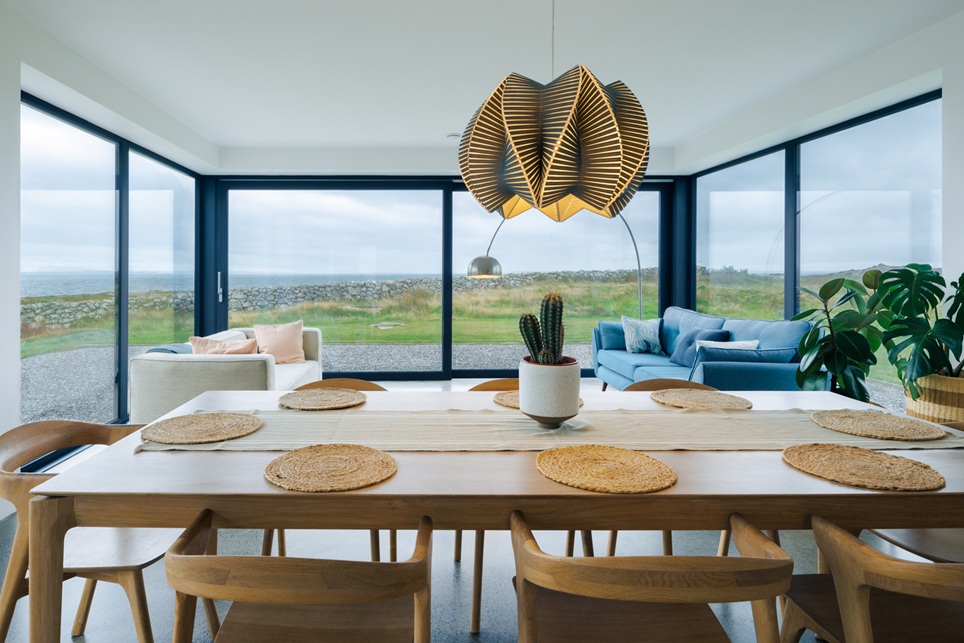

Tight layouts and busy rooms make swing doors awkward—they steal clearance, block furniture, and break the path to patios or decks. Sliding doors move on a track instead, keeping walkways open, brightening rooms with larger glass areas, and making everyday traffic smoother.
This guide explains where sliding doors work best, when they outperform hinged doors, and what matters for energy performance (IECC, ENERGY STAR). You’ll also see material and design options, plus smart features that make them easy to live with.
- Save space and open up your floor plan
- Introducing two standout systems — Horizon & Aluview Premium
- Energy efficiency: what U.S. homeowners should know
- What actually improves performance in sliding doors?
- Modern look, smart features, and added value
- Sliding doors – are they good for your home?
- FAQ
Key Takeaways:
- Find out how sliding doors maximize space by eliminating swing clearance, making them ideal for compact layouts.
- Learn where sliding doors outperform hinged designs—kitchens, offices, small living rooms, and patios.
- Compare uPVC and aluminum options, from family-friendly Horizon systems to ultra-slim Aluview Premium models.
- Understand key efficiency metrics (U-factor, SHGC, ENERGY STAR®) and what features truly improve insulation.
- Explore modern design choices, smart add-ons, and how sliding doors can boost comfort and home value.
Save space and open up your floor plan
Hinged doors need swing clearance – often 30–36 inches – which eats into walkways and corners. Sliding doors travel along a track, so you reclaim that footprint and can place furniture, plants, or storage right where a swing arc would have been.
Where they solve space problems
- Kitchens and dining areas: keep chairs and islands clear while maintaining a wide pass-through to the patio.
- Home offices or dens: preserve wall space for shelves and screens; no door leaf cutting across your setup.
- Small living rooms or balconies: maintain a straight path outdoors without shuffling furniture.
The layout flexibility you gain
With a sliding system, you can park a sofa or console close to the opening without worrying about a door leaf swinging into it. Built-ins can wrap the jamb, and floor lamps or plants can sit right where the swing arc used to be.
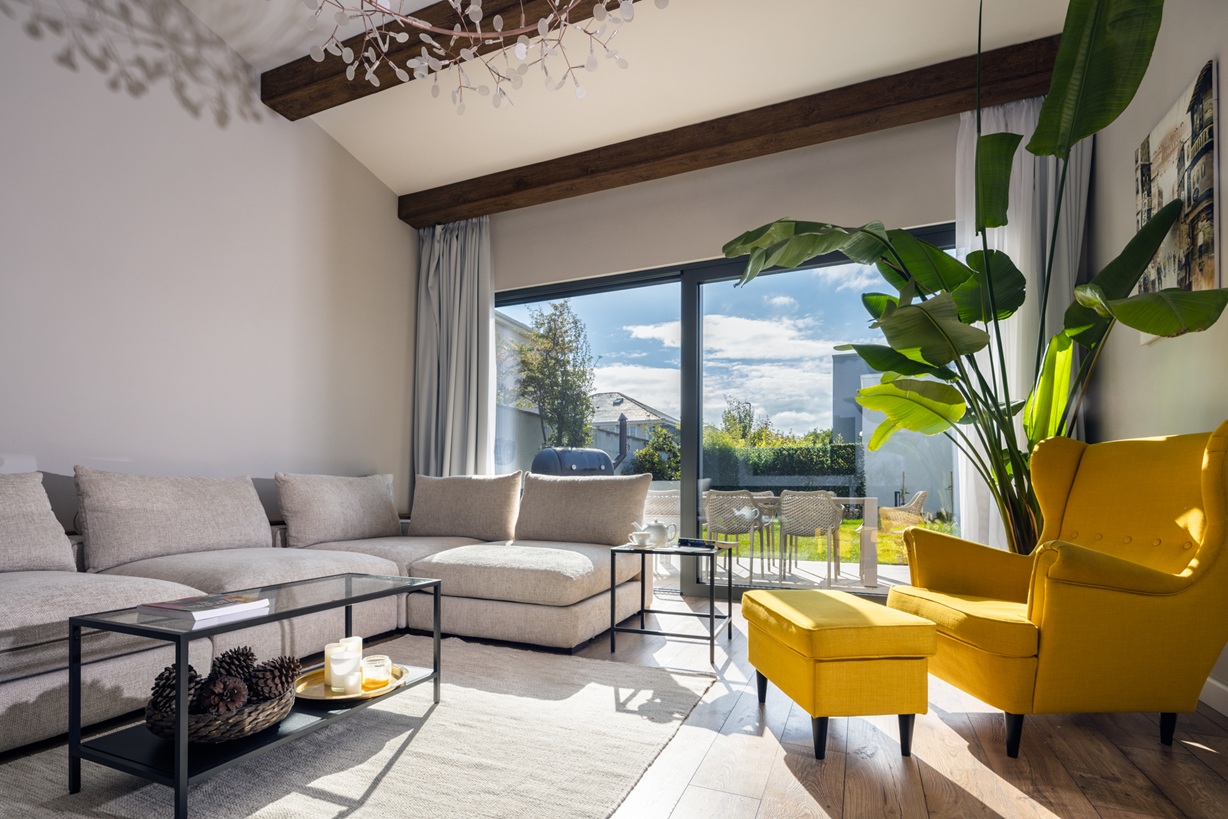
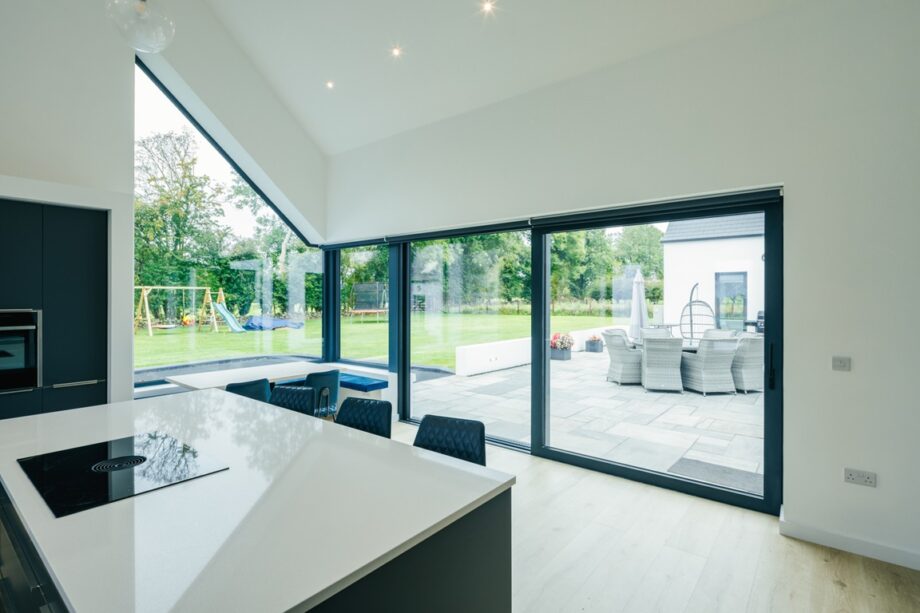
Wider panel options also change how a room works during gatherings. A broad center opening keeps traffic moving between the kitchen and deck, while a single large panel on one side preserves a clean furniture line in a compact living room. Two-panel setups are simple and practical; three- or four-panel configurations can stack to one side or meet in the middle for a balanced, symmetrical pass-through.
If your floor plan feels tight—or you want a cleaner connection to the deck—sliding doors are a straightforward way to open the room without adding square footage.
Introducing two standout systems — Horizon & Aluview Premium
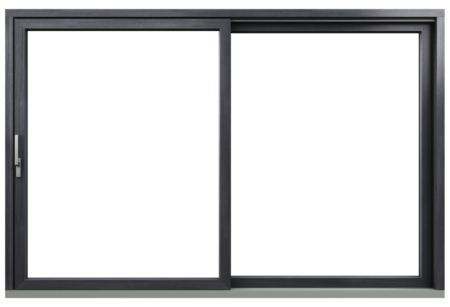
Horizon — uPVC lift-and-slide patio doors.
A minimalist, bright-first design with slim profiles and smooth lift-and-slide operation. Horizon supports large panels (single sash areas up to about 67 ft²) while maintaining stability with steel reinforcements, and offers a low, floor-flush threshold and micro-ventilation for everyday comfort. Multi-point locking and energy-efficient glazing are available for a secure, tight seal and code-friendly performance.
Aluview Premium — aluminum lift-and-slide doors.
Engineered for wide openings and long spans with narrow sightlines for panoramic views. The aluminum frame integrates a fiberglass-reinforced thermal break to improve insulation, pairing modern rigidity with thermal comfort. It’s a strong fit for contemporary renovations or new builds that call for durable structure and clean, minimal frames.

When to choose which:
- Pick Horizon if you want a warm, low-maintenance uPVC system with generous glass and a low threshold for daily family traffic.
- Choose Aluview Premium when the opening is extra-wide, the look is ultra-slim, and aluminum’s strength and thermal break tech match the project goals.
Energy efficiency: what U.S. homeowners should know
Energy codes and rebates look at tested performance, not marketing terms. Check the NFRC label on any sliding door for U-factor (insulation) and SHGC (solar heat gain). Lower U-factor means better insulation; SHGC depends on your climate and orientation. Products that meet ENERGY STAR® Version 7.0 use climate-zone criteria for sliding glass doors, and many jurisdictions reference IECC tables for code compliance—both rely on NFRC ratings.
What actually improves performance in sliding doors?
- Double or triple glazing with argon/krypton gas fills and low-E coatings to cut conductive and radiant heat transfer.
- Thermally broken frames (common on aluminum systems) and insulated uPVC profiles to reduce edge heat flow.
- Continuous weather seals and precise hardware alignment to limit air leakage. (Air leakage is an NFRC-reported metric on many labels.)
OKNOPLAST’s Horizon (uPVC) and Aluview Premium (aluminum) pair large glass areas with efficiency features—slim, reinforced profiles, thermal breaks (Aluview), and high-performance glazing packages – making them suitable choices when targeting ENERGY STAR and IECC performance in residential projects. Always verify the exact NFRC ratings on the specific configuration you order.

Modern look, smart features, and added value
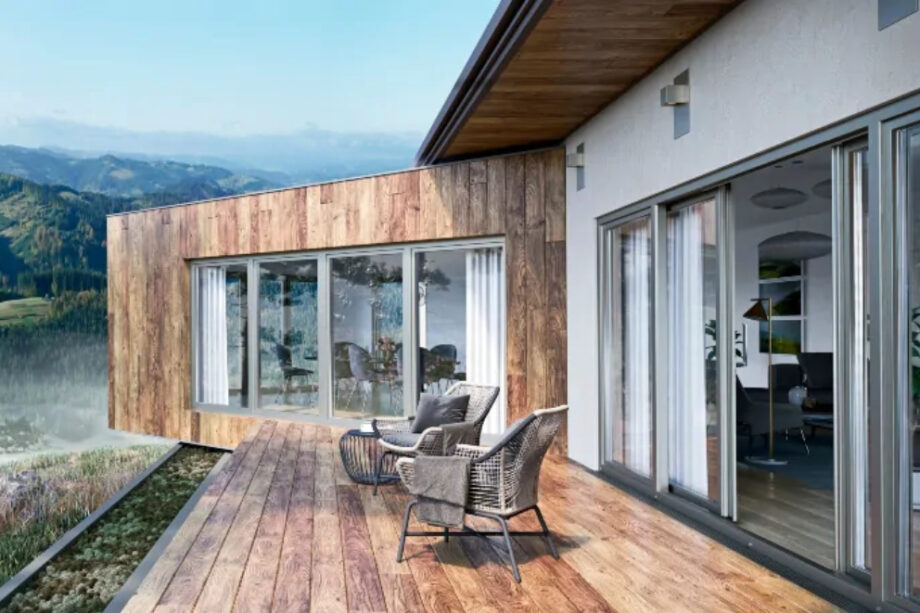
Sliding doors read clean and modern because the sightlines are slim and the glass area is large. They work with many styles—farmhouse, mid-century, industrial—without fighting the façade. Color and finish are flexible: powder-coated aluminum in deep neutrals, or uPVC laminates that match black, bronze, or wood-look trims. If your interior and exterior palettes differ, dual-color options keep both sides coordinated.
Comfort features matter as much as looks. You can specify privacy or solar-control glass, pair the opening with interior pleated shades or exterior screens, and choose low-profile thresholds that keep the transition smooth. Hardware choices such as soft-close or assisted lift-and-slide make large panels easy to operate.
Smart add-ons make daily use simpler. Door-status sensors tie into security systems, app-controlled shades manage glare and heat, and keyless access at adjacent entries keeps the whole zone convenient. Plan wiring and device placement during design so everything is concealed and weather-protected.
Well-chosen sliding doors tend to show up in buyer checklists: more daylight, an easy path to the yard, and verified efficiency ratings. That combination often improves curb appeal and marketability—especially in energy-conscious neighborhoods.
Sliding doors – are they good for your home?
Sliding doors solve tight layouts, brighten rooms, and make the path to the yard feel natural—all while meeting modern efficiency targets when specified with the right glazing, seals, and hardware. Pick the material and panel configuration for your span and climate, confirm NFRC ratings, and plan details like threshold height and shading so daily use stays smooth year-round.
Yes—when designed with features like double or triple Low-E glass, insulated frames, and tight seals. ENERGY STAR–certified models can significantly cut heating and cooling costs while improving comfort.
Energy codes like the IECC set minimum insulation standards for doors. Sliding doors must meet specific U-factor or R-value requirements, which usually means using multi-pane Low-E glass, insulated frames, and proper weatherstripping.
For exterior access in studio apartments, sliding patio doors are the most space-saving option. Unlike hinged doors, they move along a track instead of swinging inward, so they don’t take up any living space. Compact designs, such as OKNOPLAST’s COMPACT patio doors, maximize glass area while keeping the footprint minimal.

Let’s talk about your project!
Request a quote, discuss specifications, or get help choosing the right system
Send a request
"*" indicates required fields