


What Homeowners Ask Before Buying: 10 Questions About European Windows Answered


Buying windows is one of those decisions that looks simple until you start comparing specifications. Frame material, glazing, U-Factor, hardware, installation, warranty and lead time can quickly turn into a long list of questions. European windows also work differently from the standard US windows many homeowners know. Want t know more? Here are 10 questions worth asking before you order.
Key Takeaways:
- European windows differ from standard US windows in how they are built, sized and operated.
- OKNOPLAST US Tilt and Turn Windows are made to the exact dimensions of your project and can reach a U-Factor as low as 0.14.
- Tilt and Turn Windows give you secure ventilation, full inward opening and easy access to the outside glass.
- European windows need a little more planning before installation, especially when it comes to rough openings and interior clearance.
- The real cost of a window includes more than the price of the unit, so look at performance, warranty, lead time and installation too.
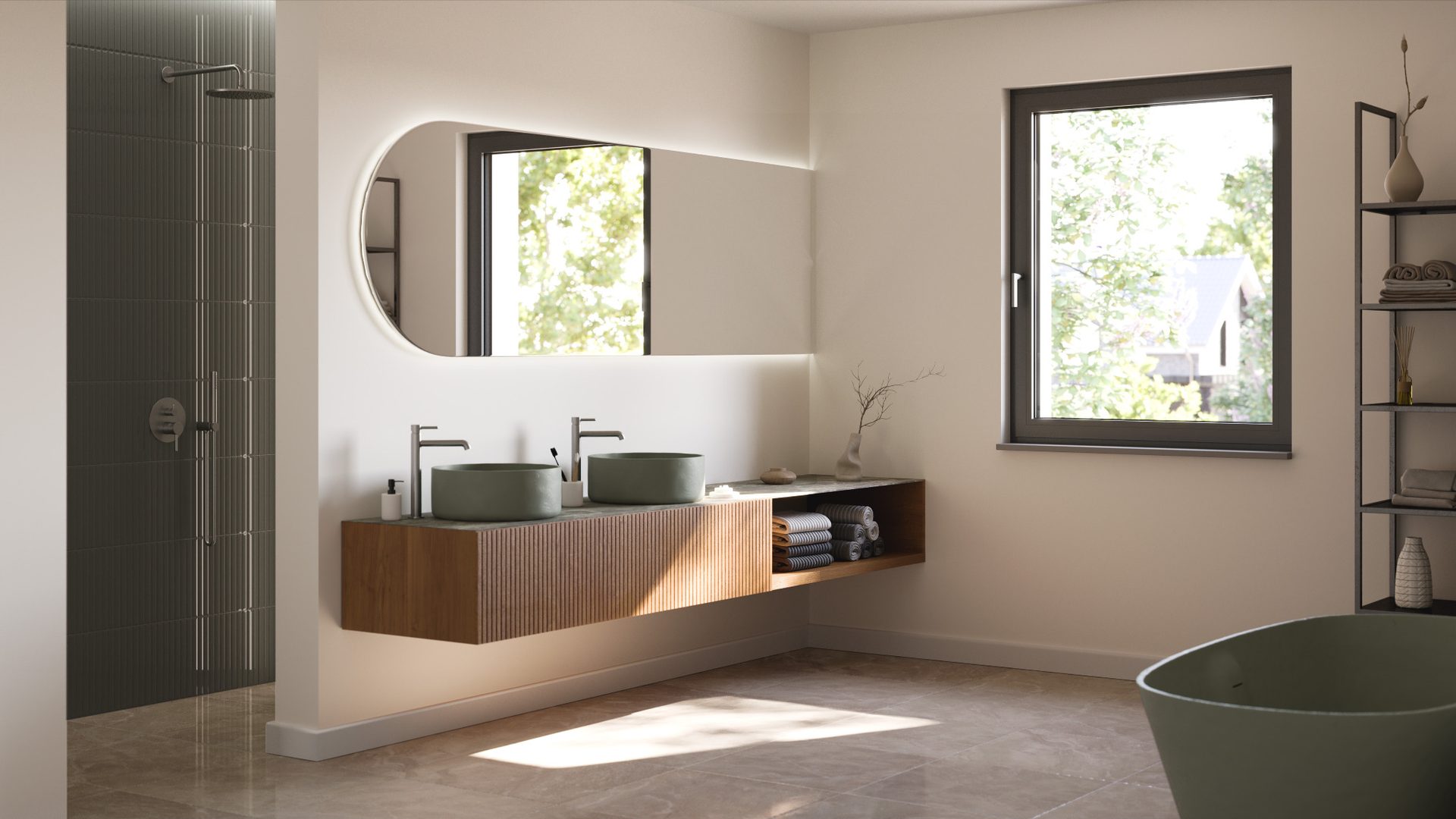
1. What makes european uPVC windows different from standard US windows?
OKNOPLAST US European uPVC Tilt and Turn Windows differ from standard US vinyl windows in five key ways: multi-chamber steel-reinforced PVC profiles, Tilt and Turn operation, made-to-measure manufacturing at no extra cost, 50+ color and finish options, and U-Factor as low as 0.14 in triple-glazed configuration.
OKNOPLAST US brings more than 30 years of European fenestration R&D to the US market, backed by a dealer network of more than 3,500 partners across 21 countries. That experience is reflected in how its European uPVC window systems are designed, manufactured and specified for US projects.
1. Frame construction
European uPVC windows, like PAVA or PIXEL, use multi-chamber PVC profiles with steel reinforcement rather than relying on a conventional vinyl extrusion alone. The multiple chambers and reinforcement are part of the frame design, helping create a rigid window system that supports the glazing and hardware.
2. Tilt and Turn operation
Tilt and Turn Windows use one sash with two opening positions. Tilt mode opens the top inward for ventilation, while turn mode opens the sash inward more fully, giving homeowners access to the exterior glass from inside and a different way to use the window than conventional US configurations.
3. Made-to-measure sizing
OKNOPLAST US windows are manufactured to the exact dimensions of the project as standard, with no additional cost for custom sizing. This is particularly useful for projects with floor-to-ceiling or non-rectangular openings, which can maintain the same NFRC-rated U-Factor performance as standard-size units. Made-to-measure orders typically have an 8–10 week lead time, so sizing needs to be planned before installation.
4. Glazing
OKNOPLAST US offers double- and triple-glazed insulating glass units, with triple-glazed configurations achieving a U-Factor as low as 0.14. The glazing is therefore not just a design choice but an important part of the window’s overall thermal performance.
5. Color options
OKNOPLAST US offers 50+ color and finish options for its uPVC profiles. This gives homeowners more flexibility when matching windows to the architectural design, particularly on projects where the window finish is part of the overall exterior or interior specification.
| Feature | OKNOPLAST US European uPVC | Standard US vinyl |
| Frame construction | Multi-chamber PVC with steel reinforcement | Standard vinyl extrusion |
| Tilt and Turn operation | Tilt for ventilation and turn for full inward opening | Conventional opening configurations |
| Glazing | Double- or triple-glazed options | Commonly double-glazed |
| Sizing | Made-to-measure at no additional cost | Fixed incremental sizes |
| Color options | 50+ colors and finishes | More limited selection |
| U-Factor | As low as 0.14 | Varies by product |
For homeowners working through house buying questions, investment potential, resale value and utility costs, these specifications provide useful points of comparison beyond the initial window price.
Field Note: The biggest difference is not just the look. It is how the window is built, sized and operated as a complete system.
2. How does multi-point locking improve security vs standard US windows?
OKNOPLAST US multi-point locking engages at multiple points around the sash perimeter, helping improve security and create a tighter compression seal than a single-point lock on a standard US double-hung window.
Think about what happens when you close a typical window. A single lock pulls the sash toward the frame at one location. With multi-point locking, the closing force is distributed around the sash perimeter, securing the window at several points instead of relying on one central lock.
The steel-reinforced uPVC frame works together with the hardware. The reinforcement adds rigidity to the frame, while the multi-point system secures the sash at multiple locations. The result is a more evenly secured sash, with closing force distributed around the perimeter rather than concentrated at a single lock point.
There is also a practical benefit for everyday use. With Tilt and Turn Windows, the sash can tilt inward at the top for ventilation while the multi-point locking system remains engaged. This allows airflow without fully opening the window.
| Security feature | OKNOPLAST US multi-point | Standard US single-point |
| Lock engagement points | Multiple points around sash perimeter | Typically one main locking point |
| Tilt ventilation while locked | Yes | Not a standard feature |
| Frame rigidity | Steel-reinforced uPVC profile | Depends on window construction |
| Air infiltration sealing | Perimeter compression seal | Primarily around standard sash lock |
When evaluating a home, buyers may already be looking at property history and major repairs. The windows deserve the same attention: checking the locking system adds another layer of transparency when assessing the condition and specification of the property.
Field Note: Security is not just about the lock itself. The frame, hardware and sash work together as one system, so look at how those parts are designed to work together.
3. What U-Factor should you look for in energy-efficient windows?
The U-Factor is the primary NFRC metric for thermal performance – lower is better, and OKNOPLAST US triple-glazed uPVC windows achieve a U-Factor as low as 0.14 through argon gas fill, warm-edge spacers, and multi-chamber PVC profiles.
U-Factor measures how readily heat passes through the complete window assembly. A lower value means less heat transfer, making it one of the most useful numbers to compare when evaluating different window systems.
But U-Factor is only part of the picture. Climate matters too.
- U-Factor measures how readily heat passes through the window. Lower values are especially important in climates where heating demand is high.
- SHGC (Solar Heat Gain Coefficient) measures how much solar heat enters through the window. It becomes more important in Southern climate zones, where managing solar heat gain is a bigger concern.
OKNOPLAST US triple-glazed uPVC windows can achieve a U-Factor of 0.14. Multi-chamber PVC profiles, insulating glass and argon gas fill work together to reduce heat transfer through the complete window assembly.
When comparing products, look beyond manufacturer claims. Ask for the NFRC-certified performance label and check the actual U-Factor and SHGC values.
| Climate Zone | Priority Metric | OKNOPLAST US Performance |
| Northern | U-Factor | As low as 0.14 |
| North-Central | U-Factor + SHGC | Evaluate both values |
| South-Central | SHGC + U-Factor | Evaluate solar heat gain and thermal performance |
| Southern | SHGC | SHGC control is especially important |
For homeowners, thermal performance matters over the life of the window because it can affect indoor comfort and utility costs. It is one factor to consider alongside the broader financial picture, including financial qualifications, down payment and equity.
Field Note: Do not judge a window by the number of panes alone. The NFRC label tells you how the complete window system performs.

4. How long does installation of European tilt and turn windows take?
OKNOPLAST US Tilt and Turn Windows carry an 8–10 week made-to-measure lead time from order confirmation, while installation itself typically takes 1.5–2.5 hours per window for an experienced two-person crew. Because each window is manufactured to the exact project dimensions at no additional cost, the installation can also avoid on-site shimming adjustments required with incremental-size windows.
The 8–10 week timeline covers made-to-measure production, not installation on site. OKNOPLAST US manufactures each window to the exact project dimensions, which means the installer does not have to compensate for a standard window size that does not precisely match the rough opening. This can reduce installation labor associated with shimming and adjustment under ASTM E2112 installation procedures.
Once the windows arrive, the actual installation time depends on the project. OKNOPLAST US reports 1.5–2.5 hours per window for an experienced two-person crew, while installers working with the system for the first time should allow approximately 3–5 hours per window. Larger units, masonry installation, existing-window removal or rough-opening repairs can add time. For 8–12 windows, an experienced crew may complete the installation in approximately 2–3 days.
Read more: Are European windows hard to install in a US-framed home?
What should be checked before installation?
- Interior clearance: Because Tilt and Turn Windows open inward, check the space required for the sash before ordering. Consider interior trim, blinds, furniture and other potential obstructions.
- Opening and framing: Installation requirements vary between new construction and retrofit projects. Check the condition and squareness of the rough opening, existing framing, flashing and air-barrier integration. Floor-to-ceiling and non-rectangular windows may require additional structural preparation.
- Installation and warranty: OKNOPLAST US provides a 10-year warranty, but coverage is contingent on proper installation. Confirm with the contractor that the installation will follow applicable ASTM E2112 requirements.
- Condition of an existing property: During home tours or a home inspection, look beyond the window itself and check the quality of its installation. Poor installation can contribute to problems that require major repairs. Installation records can also provide useful information when assessing the property’s condition, alongside factors such as property taxes.
| Installation phase | OKNOPLAST US Tilt and Turn | Standard US incremental window |
| Lead time | 8–10 weeks from order confirmation; made to exact project dimensions | Varies by product and supplier |
| On-site adjustment | Exact sizing can eliminate shimming adjustments | Shimming may be required to fit incremental-size windows |
| Interior clearance | Required because the sash opens inward | Depends on window configuration |
Field Note: For scheduling purposes, allow 1.5–2.5 hours per window for an experienced two-person crew. Retrofit conditions, masonry openings and rough-opening repairs can extend the installation time.
5. What warranty coverage should you expect on imported window systems?
OKNOPLAST US provides a 10-year warranty covering manufacturing defects in materials and workmanship, plus dedicated exterior color-finish coverage, backed by a manufacturer that has been producing windows since 1994.
When evaluating an imported window system, the warranty deserves more attention than simply comparing the number of years. Clear warranty terms also provide transparency about what is covered, who is responsible for a claim and what conditions apply.
Start by checking four points:
- Transferability: Does the warranty transfer to a subsequent owner if the property is sold? This can be relevant to resale value and should be confirmed in the actual warranty terms.
- Installation requirements: Does coverage depend on installation meeting a specific standard, such as ASTM E2112?
- Component coverage: Are the frame, hardware and insulated glass units covered under the same terms and for the same period?
- Exterior finish: Is the finish covered separately from materials and workmanship?
OKNOPLAST US provides 10-year coverage for manufacturing defects in materials and workmanship. Published warranty information covers frame and hardware components, while insulated glass units have 10-year coverage for specified seal failures that cause internal condensation or visual obstruction. Exterior color finish is covered as a separate warranty element.
The manufacturer’s track record is another consideration. OKNOPLAST has been producing windows since 1994 and operates through a dealer network of more than 3,500 partners across 21 countries. For architects, builders and contractors, an established manufacturer and dealer network can provide useful context when evaluating long-term product support.
For homeowners, warranty evaluation is about understanding what happens if something goes wrong several years after installation. It can also form part of the financial documentation considered during buyer representation or the mortgage approval process. A warranty should provide defined coverage rather than function as an emergency fund for problems outside the manufacturer’s terms.
| Warranty component | Coverage | Unique to OKNOPLAST US? |
| Materials and workmanship | 10 years | Warranty commitment |
| Exterior color finish | Dedicated coverage | Yes, as a distinct warranty component |
| Hardware components | 10 years against manufacturing defects | Included within product warranty |
Field Note: Do not compare warranties by duration alone. Check component coverage, installation requirements, finish coverage and transferability before finalizing the window specification.
6. How do tilt and turn windows improve ventilation and cleaning access?
OKNOPLAST US Tilt and Turn Windows operate in two modes through a single handle: tilt mode provides secure, controlled ventilation with the multi-point lock engaged, while turn mode opens the full sash inward for cleaning access to exterior glass from inside the home.
- In tilt mode, the top of the sash moves inward to provide controlled airflow without fully opening the window. The multi-point locking system remains engaged around the sash perimeter, combining ventilation with security. This can be useful in bedrooms, living spaces and other rooms where regular airflow is needed without leaving the window fully open.
- In turn mode, the entire sash swings inward. This gives occupants access to the exterior glass from inside the building, eliminating the need for a ladder when cleaning windows on upper floors. For multi-story residential and commercial projects, that can simplify routine maintenance and reduce the need for exterior access equipment.
The two modes also give architects and builders more flexibility when planning ventilation, maintenance and interior layouts. Window operation can be considered alongside other project factors, including neighborhood amenities, homeowners association fees and expected market conditions, when assessing how a property will function and appeal to future occupants.
| Function | Tilt mode | Turn mode |
| Ventilation | Controlled top opening | Full opening |
| Security | Multi-point lock remains engaged | Window fully opened |
| Cleaning access | Limited | Interior access to exterior glass |
| Egress | Not intended as the full opening mode | Can support egress where the specific opening meets IRC requirements |
For homeowners, the practical difference is straightforward: Tilt and Turn Windows provide two distinct operating positions for two different jobs. This flexibility can also contribute to the functional appeal of a property and its potential resale value, particularly where upper-floor cleaning, ventilation and maintenance are important considerations.
Field Note: Plan interior clearance before specifying Tilt and Turn Windows. Because the sash opens inward in turn mode, furniture, window treatments and other interior elements need to be considered during design.

7. What’s the price difference between European and standard US windows?
Comparing European OKNOPLAST US windows to standard US vinyl on unit price alone misses the full picture – made-to-measure custom sizing at no extra cost, 10-year warranty, and U-Factor 0.14 utility savings shift the comparison to total-cost-of-ownership.
European windows can have a higher initial price than basic US vinyl windows. That reflects the specification: steel-reinforced multi-chamber profiles, triple glazing, argon gas fill and made-to-measure manufacturing are not equivalent to a basic double-pane vinyl window.
The useful question is not simply what each window costs, but what the complete system delivers for that cost.
Start with sizing. OKNOPLAST US manufactures windows to exact project dimensions without an additional custom-sizing charge. Then consider performance. A U-Factor as low as 0.14 can contribute to lower long-term utility costs, depending on the building and climate.
Warranty and project logistics also belong in the calculation. OKNOPLAST US provides a 10-year warranty, while shipping, dealer margin and installation should be included when calculating the total project cost.
| Cost factor | OKNOPLAST US European uPVC | Standard US vinyl |
| Custom sizing premium | No additional cost | May vary |
| Lead time | 8–10 weeks | Varies |
| Warranty term | 10 years | Varies |
| U-Factor | As low as 0.14 | Varies |
| Long-term utility savings | Potential benefit from higher thermal performance | Depends on product |
For a homeowner, the window budget may form part of a larger property purchase that also includes closing costs, down payment, property taxes and interest rate considerations. Financial qualifications and mortgage requirements can also shape the overall project budget.
For architects, builders and contractors, the more useful comparison is the complete installed cost. Evaluate the window specification, sizing, installation, thermal performance, warranty and lead time together rather than comparing unit prices alone.
Field Note: When preparing a window budget, separate unit price from total installed cost. This makes competing window specifications easier to compare on the same basis.
8. How Does Argon Gas Fill Improve Window Thermal Performance?
Argon gas helps reduce heat transfer between glass panes because it conducts less heat than air: 0.016 W/m·K compared with 0.024 W/m·K. OKNOPLAST US uses argon as standard in all configurations, while triple-pane windows have two argon-filled spaces for added thermal resistance.
The principle is simple. Insulating glass units have spaces between the glass panes, and these spaces are filled with gas. Because argon conducts less heat than air, using argon instead of air helps reduce heat transfer through the glazing.
OKNOPLAST US uses argon gas in both double- and triple-pane configurations. In a triple-pane unit, three panes create two spaces between the glass layers. Filling both spaces with argon adds thermal resistance and contributes to the overall thermal performance of the window.
| Fill type | Thermal conductivity | U-Factor impact |
| Air | 0.024 W/m·K | Higher heat transfer |
| Argon | 0.016 W/m·K | Lower heat transfer |
Warm-edge spacer technology also helps improve performance. The spacer sits around the edge of the insulating glass unit and helps reduce thermal bridging at the glass perimeter. Together, the glazing configuration, argon fill and spacer technology contribute to the whole-window U-Factor and overall energy efficiency.
Argon is an inert, non-toxic gas suitable for long-term use in insulating glass units. When comparing products, ask for the NFRC-certified performance label. The whole-window U-Factor is more useful than looking at argon gas alone because it reflects the performance of the complete window assembly.
Field Note: Argon is one part of the window specification, not the performance rating itself. For project specifications, compare the NFRC-certified whole-window U-Factor of complete window assemblies.
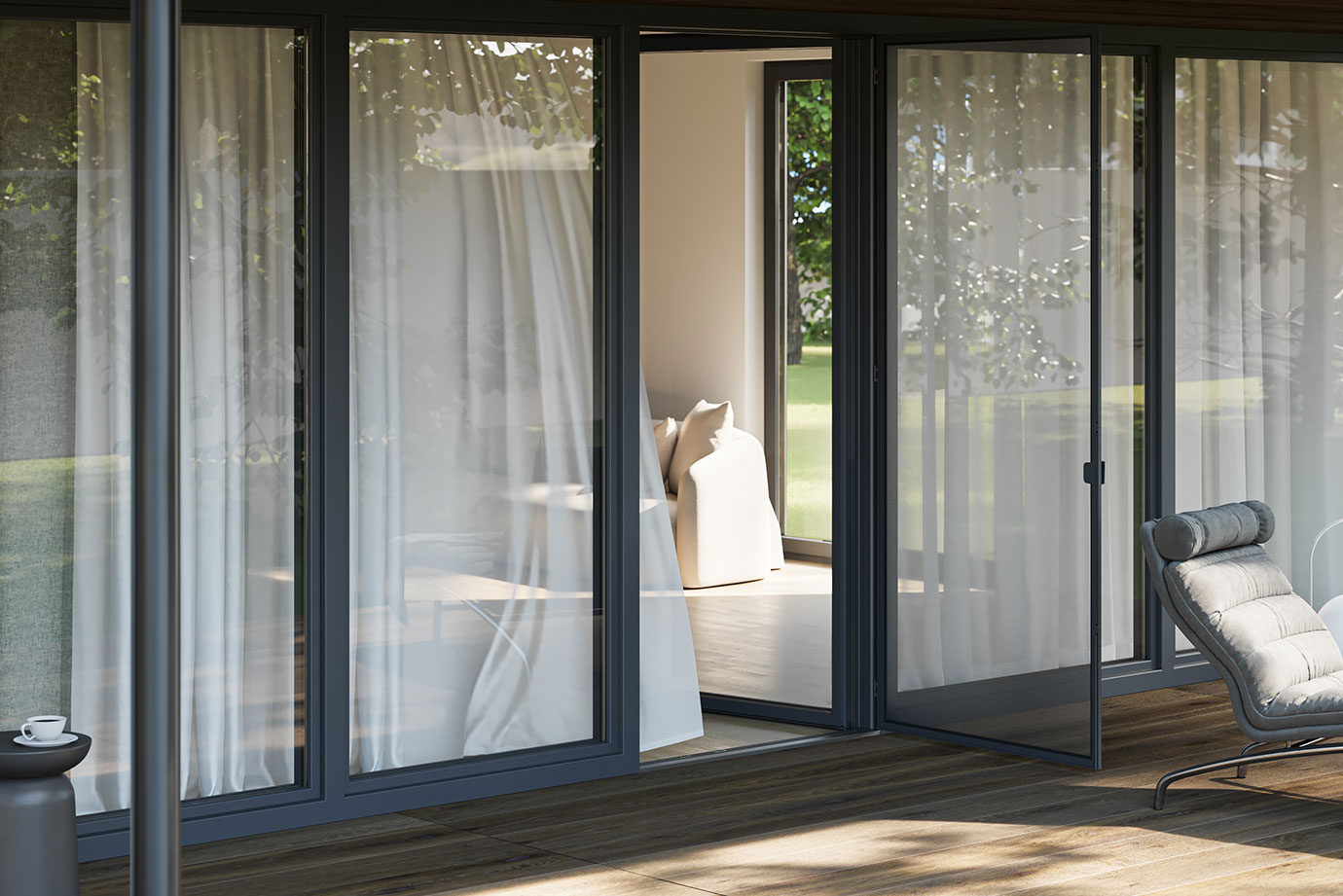
9. What Questions to Ask About Installation Compatibility with Existing Framing?
Before ordering OKNOPLAST US Tilt and Turn Windows, ask four questions: Is there enough interior clearance? Is the rough opening square? Does the installer understand ASTM E2112? And does the planned opening meet IRC egress requirements where applicable?
Start with interior clearance. Because Tilt and Turn Windows open inward, check the space around the window before ordering. Blinds, furniture, interior trim and other obstructions can interfere with the sash when it opens.
Next, verify the rough opening. OKNOPLAST US windows are made to the exact project dimensions, so the opening should be measured and checked for squareness before production. An out-of-square opening may need to be corrected before installation.
The third question concerns ASTM E2112. Ask the installer how they will handle flashing, air-barrier integration and sill-pan waterproofing. Proper installation is also a condition of the OKNOPLAST US warranty.
Finally, check egress requirements. If the window will serve as an egress opening, the specific opening must meet applicable IRC requirements for clear width, clear height and net clear opening area.
| Compatibility question | Why it matters for OKNOPLAST US | Who to ask |
| Interior clearance | Sash opens inward | Contractor / installer |
| Rough opening squareness | Exact dimensions are manufactured at the factory | Contractor |
| ASTM E2112 familiarity | Required for installation and warranty compliance | Installer |
| IRC egress compliance | Opening must meet requirements for its specific use | Architect / contractor |
A retrofit project needs one more check: the existing framing. Look for rot, insect damage, movement or other conditions that may need to be addressed before the new window is installed. A home inspection can help identify these issues in an existing property.
Field Note: For inward-opening windows, framing compatibility should be confirmed before the order is placed not after the windows arrive.
10. How to verify a window manufacturer’s quality certifications before buying?
Verify window manufacturer quality through three sources before buying: the NFRC Certified Products Directory for U-Factor and SHGC, manufacturer testing documentation, and warranty terms and production history.
Start with the NFRC. The National Fenestration Rating Council provides standardized performance ratings that make it easier to compare window products using metrics such as U-Factor and SHGC. For a custom window, do not stop at finding the manufacturer or product line. Ask whether the certification applies to the configuration and size you are actually buying.
Next, request the manufacturer’s product and testing documentation. Look for information about frame construction, glazing configuration and tested performance. For architects, builders and contractors, this documentation provides greater transparency when confirming that the specified product matches the performance requirements of the project.
Finally, review the warranty and the manufacturer’s production history. A warranty does not replace independent testing, but it shows what the manufacturer covers and for how long. OKNOPLAST US has more than 30 years of production experience dating back to 1994 and operates a dealer network of more than 3,500 partners across 21 countries.
| Certification source | What it verifies | How to check |
| NFRC Certified Products Directory | U-Factor and SHGC | Search the product at nfrc.org |
| Manufacturer testing documentation | Product construction and testing | Request current product documentation |
| Warranty terms and track record | Coverage and manufacturer history | Review warranty and company history |
This is where quality certifications become useful rather than just another specification to list. For a non-rectangular, floor-to-ceiling or otherwise custom window, confirm that the published performance rating applies to the configuration being specified.
FAQ
Yes. OKNOPLAST US Tilt and Turn Windows are made for US projects and manufactured to the exact dimensions of the opening.
OKNOPLAST US triple-glazed uPVC windows can achieve a U-Factor as low as 0.14, with NFRC ratings providing a standardized way to compare thermal performance.
An experienced two-person crew typically needs 1.5–2.5 hours per standard window, while first-time installers should allow more time.
Yes. For retrofit projects, check the existing framing, rough opening and interior clearance before ordering.
Compare total cost rather than unit price alone, including sizing, glazing, thermal performance, installation, warranty and utility costs.
Check the rough opening, interior clearance, installer’s ASTM E2112 experience, applicable IRC egress requirements, NFRC rating and warranty terms.
Let’s talk about your project!
Request a quote, discuss specifications, or get help choosing the right system
Send a request
"*" indicates required fields