


Clerestory Windows: The Signature of Modern High-End Residential Design


Key Takeaways:
- Thermal performance data – the NFRC-certified U-Factor values OKNOPLAST achieves in clerestory applications (as low as 0.14 BTU/hr·ft²·°F for PAVA, 0.16 for PIXEL), and how these compare to ENERGY STAR requirements across all four U.S. climate zones.
- How fixed vs. operable configurations work – the difference between sealed daylighting units and Tilt and Turn operable windows, including how the stack effect drives passive ventilation at 8-12 ft installation heights.
- §25C tax credit eligibility and full cost breakdown – the 30% credit (up to $600/unit), plus realistic product pricing ($500–$3,500+) and total installed costs ($1,200-$4,500+), including which cost components qualify and which don’t.
- Code-compliant installation requirements – the four-step flashing sequence, IRC Section R613 structural header sizing, and the IRC R308 safety glazing trigger specific to high-wall clerestory placement.
- Warranty coverage – the four distinct warranty components (frame, IGU seal/argon retention, hardware, installation requirement) and what voids each one.
- Daylighting and orientation strategy – how clerestory placement and compass orientation (south/north/east/west) affect light quality, solar heat gain, and energy savings by climate zone.
What Defines Clerestory Windows in Modern Architectural Design and Passive Houses?
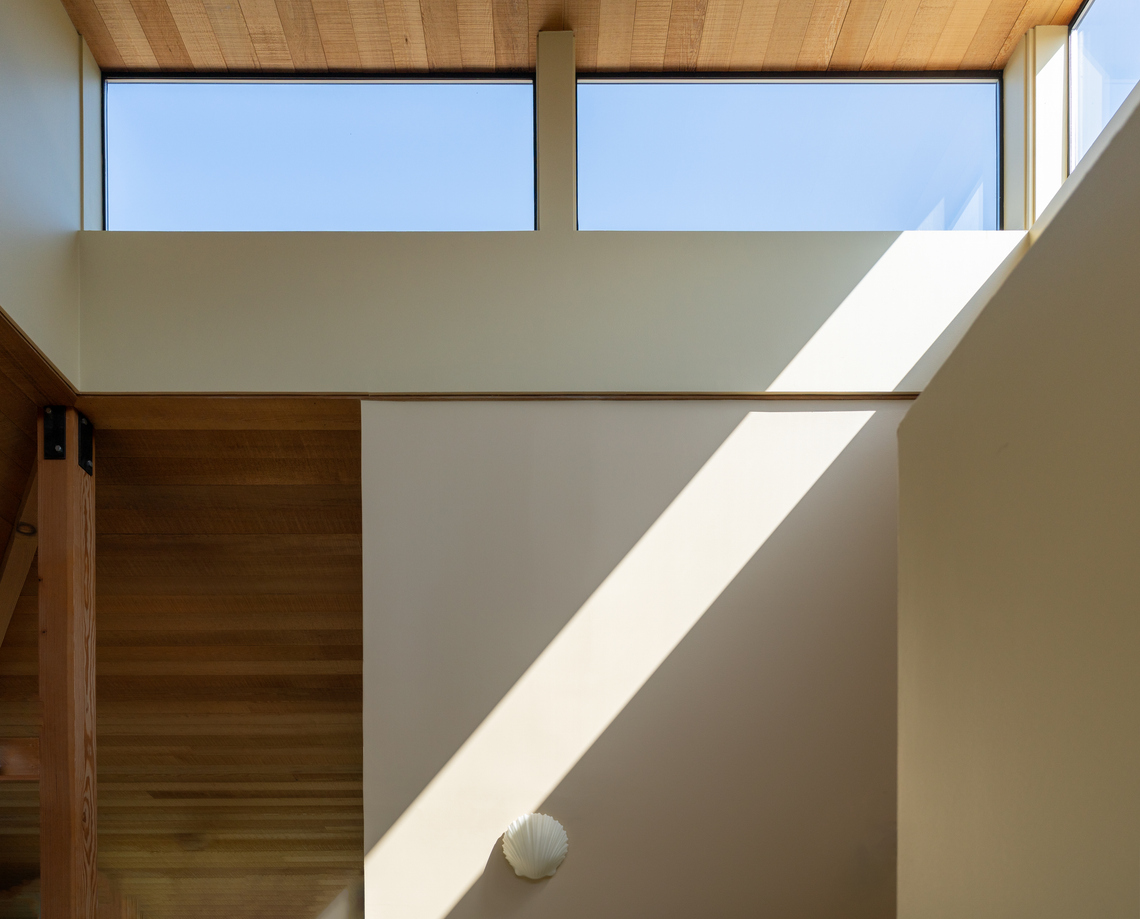
Clerestory windows are rows of windows installed 8-12 feet above floor level, just below the roofline. OKNOPLAST steel-reinforced, triple-glazed uPVC Tilt and Turn systems bring European passive house-standard performance to US residential clerestory applications, delivering an NFRC-certified U-Factor as low as 0.14 BTU/hr·ft²·°F (PAVA system) while maintaining the ambient daylighting and privacy that define this architectural element – from Gothic cathedrals to modern passive homes.
Positioned at the uppermost section of a wall, directly below the roofline or ceiling plane, clerestory windows draw natural light deep into interior spaces without sacrificing privacy at eye level. Lower wall surfaces remain free for furniture, cabinetry, and insulation – making this fenestration strategy uniquely effective at decoupling daylighting from sightlines, something no standard window placement can achieve.
The clerestory’s architectural lineage stretches back over 3,000 years, from high openings in ancient Egyptian temples that channeled light into ceremonial halls to the grand glazed bays of Gothic cathedrals flooding nave interiors with diffuse illumination. Mid-century modernism scaled the concept down to domestic rooflines, weaving continuous clerestory bands into low-profile designs. Today’s passive house movement takes it further, treating these windows as active solar tools – south-facing orientations capture low winter sun, while carefully calculated overhangs block the high summer arc, reducing cooling loads without mechanical intervention.
OKNOPLAST multi-chamber uPVC profiles combine steel reinforcement with triple-pane glazing to meet the thermal thresholds demanded by passive house and zero-energy building standards across all four US ENERGY STAR climate zones, achieving NFRC-certified U-Factor values as low as 0.14 BTU/hr·ft²·°F (PAVA) and 0.16 BTU/hr·ft²°F (PIXEL) – qualifying for ENERGY STAR in all four U.S. climate zones.
| Architectural Style | Clerestory Role | OKNOPLAST Specification |
|---|---|---|
| Contemporary | Daylighting band below roofline; preserves lower wall privacy | Steel-reinforced multi-chamber uPVC Tilt and Turn, triple-pane; NFRC U-Factor 0.14–0.26 (PAVA) / 0.16–0.29 (PIXEL) |
| Mid-Century Modern | Continuous glazing strip integrated into low-profile roofline | Steel-reinforced multi-chamber uPVC Tilt and Turn, triple-pane; NFRC U-Factor 0.14–0.26 (PAVA) / 0.16–0.29 (PIXEL) |
| Passive House | South-facing passive solar capture; overhang-controlled summer shading | Steel-reinforced multi-chamber uPVC Tilt and Turn, triple-pane; NFRC U-Factor 0.14–0.26 (PAVA) / 0.16–0.29 (PIXEL) |
How fixed clerestory windows enhance ambient daylighting and maintain privacy
Fixed clerestory windows positioned above eye level bring diffused, glare-free light into bathrooms, bedrooms, and open-plan living spaces – all without sacrificing privacy. OKNOPLAST triple-pane uPVC fixed configurations combine warm-edge spacers and low-e coatings to maximize visible light transmittance while meeting NFRC-certified standards of U-Factor ≤ 0.40 and SHGC ≤ 0.25 for Southern zone compliance (per ENERGY STAR 2025).
The high wall placement is what makes privacy possible: by sitting well above eye level, these windows eliminate street-level sightlines into the home entirely. Bathrooms, bedrooms, and home offices benefit most – spaces where natural light is a genuine functional need, yet privacy is non-negotiable. The sealed, non-operable glazing unit also preserves NFRC-certified U-factor integrity without any ventilation trade-offs.
Rather than flooding a room with harsh direct light, clerestory glazing produces an even, diffused illumination that reaches deep into floor plans. Triple-pane insulated glass with a low-e coating reflects unwanted solar radiation while transmitting visible light efficiently. In Northern and North-Central US climate zones, south-facing installations allow ambient light to wash across floors and ceilings throughout the day, meaningfully reducing dependence on artificial lighting.
In moisture-prone spaces like bathrooms, warm-edge spacer technology proves especially valuable by eliminating condensation risk at the glazing perimeter. Meanwhile, the uPVC frame’s inherently low thermal conductivity keeps U-factor performance consistent across all four ENERGY STAR climate zones.
Beyond performance, fixed clerestory windows make a quiet architectural statement – drawing the eye upward and emphasizing vaulted ceilings and rooflines. In open-plan layouts, they serve as both a passive daylighting tool and a visual focal point, brightening interiors without ever introducing glare at occupant eye level.
| Room Type | Privacy Benefit | Daylighting Benefit |
|---|---|---|
| Bathroom | Above-eye-level placement blocks street-level sightlines; warm-edge spacer prevents condensation on glazing perimeter | Diffused ambient light reduces artificial lighting demand without exposing occupants |
| Bedroom | High wall position eliminates exterior viewing angles; non-operable sealed unit maintains NFRC-certified U-Factor (PAVA: as low as 0.14 BTU/hr·ft²·°F) | Low-e triple-pane glazing delivers glare-free light across deep floor plans |
| Open-Plan Living | Clerestory height separates interior visibility from exterior vantage points | South-facing placement in Northern zone spreads ambient light across floors and ceilings; accentuates vaulted ceiling aesthetics |
How NFRC-certified U-factor and SHGC ratings optimize clerestory windows for ENERGY STAR climate zones
OKNOPLAST NFRC-certified clerestory windows qualify for the §25C Energy Efficient Home Improvement Credit (up to $600 per unit) when meeting ENERGY STAR Most Efficient thresholds – confirm current U-Factor and SHGC requirements at energystar.gov at time of filing. SHGC targets vary by climate zone and orientation: southern-facing units in the Northern zone benefit from higher SHGC for passive solar gain, while the Southern zone calls for SHGC ≤ 0.25 to guard against overheating.
Clerestory windows demand more precise NFRC optimization than standard eye-level glazing. Their elevated placement increases exposure to thermal bridging and greater solar heat gain variability – intercepting more direct radiation at steep summer angles while shedding more heat through conduction on winter nights. That makes both U-factor and SHGC primary performance variables, not afterthoughts.
ENERGY STAR’s four US climate zones set the baseline for clerestory selection. The Northern zone requires U-factor ≤ 0.27 with no SHGC restriction; North-Central demands ≤ 0.30 and SHGC ≤ 0.40; South-Central matches that U-factor but tightens SHGC to ≤ 0.25; and the Southern zone allows U-factor ≤ 0.40 while holding SHGC ≤ 0.25. OKNOPLAST triple-pane uPVC systems reach U-Factor values well below ENERGY STAR Northern zone threshold of 0.27 – the PAVA system achieves U-Factor as low as 0.14 BTU/hr·ft²·°F; PIXEL triple-pane configurations reach as low as 0.16 BTU/hr·ft²·°F (per OKNOPLAST NFRC certification documentation).
SHGC selection follows a climate-plus-orientation matrix. South-facing Northern zone clerestories are specced for higher SHGC to capture winter solar heat, while units in the Southern, South-Central, and North-Central zones stay at ≤ 0.25 to keep ceiling-level solar gains from driving up cooling loads.
Architectural elements like overhangs, eaves, and recessed wall profiles work alongside rated SHGC – blocking steep summer sun while letting low-angle winter light through. These passive shading strategies complement the window’s certified performance rather than replace it.
Qualifying for the §25C Energy Efficient Home Improvement Credit requires ENERGY STAR Most Efficient certification – confirm current U-Factor and SHGC thresholds at energystar.gov at time of filing. OKNOPLAST NFRC-certified triple-pane clerestory units are designed to meet ENERGY STAR thresholds across all four U.S. climate zones; verify certification status at time of purchase. Homeowners claim the credit via IRS Form 5695, retaining the Manufacturer’s Certification Statement as supporting documentation.
| Climate Zone | U-factor Requirement | SHGC Requirement | Clerestory Strategy |
|---|---|---|---|
| Northern | ≤ 0.27 (ENERGY STAR); Most Efficient: verify at energystar.gov | No restriction | Higher SHGC on south-facing units for passive solar heat gain; PAVA triple-pane: U-Factor as low as 0.14 BTU/hr·ft²·°F for maximum thermal retention (per OKNOPLAST NFRC certification documentation) |
| North-Central | ≤ 0.30 (ENERGY STAR); Most Efficient: verify at energystar.gov | ≤ 0.40 | Moderate SHGC with low-e coating; argon fill maintains U-Factor below ENERGY STAR Northern zone threshold of 0.27 |
| South-Central | ≤ 0.30 (ENERGY STAR); Most Efficient: verify at energystar.gov | ≤ 0.25 | SHGC ≤ 0.25 to limit solar heat gains at elevated clerestory angle; architectural overhang as complement |
| Southern | ≤ 0.40 (ENERGY STAR); Most Efficient: verify at energystar.gov | ≤ 0.25 | Strict SHGC ≤ 0.25 to prevent overheating through ceiling-level glazing; eaves and recessed profiles as passive shading |
How operable clerestory windows boost passive ventilation and thermal comfort
Operable clerestory windows work by harnessing the stack effect – hot air escapes at ceiling height while cooler air flows in from below. OKNOPLAST Tilt and Turn uPVC systems support both modes of operation: tilt for secure passive ventilation during light rain, and turn for maximum airflow. At installation heights of 8-12 feet, motorized chain-drive automation becomes essential rather than optional.
The physics behind this are simple: hot air rises and collects at the highest point in a room. Placing operable windows at ceiling level maximizes thermal buoyancy, expelling warm interior air without any mechanical assistance. OKNOPLAST multi-chamber uPVC profiles keep cold drafts from forming at the frame perimeter during tilt-ventilation, maintaining the NFRC-certified U-factor even with the sash open.
Pairing clerestory units on one wall with lower operable windows on the opposite side takes the stack effect even further. This cross-ventilation setup creates a clear airflow pathway – warm air exits high while cool exterior air enters through the lower openings – reducing HVAC demand and improving thermal comfort across all four US ENERGY STAR climate zones.
| Ventilation Mode | Mechanism | Weather Suitability |
|---|---|---|
| Tilt Position | Sash opens inward from top; controlled passive airflow through narrow gap at frame top | Light rain, wind – secure ventilation with weather protection |
| Turn Position | Sash pivots fully open on vertical axis; maximum airflow cross-section | Dry, calm conditions – full passive ventilation capacity |
At 8-12 feet above floor level, manually operating a clerestory window simply isn’t practical. OKNOPLAST Tilt and Turn uPVC systems are compatible with chain-drive motorized openers, allowing remote-controlled ventilation management without the need for ladders or poles. When closed, the system achieves air infiltration rates as low as 0.012 CFM/ft² at 75 Pa (ASTM E283/E283M-19) – well within IRC-required infiltration limits – keeping thermal comfort consistent between ventilation cycles (per OKNOPLAST NFRC certification documentation).
What insulated glazing and frame materials achieve NFRC-certified U-Factor performance in clerestory windows
OKNOPLAST reaches NFRC-certified U-Factor values as low as 0.14 BTU/hr·ft²·°F (PAVA system) in clerestory window assemblies by combining three key technologies: triple-pane argon-filled IGUs (center-of-glass U-factor 0.10-0.14 Btu/hr·ft²·°F), warm-edge spacers that cut edge-of-glass heat loss by up to 30% versus aluminum alternatives, and steel-reinforced multi-chamber uPVC frames – an element frequently underestimated in whole-window U-factor calculations.
Triple-pane IGU construction and center-of-glass performance
Triple-pane IGUs feature three glass panes separated by two sealed argon-filled cavities, delivering a center-of-glass U-factor of 0.10-0.14 Btu/hr·ft²·°F under NFRC testing – the lowest thermal transmittance available in residential glazing. Because argon conducts heat less readily than air, convective transfer between panes drops significantly. Low-e coatings on the inner glass surfaces add another layer of control by reflecting infrared radiation back indoors, simultaneously keeping SHGC at ≤ 0.25 for Southern US climate compliance and maintaining enough visible light transmittance to support daylighting – a particularly important balance in high-wall clerestory applications.
Warm-edge spacer advantage in clerestory frame-to-glass ratio
Replacing aluminum spacers with warm-edge alternatives reduces the edge-of-glass U-factor contribution by up to 30%, with a direct benefit to the whole-window NFRC rating. This matters more in clerestory configurations than in standard windows because the higher frame-to-glass perimeter ratio amplifies the impact of edge thermal bridging on the overall calculation. Eliminating aluminum – a well-known thermal bridge at the glazing perimeter – therefore carries greater consequences for clerestory performance than it would for conventional fenestration.
Multi-chamber uPVC frame durability at high-wall exposure
Steel-reinforced multi-chamber uPVC profiles keep frame-section thermal conductivity low, allowing the whole-window U-Factor to meet ENERGY STAR Northern zone requirements (≤ 0.27) – and in PAVA triple-pane configurations, reach as low as 0.14 BTU/hr·ft²·°F – without depending entirely on glazing performance. uPVC handles UV exposure, moisture, and thermal cycling well – stressors that are noticeably more intense at high-wall clerestory heights, where solar radiation and temperature swings exceed ground-level conditions. Internal steel reinforcement preserves structural rigidity under elevated wind loads, protecting both air leakage ratings and long-term energy efficiency.
| Component | Performance Contribution | Clerestory-Specific Importance |
|---|---|---|
| Triple-Pane Argon IGU | Center-of-glass U-factor 0.10-0.14 Btu/hr·ft²·°F; low-e coating controls SHGC ≤ 0.25 and maximizes visible light transmittance | Delivers primary thermal resistance and daylighting performance required at high-wall positions with elevated solar exposure |
| Warm-Edge Spacer | Reduces edge-of-glass heat loss by up to 30% vs. aluminum spacers, lowering whole-window NFRC U-factor | Higher frame-to-glass perimeter ratio in clerestory units amplifies the U-factor benefit of eliminating aluminum thermal bridges |
| Multi-Chamber uPVC Frame | Low thermal conductivity at frame section; steel reinforcement maintains structural rigidity and air leakage ratings | Resists UV, moisture, and thermal cycling at elevated wall heights; prevents frame degradation that would compromise long-term energy efficiency |
What installation costs and 25C tax credit eligibility apply to NFRC-certified clerestory windows
OKNOPLAST NFRC-certified uPVC clerestory windows qualify for the 25C Energy Efficient Home Improvement Credit, which covers 30% of product cost up to $600 per unit. Product pricing ranges from $500 to $3,500+, while total installed project costs run $1,200-$4,500+ – a figure shaped by structural header requirements, scaffolding, proper flashing at the rough opening per local building code, and motorized openers.
Product cost drivers for clerestory windows
At $500-$3,500+ per unit, clerestory window pricing hinges on three key variables. Glazing specification carries the most weight: triple-pane argon-filled units with low-e coating cost more than double-pane alternatives, though they deliver the NFRC-certified U-factor and SHGC ratings needed to meet ENERGY STAR requirements across all US climate zones. Unit size follows naturally – high-wall rough openings typical of clerestory applications demand larger insulated glass units, pushing costs up accordingly. Finally, fixed units are the more affordable option; motorized operable versions add actuator hardware and wiring to the base price.
25C Energy Efficient Home Improvement Credit eligibility
The 25C credit offers a 30% rate on qualifying product costs, capped at $600 per unit for clerestory windows installed in a primary US residence. ENERGY STAR certification is a prerequisite, and OKNOPLAST windows satisfy this through verified NFRC performance documentation. It’s worth noting that the credit applies strictly to product cost – installation labor, structural framing, scaffolding, and motorized opener wiring are all excluded. To claim the credit, homeowners file IRS Form 5695 and should keep the Manufacturer’s Certification Statement on hand as supporting documentation.
Four installation cost drivers beyond product price
Clerestory installations consistently run higher than standard window replacements, and four factors explain why. IRC-compliant structural framing and header work for high-wall openings introduces material and labor expenses that simply don’t exist in typical retrofits. Scaffolding or lift equipment for installation heights of 8-12 feet adds further overhead. Specialized labor for code-compliant flashing and air sealing at high-wall penetrations per local building authority requirements is another line item, as is electrical rough-in for motorized opener wiring on operable units. That said, new construction and major renovation projects can absorb structural framing costs within the broader budget – making clerestory installation considerably more cost-efficient in those settings than as a standalone retrofit.
| Cost Component | Estimated Range | 25C Credit Eligible |
|---|---|---|
| Product Cost (uPVC clerestory unit) | $500-$3,500+ | Yes – 30%, up to $600/unit |
| Structural Framing & IRC-Compliant Header | Varies by retrofit vs. new construction | No |
| Installation Labor (scaffolding, flashing per local code) | Included in $1,200-$4,500+ total | No |
| Motorized Opener (actuator + wiring) | Additional per operable unit | No |
How to install clerestory windows per IRC code and manufacturer requirements
Installing OKNOPLAST clerestory windows correctly means following a four-step flashing sequence – sill pan, jamb, window unit, then head flashing – per manufacturer installation instructions and local building code, alongside IRC Section R613 structural header requirements from Table R602.7. At heights ranging from 8 to 12 feet, scaffolding or lift equipment isn’t optional. Sealing the perimeter gap with low-expanding polyurethane foam is equally essential, as it preserves the whole-unit U-factor achieved under NFRC certification.
Four-step flashing sequence for clerestory windows
Proper window installation requires a precise four-step flashing sequence per manufacturer installation instructions and local code to block water infiltration at every interface of the rough opening. The process begins with sill pan flashing fitted with end dams to stop lateral water movement at the lowest point. Jamb flashing follows, integrating with the weather-resistive barrier (WRB) to seal vertical sides against wind-driven rain. Step 3 covers window unit installation, where shimming and leveling accuracy become especially critical: even a 1/8-inch deviation from plumb can prevent the OKNOPLAST Tilt and Turn multi-point locking mechanism from achieving full compression seal engagement. Finally, head flashing laps over both the window frame and WRB, channeling water away from the rough opening header.
IRC Section R613 structural header requirement at clerestory height
Any fenestration in a load-bearing wall must have headers sized according to IRC Table R602.7 under Section R613 – and clerestory windows, positioned near the roofline, face some of the most demanding load transfer conditions. At wall heights of 8 to 12 feet, undersized headers can deflect enough to distort the uPVC frame geometry, which directly voids NFRC-certified performance ratings. OKNOPLAST clerestory units use steel-reinforced uPVC frames that require specific anchorage protocols to maintain structural integrity across these elevated spans.
IRC R308 safety glass trigger and perimeter foam thermal break
When the bottom edge of clerestory glazing sits within 18 inches of the finished floor, IRC Section R308 mandates safety glazing – either tempered or laminated glass. At the perimeter gap between the uPVC frame and rough opening framing, only low-expanding polyurethane foam should be used; high-expanding foam compresses the frame and compromises the thermal break that underpins the whole-unit U-factor under NFRC testing. Working at 8 to 12 foot heights, scaffolding or lift equipment remains a firm requirement – not just for safety, but to maintain the positioning accuracy needed during shimming and anchorage.
| Installation Step | ASTM/IRC Reference | Clerestory-Specific Consideration |
|---|---|---|
| Sill Pan Flashing | Flashing Step 1 | End dams required; high-wall access demands scaffolding or lift equipment at 8-12 ft heights |
| Header Sizing | IRC Section R613, Table R602.7 | Near-roofline placement increases roof load transfer; undersized headers deflect uPVC frame and void NFRC ratings |
| Window Shimming | Flashing Step 3 | Plumb/level/square tolerance critical for Tilt and Turn multi-point locking operation and compression seal performance |
| Perimeter Sealing | Flashing Step 4; IRC R613 | Low-expanding polyurethane foam only – preserves thermal break and whole-unit NFRC-certified U-factor |
What warranty covers OKNOPLAST uPVC clerestory windows in US residential projects
OKNOPLAST uPVC clerestory windows carry four distinct warranty components: 10-year warranty coverage for uPVC frame profiles against warping and discoloration (per OKNOPLAST Limited Warranty), a 10-20 year IGU seal and argon gas retention warranty, a hardware operational warranty, and professional installation per manufacturer instructions as a condition of validity. Notably, the Manufacturer’s Certification Statement pulls double duty – supporting both warranty claims and 25C tax credit documentation.
uPVC Frame Profile Warranty
The multi-chamber uPVC frame profiles carry a 10-year warranty against manufacturing defects (per OKNOPLAST Limited Warranty) – warping, cracking, and discoloration – under normal use conditions. Compared to painted wood frames, this is a meaningful advantage: wood warranties typically require periodic repainting to stay valid, while uPVC profiles need no such maintenance cycle. For clerestory windows installed at elevation in residential assemblies, that distinction translates directly into lower long-term obligations for US homeowners.
IGU Seal and Argon Gas Retention Warranty
Triple-pane IGUs are warranted against seal failure and argon gas loss for 10-20 years, depending on configuration. Seal failure typically shows up as fogging between panes – a visible cue that triggers replacement coverage. Argon retention matters beyond aesthetics: it’s a critical factor in maintaining NFRC-certified U-factor ratings, and its degradation compromises thermal performance in clerestory assemblies across all four US climate zones.
Hardware Operational Warranty
The Tilt and Turn hardware – multi-point locking mechanism, handle, and hinges – is covered against operational defects under normal residential use. Clerestory installations present unique load conditions given their height and limited manual access, which makes documented hardware coverage a relevant spec point for general contractors and building professionals working on residential projects.
Installation Requirement for Warranty Validity
Warranty validity requires installation by a qualified professional per manufacturer installation instructions and local building code. Improper installation leading to water intrusion or structural failure voids manufacturer coverage. Retaining installation records and purchase documentation serves as proof of compliant workmanship when supporting a warranty claim.
| Warranty Component | Coverage | Duration | Condition |
|---|---|---|---|
| uPVC Frame | Warping, cracking, discoloration under normal use | 10 years from date of purchase | No repainting required; normal residential use |
| IGU Seal | Seal failure (fogging) and argon gas loss | 10-20 years (configuration-dependent) | NFRC-certified IGU; proper installation |
| Hardware | Tilt and Turn mechanism, handle, hinges – operational defects | Per manufacturer specification | Normal residential use conditions |
| Installation Requirement | Warranty validity condition – not a defect coverage | Applies at time of installation | Professional installation per manufacturer instructions and local building code |
Homeowners should hold onto purchase documentation, NFRC labels, and professional installation records – all are relevant when filing a warranty claim. The Manufacturer’s Certification Statement confirming ENERGY STAR qualification serves a dual role here too, supporting both warranty documentation and IRS Form 5695 for the 25C Energy Efficient Home Improvement Credit. Extended warranty options may also be available through authorized OKNOPLAST installation partners in the US residential market.

How Clerestory Windows Maximize Ambient Natural Light and Daylighting in Modern Homes
Positioned 8-12 feet above floor level, clerestory windows push ambient natural light deeper into a floor plan than any standard window placement can. OKNOPLAST triple-pane low-e glazing optimizes visible light transmittance across all four US climate zones, keeping solar heat gain in check while cutting artificial lighting energy use by 30-70% – and delivering real biophilic benefits like circadian rhythm support and stress relief.
The physics behind high placement are straightforward: daylight entering near the ceiling strikes upper walls and soffits at a shallow angle, bouncing downward as soft, even illumination across open-plan interiors. Conventional eye-level windows push light horizontally into a narrow perimeter band, while clerestory glazing redirects it vertically – reaching interior zones that ground-level windows simply can’t serve. Add a vaulted ceiling, and the sloped surface reflects that light even further into the room.
Orientation shapes both light quality and climate performance. South-facing clerestory windows catch low-angle winter sun in Northern and North-Central US zones, maximizing passive solar daylighting during heating-dominated months. North-facing units offer something different entirely – consistent, diffused, cool-toned light with zero direct glare year-round, making them the go-to for studios, home offices, and galleries. East- and west-facing clerestory windows bring in morning and evening sun respectively, though OKNOPLAST low-e glazing is essential in South-Central and Southern zones to keep afternoon heat loads manageable.
| Clerestory Orientation | Light Quality | Climate Zone Best Use |
|---|---|---|
| South | Warm, direct winter sun; maximum passive solar gain | Northern & North-Central (heating-dominated) |
| North | Consistent, diffused, cool-toned; zero direct glare | All zones; ideal for studios, offices, galleries |
| East | Bright morning light; low-angle solar admission | South-Central & Southern (SHGC control required) |
| West | Warm evening light; high afternoon heat load risk | South-Central & Southern (low-e SHGC management essential) |
DOE research backs this up: daylighting strategies reduce residential artificial lighting consumption by 30-70%, translating directly into lower operating costs. OKNOPLAST uPVC frames contribute here too – their narrow sightlines maximize the glass-to-frame ratio within each rough opening, delivering more visible light transmittance per installed unit than wider aluminum or wood alternatives. Every aperture works harder as a result.
Beyond energy savings, biophilic design research points to measurable human benefits from clerestory-sourced natural light, including:
- improved mood and emotional well-being,
- sharper daytime productivity,
- regulated sleep cycles,
- lower stress levels.
High-placement glazing connects occupants to shifting sky conditions, weather patterns, and natural light rhythms in ways artificial lighting simply cannot replicate, regardless of how bright or color-accurate it gets.



Let’s talk about your project!
Request a quote, discuss specifications, or get help choosing the right system
Send a request
"*" indicates required fields