


Custom Window Shapes: Round, Triangular, and Arched Configurations Within PAVA and PIXEL
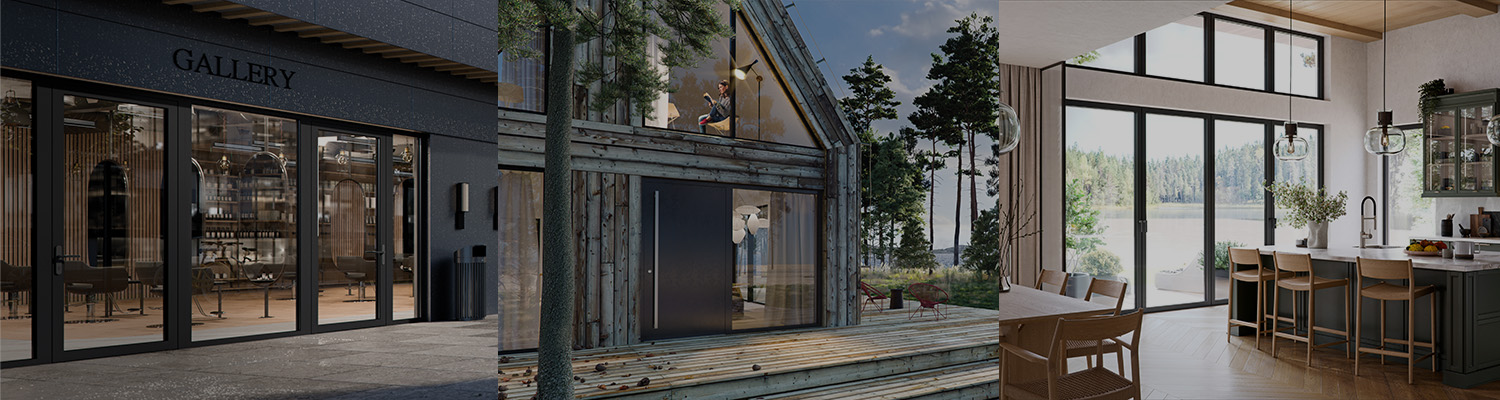

PAVA and PIXEL support round, trapezoidal, triangular, and arched window configurations within the same profile families as their standard rectangular units, with published dimension limits, angle calculations, and radius constraints – data that competing manufacturers publishing custom shape windows generally do not disclose at this level of detail. Some of these shapes are operable in tilt and turn mode; others are fixed-glazing only, and the distinction depends on the specific shape and sash profile selected, not a blanket rule for the category.
Key Takeaways:
- Which non-standard shapes – round, trapezoidal, triangular, and arched – are available within the PAVA and PIXEL platforms, and their published dimension, angle, and radius limits.
- Which custom shapes can actually operate in tilt and turn mode versus fixed-glazing only, and why that depends on shape and sash profile rather than a blanket rule.
- The specific radius, angle, and dimension constraints for each shape category, including the sash 103.341 restriction that governs round and arched windows.
- How PIXEL’s fixed-frame and Turn-or-Tilt custom shape dimension tables differ from PAVA’s.
- What’s required to order a custom shape – physical template specifications, ornamental glass options, color availability, and multi-panel mullion configurations.
- When a custom shape configuration requires a technical inquiry to OKNOPLAST and how that affects project lead time beyond the standard 8-to-10-week window.
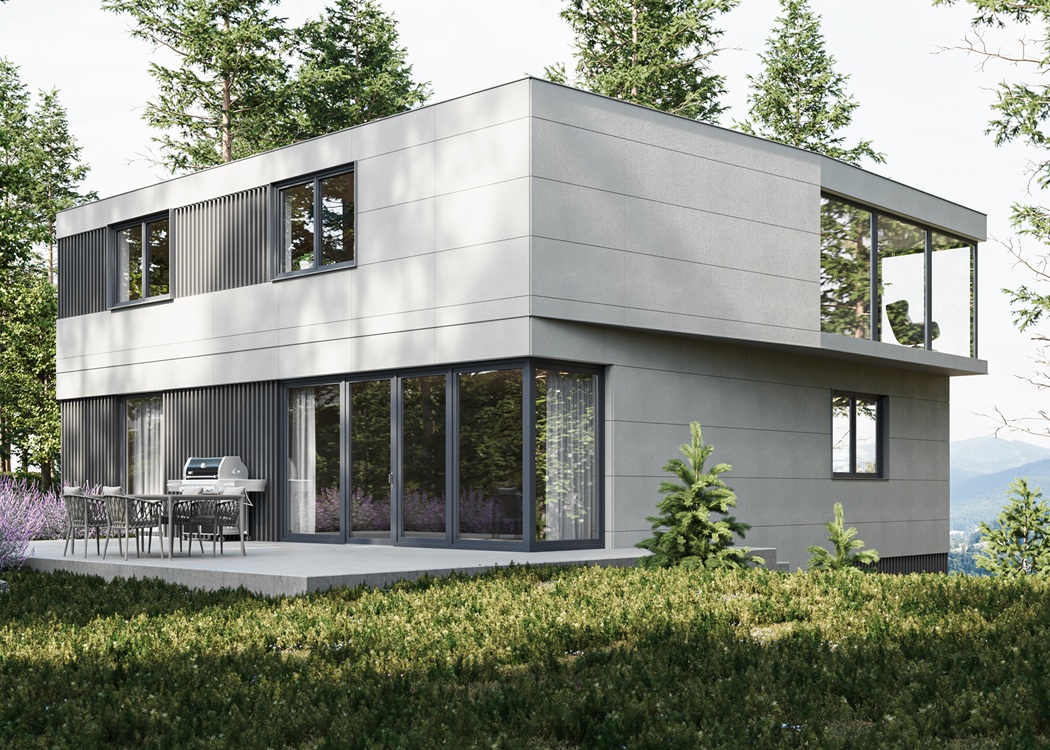
Custom Shapes as a Platform Extension, Not a Separate Product Line
Non-standard shapes are built on the same sash and frame profiles used across PAVA and PIXEL’s standard rectangular windows rather than a dedicated specialty-shapes product. This differs from how some manufacturers structure their catalog. Within PAVA and PIXEL, shape and operating mode are two independent specification decisions, not a package deal.
Every non-standard shape carries a maximum sash area of 2.25 m² (about 24.22 ft²), the same structural ceiling that applies across PAVA’s standard operable configurations, and every shape order requires a physical template: a minimum three-layer corrugated cardboard template over 3 mm thick, cut to the final window dimensions rather than the mounting hole, with the inner side and any right angle marked.
Round Windows: Radius Limits for Fixed and Operable Configurations
Round and arched windows are available only on sash 103.341 – they cannot be built on sash 103.416, a specific hardware constraint that applies regardless of which color or frame profile is selected. Within that constraint, round windows come in three distinct radius categories depending on how the window functions: fixed glazing, opening (operable) windows, and full swing wheel configurations, each with its own minimum and maximum radius.
Table 1 – Round Window Radius Limits by Configuration
| Configuration | Minimum Radius | Maximum Radius |
|---|---|---|
| Fixed glazing | 400-640 mm (frame/color-dependent) | 1,100 mm |
| Opening (operable) window | 550-600 mm (103.341, color-dependent) | 1,000 mm |
| Full swing wheel | N/A | 700 mm |
The minimum radius for fixed glazing varies by the specific frame profile and color combination – as low as 400 mm on frame 101.300 and as high as 640 mm on a colored 101.291 frame – which means the achievable minimum size for a round window depends on which frame profile is specified alongside the shape itself, not the shape alone.
Trapezoidal Windows: T4K, T5K, and T6K Configurations
PAVA’s trapezoidal windows are available in Turn and Tilt one-unit and two-bay configurations, each with distinct minimum dimensions and angle requirements. A one-unit Turn and Tilt trapezoidal sash requires a minimum height of 480 mm and a minimum lower width of 470 mm, with a maximum sash width of 1,424 mm (56.06 inches) and a minimum angle of 45 degrees.
- Trapezoidal (T4K/T5K/T6K) → Operating mode → Turn and Tilt (RU), one-unit or two-bay
- Trapezoidal (T4K/T5K/T6K) → Maximum sash width → 1,424 mm (56.06 in.)
- Trapezoidal (T4K/T5K/T6K) → Maximum sash area → 2.25 m² (24.22 ft²)
- Trapezoidal (T4K/T5K/T6K) → Hardware → RU/R/U standard; RU available in RC1, and RC2 on rectangular-sash structures
Two-bay trapezoidal configurations (R/RU or Y/Y) carry a different angle constraint depending on the target market – a maximum angle of 12 degrees for PL, FR, and DE markets versus 45 degrees for IT – a reminder that some structural parameters in OKNOPLAST’s engineering documentation are market-specific and should be confirmed for US applications rather than assumed universal.
Triangular Windows: Tilted vs. Side-Hung Operation
Triangular windows come in two distinct operable configurations: tilted (U), which vents from a horizontal hinge, and side-hung (R), which swings on a vertical hinge – both single-leaf only. Tilted triangular sashes require a minimum height of 374 mm and a minimum angle of 45 degrees, with the sash width to height ratio held at 0.6 or greater. Side-hung triangular sashes use a shallower minimum angle of 30 degrees but require the sash width to equal or exceed the height.
Table 2 – Triangular Window Configurations
| Configuration | Minimum Dimension | Minimum Angle |
|---|---|---|
| Tilted (U) | 374 mm height | 45° (secondary angle min. 30°) |
| Side-hung (R) | 374 mm height, 374-1,224 mm width | 30° (secondary angle min. 45°) |
Glazing thickness for triangular windows depends on the specific sash and glazing-bead profile selected: Concept beads accept 42-57 mm, PIXEL beads accept 38-61 mm across three sub-ranges, and Winergetic beads accept 24-53 mm – a wider spread than the standard rectangular glazing range, reflecting the additional structural consideration a triangular sash requires.
Arched Windows: Radius Constraints and Fabrication Limits
Arched windows (cataloged as Łuk_1Sk, Łuk_2Sk, and Łuk_1/4 configurations) are not possible on sash 103.416, matching the same hardware restriction as round windows. Single- and double-leaf arched windows with a fixed post accept a sash width of 424 to 1,228 mm and a height of 424 to 2,424 mm, with a maximum angle of 20 degrees under the standard structural formula.
Two fabrication limits are worth flagging specifically: arch radii greater than 1,300 mm are only possible after a technical inquiry submitted to OKNOPLAST rather than as a standard catalog option, and a semicircular arch with a radius exceeding 1,100 mm cannot be produced with welded legs – the legs must be heated instead, a manufacturing detail that can affect lead time on larger arched configurations.
Which Shapes Can Actually Tilt and Turn – and Which Can’t
OKNOPLAST’s consumer-facing marketing states that “even uniquely shaped windows can feature the Tilt and Turn function,” and trapezoidal and triangular configurations bear that out directly: both are documented with Turn and Tilt (RU) or single-mode Tilted/Side-hung operation, matching standard rectangular window functionality. Round and arched windows are more constrained – limited to sash 103.341 rather than the full range of PAVA sash profiles, and some non-standard RU configurations are documented as having no micro-ventilation function, meaning the shape trades one specific feature for its geometry even when the sash itself remains operable.
This is a more precise claim than either extreme found in the competitor set: Stanek’s position that custom shapes are categorically fixed, or an unqualified marketing claim that every shape opens. The honest answer depends on the specific shape and sash combination, which is exactly what a physical template and structural review are designed to confirm before fabrication.
PIXEL’s Fixed-Frame Custom Shapes: A Different Dimension Set
PIXEL documentation for architects separates custom shapes into two categories with distinct dimension requirements: fixed-frame configurations and Turn-or-Tilt operable configurations. A fixed-frame triangular PIXEL window requires a height greater than 250 mm, a width or secondary height of at least 400 mm (increasing to 650 mm depending on configuration), and a minimum angle of 30 degrees. A fixed-frame arched configuration requires a minimum height of 300 mm and minimum width of 400 mm, while an elliptical arch fixed frame requires a minimum width of 1,000 mm and a minimum angle of 25 degrees.
- PIXEL fixed-frame triangular → Minimum height → greater than 250 mm
- PIXEL fixed-frame arched → Minimum dimensions → 300 mm height, 400 mm width
- PIXEL Turn-or-Tilt quarter-circle → Maximum sash area → 2.25 m² (24.22 ft²), same formula as PAVA
PIXEL’s operable Turn-or-Tilt custom shapes – including quarter-circle and arched configurations – use the same 2.25 m² maximum sash area formula as PAVA’s operable shapes, with sash dimensions ranging from 374 to 1,228 mm depending on configuration. In practice, this means PIXEL’s fixed-frame and operable custom shapes are governed by different dimension tables entirely, so confirming which mode a project needs should happen before, not after, dimensions are finalized.
Ornamental Glass: A Complementary Option for Custom Shapes
Eight ornamental glass patterns are available across OKNOPLAST’s window line – cathedral, master carre, chinchila clean, master ligne, delta mat, kura brun, kura clean, and satinato – offering a privacy and light-diffusion option that layers onto a custom shape without changing its structural configuration. This is a finish-level decision similar to frame color: it affects appearance and privacy, not the dimension or angle limits documented for the shape itself.
Specifying Custom Shapes: Templates and Structural Review
Every non-standard PAVA or PIXEL window requires a physical template built from a minimum three-layer corrugated cardboard, thicker than 3 mm, cut to the final window structure dimensions rather than the rough opening. The template must mark the inner side of the structure and, where applicable, the right angle reference point; for an elliptical shape specifically, the mounting orientation must also be specified on the template.
Non-standard structure dimensions are recalculated individually for each project according to OKNOPLAST’s general woodwork design principles for maximum surface area, rather than pulled from a fixed lookup table – which means the specific dimension ranges in this guide describe the documented envelope for each shape category, not a guarantee that every combination within that envelope is buildable without a project-specific technical review.
From Marketing Name to Technical Specification: Translating “Unique Shapes” Into Catalog Terms
OKNOPLAST’s consumer-facing catalog lists nine shape names under “Unique Shapes”: circle, cathedral, circle with transom, half-circle, circle quarter arched, elliptical, arched transom, trapezoid, and triangle. Each maps to a specific technical catalog category with its own dimension table: circle and half-circle correspond to the round window category, trapezoid corresponds to the T4K/T5K/T6K trapezoidal category, triangle corresponds to the tilted or side-hung triangular category, and cathedral, circle with transom, circle quarter arched, elliptical, and arched transom all fall under the arched window category (Łuk_1Sk, Łuk_2Sk, Łuk_1/4).
This distinction matters at the specification stage: a marketing name like “cathedral” or “quarter arched” doesn’t correspond to a separate product, but it does determine which dimension table, angle calculation, and sash-103.341 restriction applies – the same restriction that governs round windows applies to every shape in the arched family, including cathedral and quarter-arched variants.

Color Options for Custom Shapes: Full Palette, Not a Reduced One
Every custom shape category in PAVA’s technical documentation – round, trapezoidal, triangular, and arched – lists the identical color availability: white, white/color, color/color, and full color, matching the standard rectangular window palette rather than a reduced shape-specific selection. Combined with the more than 50 color combinations available across the PAVA and PIXEL line generally, this means a custom-shaped accent window can match a building’s primary rectangular window color exactly, without defaulting to white because of the shape.
Multi-Panel Custom Shape Configurations: Fixed and Movable Mullions
Not every custom shape supports a multi-panel configuration. Round windows are available in single and double-sash configurations, trapezoidal windows support a double-leaf configuration with a movable RU-plus-R mullion, and arched windows are available as single- or double-leaf with a fixed post. Triangular windows are documented as single-leaf only, with no double-leaf or movable-mullion option in current PAVA technical documentation.
For a project pairing a custom shape with an adjacent operable window in one combined structure, the movable-mullion option on trapezoidal and arched configurations allows the two to function independently within a shared frame, while a single-leaf-only triangular shape would need to be specified as its own separate unit next to any operable companion window rather than joined through a movable mullion.
Security Hardware Across Shapes: Where RC1 and RC2 Apply
RC1 and RC2 security hardware classifications are not available uniformly across every custom shape. Trapezoidal windows document RU hardware in RC1, with RC2 specifically limited to structures with rectangular sashes. Arched windows document RU hardware in RC1 only, with no RC2 option listed in current PAVA technical documentation. Round windows are documented with R and U standard hardware only, without an RC1 or RC2 designation in the round-window-specific specification.
An architect specifying a custom shape for an opening where forced-entry resistance matters – a ground-floor accent window, for instance – should treat RC-class hardware availability as shape-dependent rather than assuming the same security upgrade path available on PAVA’s standard rectangular tilt and turn windows applies equally to every custom configuration.

Glazing Thickness Across All Custom Shapes
Standard glazing thickness for round, trapezoidal, and arched windows falls in a 24 to 52 mm range, using the same standard glazing unit (4TF/18cAr/3/16cAr/TF3 or 4TF/16c/4/16c/4TF depending on shape) referenced across PAVA’s non-standard window documentation. Triangular windows are the exception, with a glazing range that depends on which glazing-bead profile is selected: 42 to 57 mm on Concept beads, three sub-ranges spanning 38 to 61 mm on PIXEL beads, and 24 to 53 mm on Winergetic beads.
The practical takeaway is that a project mixing multiple custom shapes on one elevation – a triangular gable window alongside an arched transom, for example – should confirm glazing thickness compatibility per shape individually rather than assuming one glazing package fits every non-standard window on the building.
Lead Time and the Technical Inquiry Process for Large or Complex Shapes
OKNOPLAST’s standard 8-to-10-week lead time applies to made-to-measure orders generally, but custom shapes carry an additional variable that standard rectangular windows don’t: several configurations documented in this guide explicitly require a technical inquiry before they can be confirmed as buildable, including arch radii greater than 1,300 mm and any construction involving bent extensions or crossbars in trapezoidal configurations. That inquiry step sits before order placement, not within the standard production window, and should be budgeted into a project schedule separately from the 8-to-10-week baseline.
Semicircular arches with a radius over 1,100 mm add a related consideration: since the legs must be heated rather than welded, that fabrication method is a production detail worth confirming directly with OKNOPLAST if a project’s schedule has little flexibility around a large arched configuration specifically.
FAQ
Some can. Trapezoidal and triangular shapes are documented with Turn and Tilt or single-mode operation. Round and arched windows are more constrained and available only on sash 103.341, with some configurations lacking micro-ventilation.
2.25 square meters (about 24.22 square feet) of sash area, the same structural ceiling that applies across PAVA’s standard operable rectangular configurations.
Up to 1,100 mm for fixed glazing, 1,000 mm for an operable opening window, and 700 mm for a full swing wheel configuration.
No. Round and arched windows are available only on sash 103.341 and cannot be built on sash 103.416, regardless of color or frame profile.
It depends on operating mode: a tilted (U) triangular sash needs a minimum angle of 45 degrees, while a side-hung (R) triangular sash needs a minimum of 30 degrees.
Arch radii greater than 1,300 mm require a technical inquiry to OKNOPLAST rather than being a standard catalog option, and semicircular arcs with a radius over 1,100 mm require heated rather than welded legs.
Yes, with a separate dimension table for fixed-frame configurations versus Turn-or-Tilt operable configurations. PIXEL’s operable custom shapes use the same 2.25 m² maximum sash area formula as PAVA’s.
A physical template made from three-layer corrugated cardboard over 3 mm thick, cut to the final window dimensions, with the inner side and any right angle marked. Elliptical shapes also require the mounting orientation to be specified.
Yes. Eight ornamental glass patterns are available, layering a privacy and light-diffusion finish onto the shape without changing its structural dimension or angle limits.
OKNOPLAST does not publish a specific price or lead-time premium for custom shapes; project-specific dimensions are recalculated individually per OKNOPLAST’s design principles, so timeline and cost should be confirmed directly for the specific configuration.
These are consumer-facing marketing names for shapes that fall under PAVA’s arched window category (Łuk_1Sk, Łuk_2Sk, Łuk_1/4), which means the sash-103.341 restriction and arched-window dimension limits apply to them the same as any other arched configuration.
No. Round, trapezoidal, triangular, and arched windows all list the same color options as standard rectangular windows: white, white/color, color/color, and full color.
No. Current PAVA technical documentation lists triangular windows as single-leaf only, unlike trapezoidal and arched shapes, which support double-leaf or movable-mullion configurations.
It depends on the shape. Trapezoidal windows support RC2 only on rectangular-sash structures. Arched windows document RC1 only, with no RC2 listed. Round windows list standard hardware without an RC1 or RC2 designation.
It depends on the glazing-bead profile: 42-57 mm on Concept beads, 38-61 mm across three sub-ranges on PIXEL beads, or 24-53 mm on Winergetic beads – a wider range than the 24-52 mm standard used for round, trapezoidal, and arched shapes.





Let’s talk about your project!
Request a quote, discuss specifications, or get help choosing the right system
Send a request
"*" indicates required fields