


Double Glazed Windows Cost in 2026: Prices, Performance, and ROI

Key Takeaways:
- Double glazed windows cost $300-$1,200 per window fully installed in 2026, with total home projects ranging $3,000-$10,000+. Frame material is the largest single price variable: vinyl runs $450-$1,600, wood $800-$2,500+.
- Double glazing with standard double-pane glass typically achieves U-Factor 0.25-0.35. Triple glazing (three glass panes) achieves U-Factor 0.14-0.26 – meeting ENERGY STAR Most Efficient thresholds that qualify for the §25C tax credit ($600/unit, $1,200 annual cap). Most standard double-pane configurations do not meet Most Efficient criteria.
- The upgrade from double to triple glazing carries a 15-25% cost premium. In Climate Zones 5-8, the payback period through energy savings is 8-15 years. In Zones 1-3, payback extends to 15-25 years, making double glazing the more cost-effective choice for warm climates.
- Argon gas fill is included as standard in all OKNOPLAST glazing assemblies – not a separate cost item. Low-E coating is the primary glass upgrade to evaluate: it reduces U-Factor by 20-30% and is required for ENERGY STAR certification in all four U.S. climate zones.
Double glazed window replacement is one of the highest-volume home improvement decisions in the U.S. – and one of the most price-variable. Published cost ranges span $300 to $2,500+ per unit depending on frame material, glass specification, and installation method. The sections below cover pricing by material, region, and style; double vs. triple performance with U-Factor data; glass upgrades; and ROI by climate zone.
How much do double glazed windows cost in 2026 – installed price by frame and style?
Double glazed windows cost $300-$1,200 per window fully installed as a typical range in the U.S. residential market in 2026, with the full project cost for an average home (10-15 windows) running $3,000-$10,000+. Frame material is the single largest cost variable, accounting for 40-60% of the unit price difference across options.
Cost by frame material
| Frame material | Cost per window (installed) | U-Factor (frame) | Best for | Maintenance |
| Vinyl / uPVC | $450-$1,600 | 0.25-0.35 | Cost-sensitive; all climate zones | Very low |
| Aluminum (thermally broken) | $440-$1,200 | 0.35-0.55 | Modern design; large formats | Low |
| Fiberglass | $588-$2,200 | 0.25-0.35 | All climates; high-performance residential | Very low |
| Wood or wood-clad | $800-$2,500+ | 0.20-0.35 | Traditional/luxury; historic | Moderate |
Vinyl (uPVC) remains the most widely specified frame material in U.S. residential replacement projects, accounting for approximately 70% of replacement window volume per AAMA industry data. It combines low thermal conductivity with no painting requirement and a competitive price point. Fiberglass frames offer comparable thermal performance to vinyl but at 30-50% higher cost, with the advantage of lower expansion/contraction cycling – a relevant factor in Climate Zones 6-8 where temperature swings exceed 100°F seasonal differential.
Cost by window style
| Window style | Installed cost range | Complexity | Notes |
| Double-hung | $300-$1,100 | Low | Most common replacement type; straightforward pocket install |
| Casement | $300-$2,000 | Low-Medium | Side-hinged outswing; better air seal than double-hung |
| Sliding | $300-$2,200 | Low | Standard RO; sash replacement is simpler than full-frame |
| Picture / Fixed | $65-$1,000 | Low | No hardware; lowest install labor |
| Bay or Bow | $700-$7,000+ | High | Structural support required; higher labor and framing cost |
| Tilt and Turn | $800-$1,400 | Medium | Multi-point hardware; two-person install for units >30” wide |
Installation labor accounts for 30-50% of total project cost in most U.S. markets. Full-frame replacement – removing the existing window, frame, and exterior trim – adds $150-$400 per window in labor compared to pocket (retrofit) installation, which inserts a new unit into an existing frame. The decision between the two methods has both cost and thermal performance implications, covered in the installation section below.
Replacing multiple windows in a single project typically reduces per-unit cost by 10-20% through labor efficiency. A 10-window project that would cost $900 per unit individually might run $750-$800 per unit when contracted together. Most installers apply bulk pricing at the 5-unit threshold.
How do double and triple glazed windows compare on U-Factor, SHGC, and energy performance?
Double-pane glazing achieves whole-unit U-Factor of 0.25-0.35 in standard configurations; triple-pane glazing achieves 0.14-0.26 – a 25-60% improvement in thermal transmittance depending on the specific assembly. This difference determines ENERGY STAR zone qualification, §25C tax credit eligibility, and long-term heating and cooling cost impact.
| Factor | Double glazing | Triple glazing | Decision driver | OKNOPLAST system |
| U-Factor (typical) | 0.25-0.35 | 0.14-0.26 | Climate Zone 5-8: triple required for PHIUS | PAVA Light / PAVA |
| ENERGY STAR zone | Northern-Southern | All 4 zones (Most Efficient) | Most Efficient = §25C eligibility | PAVA triple ≤0.20 |
| SHGC | 0.25-0.40 | 0.15-0.35 | Zones 1-3: lower SHGC preferred | Specify per orientation |
| STC (acoustic) | 28-32 dB | 38-45 dB (STC 45 PAVA) | Highway / urban noise: triple | PAVA STC 45 |
| Cost premium vs double | Baseline | +15-25% | Use payback calc by zone | PAVA: 8-10 wk lead |
| Payback period (energy) | N/A (baseline) | 8-25 yrs (Zone-dependent) | Zone 5-8: 8-15 yrs | Triple standard in PAVA |
| §25C Most Efficient | Rarely (needs U ≤0.20) | Yes if U ≤0.20 NFRC | $600/unit credit | PAVA qualifies |
For Climate Zones 5-8 (upper Midwest, Northeast, Mountain states, and Alaska), the practical consequence of the U-Factor difference is significant. A double-pane window at U-Factor 0.28 meets ENERGY STAR Northern zone requirements (U ≤0.27) only marginally, and does not meet Most Efficient threshold (U ≤0.20). A PAVA triple-pane at U-Factor 0.20 meets Most Efficient and qualifies for the §25C credit, offsetting $600 of the per-unit cost.
For Climate Zones 1-3 (Southern U.S., Gulf Coast, Southwest), the dominant concern shifts from U-Factor to SHGC. In these cooling-dominated climates, a lower SHGC (0.20-0.25) reduces solar heat gain regardless of glazing layer count. A double-pane window with low-e coating and SHGC 0.22 often performs as well as a triple-pane in annual energy cost in Zone 2 – making the 15-25% triple glazing premium harder to justify on pure energy grounds in warm climates.
Acoustic performance is a separate consideration. The PAVA system achieves STC 45 (OITC 38) with triple glazing – relevant for urban, highway-adjacent, or airport-proximate locations. Standard double-pane assemblies typically achieve STC 28-32. The acoustic improvement is driven by the additional mass and cavity rather than the thermal properties, so it holds regardless of climate zone.
Which glass upgrades are worth the cost – Low-E coating and argon gas fill?
Three glass upgrades appear on most double glazed window quotes: Low-E coating ($100-$300 per window), argon gas fill ($50-$150 per window),
Low-E coating
Low-E (low-emissivity) coating adds $100-$300 per window and is a microscopically thin metallic oxide layer applied to one glass surface. It reflects long-wave infrared radiation – in cold climates, reflecting heat back into the room; in hot climates, blocking solar heat from entering. Low-E coating is the highest-ROI upgrade available for double glazed windows: it reduces U-Factor by approximately 20-30% and is required for ENERGY STAR certification in all four U.S. climate zones. At $100-$300 per window, Specify Low-E before any other glass upgrade – it delivers the largest per-dollar thermal improvement. In OKNOPLAST windows, argon fill is already included as standard.
Argon gas fill
Argon gas fill replaces the air between glass panes with a denser inert gas, reducing convective heat transfer across the cavity. Argon (thermal conductivity 0.0177 W/m·K vs air at 0.0260 W/m·K) reduces whole-unit U-Factor by approximately 10-15% compared to an equivalent air-filled cavity. It is included as standard in OKNOPLAST double and triple glazing configurations.
Argon fill performance is consistent across standard residential glazing assemblies.
Tempered and laminated glass
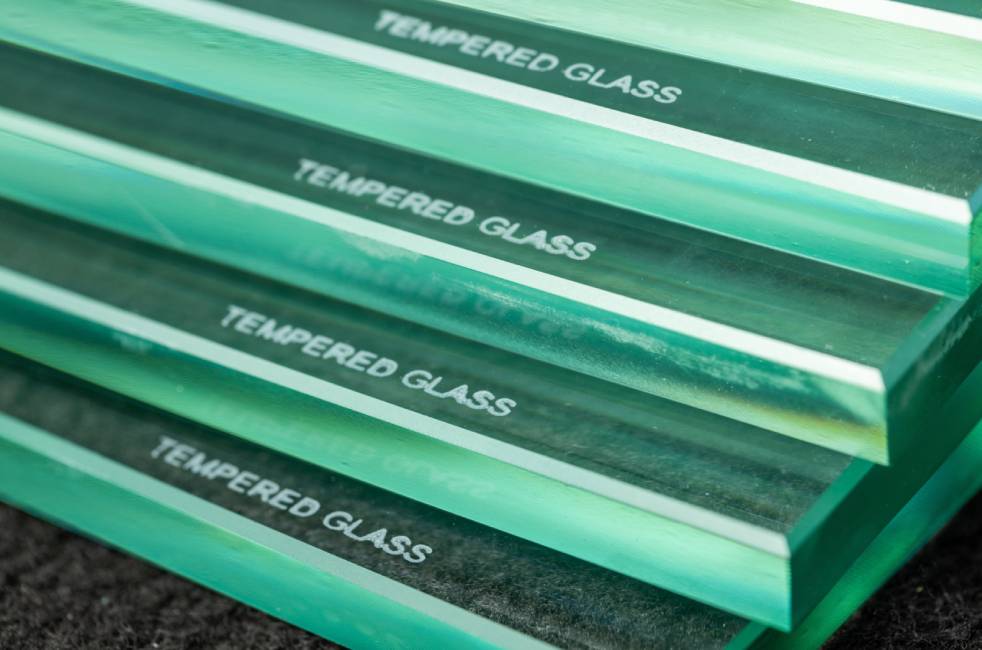
Tempered glass adds $100-$300 per window and is required by IRC Section R308 for glazing within 18 inches of a floor, adjacent to doors, in bathrooms, and in several other locations. It is a code requirement in these locations, not an optional upgrade. Laminated glass (a PVB or EVA interlayer between glass layers) costs $150-$400 per unit and provides impact resistance (required in HVHZ: Miami-Dade and Broward counties), sound attenuation beyond what air cavities provide, and UV blocking. For non-impact-zone applications, laminated glass adds approximately 4-6 STC points over standard tempered.
How do US regional labor rates affect double glazed window installation costs in 2026?
Installation labor for double glazed windows ranges from $150-$400 per window in most U.S. markets, but varies by 30-40% between low-cost and high-cost regions. The table maps average installed cost ranges by region and IECC climate zone.
| US Region | Avg. installed cost / window | Labor rate index | Climate Zone(s) | Notes |
| Northeast (NY, NJ, MA, CT) | $650-$1,400 | High (+20-30%) | 5-6 | High labor; triple glazing common |
| Mid-Atlantic (PA, MD, VA, DC) | $550-$1,200 | Above avg (+10-20%) | 4-5 | Mixed humidity; full-frame often required |
| Southeast (FL, GA, NC, SC) | $400-$950 | Below avg (−10%) | 1-3 | HVHZ surcharge in S. Florida |
| Midwest (IL, MN, OH, MI) | $500-$1,100 | Average | 5-7 | Extreme cold drives triple demand |
| South-Central (TX, LA, OK) | $380-$850 | Below avg (−10-15%) | 2-3 | Low labor; cooling load drives SHGC spec |
| Mountain/West (CO, MT, UT) | $550-$1,250 | Variable | 5-7 | Altitude +UV; PVDF/UV coating relevant |
| Pacific Coast (CA, OR, WA) | $600-$1,350 | High (+15-25%) | 3-5 | CA Title 24 requirements; stringent SHGC |
The Northeast and Pacific Coast carry the highest labor premiums, driven by union wage agreements, permit requirements, and higher cost of living. A replacement project in Boston or San Francisco that costs $1,100-$1,300 per window would cost $650-$850 for equivalent windows and labor in Atlanta or Dallas. The glazing specification – which U-Factor and SHGC to target – is driven by climate zone, not region, but the labor cost differential is real and should be factored into ROI calculations.
California Title 24 imposes stricter fenestration requirements than the base IECC – including prescriptive SHGC limits and mandatory NFRC certification for all replacement windows. In HVHZ (South Florida), Miami-Dade Product Approval and impact testing add $200-$600 per window in compliance and testing costs on top of the base installed price.
Do double glazed windows qualify for the §25C tax credit and ENERGY STAR certification?
Double glazed windows qualify for the §25C Energy Efficient Home Improvement Credit (IRS, tax year 2026) when NFRC-certified and meeting ENERGY STAR Most Efficient criteria – but most standard double-pane configurations do not meet Most Efficient thresholds. The credit provides up to $600 per exterior window unit, with a $1,200 annual household cap. The key criterion is U-Factor, not glazing layer count.
| ENERGY STAR zone | Max U-Factor | Max SHGC | Most Efficient threshold | §25C credit |
| Northern (Zones 5-8) | ≤0.27 | ≤0.40 | U ≤0.20, SHGC ≤0.40 | $600/unit |
| North-Central (Zone 4) | ≤0.28 | ≤0.40 | U ≤0.22, SHGC ≤0.40 | $600/unit |
| South-Central (Zone 3) | ≤0.30 | ≤0.25 | U ≤0.22, SHGC ≤0.22 | $600/unit |
| Southern (Zones 1-2) | ≤0.32 | ≤0.25 | U ≤0.24, SHGC ≤0.22 | $600/unit |
Standard double-pane windows with argon fill and Low-E coating typically achieve U-Factor 0.25-0.30 – meeting basic ENERGY STAR qualification but not Most Efficient in the Northern zone (which requires U ≤0.20). Triple-pane configurations with warm-edge spacers and improved frames are more likely to reach Most Efficient thresholds. The PAVA Light system (double-pane, U-Factor from 0.25) sits at the borderline and requires verification of the specific configuration’s NFRC label before claiming the credit.
The credit applies to product cost only – not installation labor, not shipping. It is claimed in the tax year the installation is completed. For a homeowner replacing 10 windows with qualifying double-pane units at $700 per unit product cost, the available credit is up to $600 per unit – applied to 10 units, that is $6,000 in potential credits, subject to the $1,200 annual cap. Spreading the project across two tax years captures $2,400 in credits rather than $1,200. Confirm the specific product’s NFRC certification number before filing.
What ROI and payback period should homeowners expect from double glazed window replacement in 2026?
Window replacement in 2026 returns approximately 60-70% of project cost in increased resale value, per Remodeling Magazine’s Cost vs. Value Report. A $10,000 window replacement project adds roughly $6,000-$7,000 to assessed home value at resale. The energy savings ROI is separate and depends on what is being replaced.
Replacing single-pane with double-pane
The DOE Building Technologies Office estimates annual energy savings of $125-$465 per year when replacing single-pane windows with ENERGY STAR-certified double-pane in a typical U.S. home. The range reflects climate: $125/year in warm Climate Zones 1-2 (minimal heating load), $465/year in cold Climate Zones 6-8 (high heating load). At a project cost of $700-$1,000 per window and 10 windows, payback period from energy savings alone is typically 15-40 years depending on climate – which is why resale value and comfort, not energy payback, are the primary economic justification for most single-pane-to-double replacements.
Upgrading double-pane to triple-pane
When replacing an existing double-pane window (U-Factor 0.28) with triple-pane (U-Factor 0.20), the marginal energy savings are smaller. DOE data suggests $27-$111 per year per window in annual savings from the double-to-triple upgrade, depending on climate zone. At a 15-25% premium for triple over double (approximately $150-$400 per window), the payback period from energy savings is:
- Climate Zone 5-8 (cold): $80-$111/year savings, $150-$400 premium → payback 2-5 years per window in heating-dominated applications
- Climate Zone 4 (mixed): $50-$80/year savings → payback 3-8 years
- Climate Zone 1-3 (warm): $27-45/year savings → payback 5-15 years
The §25C credit changes this calculus for qualifying triple-pane configurations: $600 per window reduces the effective premium to near zero in many cases, making the triple upgrade financially neutral or positive at purchase. For a project where triple glazing qualifies for Most Efficient and double glazing does not, the credit effectively closes the cost gap – which is why the glazing layer decision should always be evaluated together with §25C qualification, not separately.
OKNOPLAST systems in context
The PAVA Light system (uPVC, double-pane, U-Factor from 0.25) is positioned for Climate Zones 1-5 and wood-frame construction with tighter load limits. OKNOPLAST systems are NFRC-certified; air leakage testing per ASTM E283 confirms infiltration below 0.10 CFM/ft² at 25 Pa regardless of double or triple glazing configuration. The PAVA system (triple-pane, U-Factor 0.14-0.26) is the specification for Climate Zones 5-8, Passive House projects, and any project where §25C Most Efficient certification is required. Both systems carry OKNOPLAST’s 10-year product guarantee and 8-10 week lead time to U.S. delivery from Poland. For architects and builders specifying at the $800-$1,400 per-unit range for high-performance uPVC tilt and turn windows, the PAVA line covers both glazing specifications within a single product family.
FAQ
Double glazed windows cost $300-$1,200 per window fully installed as the typical U.S. range in 2026. Frame material is the largest variable: vinyl/uPVC runs $450-$1,600, aluminum $440-$1,200, fiberglass $588-$2,200, wood $800-$2,500+. Total home project costs (10-15 windows) typically run $3,000-$10,000+. Regional labor premiums add 10-30% in the Northeast and Pacific Coast markets compared to the Southeast and South-Central.
It depends on climate zone. In Climate Zones 5-8 (Midwest, Northeast, Mountain West), triple glazing with U-Factor 0.14-0.22 reduces heating energy use by $80-$111 per window per year compared to double glazing, with a payback period of 2-8 years. In Climate Zones 1-3 (Southeast, Gulf Coast, Southwest), the energy savings differential is smaller ($27-$45/year per window) and the 15-25% cost premium is harder to justify on energy grounds alone. Low-SHGC double glazing often performs comparably to triple in cooling-dominated climates.
Double glazed windows qualify for the §25C Energy Efficient Home Improvement Credit only if they are NFRC-certified and meet ENERGY STAR Most Efficient criteria – which requires U-Factor ≤0.20 in the Northern zone. Most standard double-pane configurations reach U-Factor 0.25-0.30, which meets basic ENERGY STAR but not Most Efficient. Triple-pane assemblies more commonly reach the ≤0.20 threshold. The credit provides up to $600 per exterior window unit ($1,200 annual household cap). Confirm the specific NFRC label before claiming.
Argon gas fill reduces whole-unit U-Factor by approximately 10-15% by replacing air (thermal conductivity 0.0260 W/m·K) with a denser inert gas (argon: 0.0177 W/m·K). In OKNOPLAST windows, argon is included as standard in all glazing assemblies – not a separately priced upgrade. When comparing quotes from other manufacturers, verify whether argon is included or listed as an add-on, as this affects both U-Factor and headline price.
Window replacement returns approximately 60-70% of project cost in resale value, per Remodeling Magazine Cost vs. Value data. Energy savings when replacing single-pane with double-pane run $125-$465 per year for a typical 10-window home, depending on climate. The double-to-triple upgrade saves an additional $27-$111 per year per window. The §25C credit ($600/unit for qualifying products) can close most of the triple glazing cost premium, improving net ROI significantly for projects in colder climate zones.
Retrofit (pocket) installation drops a new window unit into an existing frame, costing $150-$400 less per window in labor. Full-frame replacement removes the entire window assembly including frame and exterior trim, adding $150-$400 in labor but eliminating thermal bridging at the frame perimeter. For high-performance windows targeting U-Factor below 0.25, full-frame replacement is recommended – the existing frame may harbor thermal bridges that raise the effective U-Factor of the installation above the NFRC-labeled value. ASTM E2112 governs installation standards for both methods in the U.S.
OKNOPLAST offers double-pane configurations in the PAVA Light system (uPVC, U-Factor from 0.25, suited for Climate Zones 1-5 and wood-frame construction) and in PIXEL (uPVC slim sash, U-Factor 0.16-0.29 depending on glazing package). Both are tilt and turn operation – providing multi-point locking with air infiltration below 0.10 CFM/ft² at 25 Pa (ASTM E283) regardless of double or triple glazing. The PAVA triple-pane system achieves U-Factor as low as 0.14. Lead time to U.S. delivery is 8-10 weeks from order confirmation. All systems carry a 10-year product guarantee.
Low-E coating adds $100-$300 per window and is the highest-ROI glass upgrade available. It reduces U-Factor by approximately 20-30% and is required for ENERGY STAR certification in all four U.S. climate zones. It is the first upgrade to specify before argon fill, tempered glass, or any other option. Most windows sold as ‘ENERGY STAR certified’ already include Low-E as a standard feature rather than an add-on.
The average U.S. home has 12-15 windows, with larger homes reaching 20+. A standard 3-bedroom, 2-bathroom house typically requires 10-12 replacement windows in a full project. At $300-$1,200 per window installed, the total project budget for an average home runs $3,600-$18,000 depending on frame material, glass specification, and installation method. Replacing in a single project reduces per-unit cost by 10-20% through labor efficiency.


Let’s talk about your project!
Request a quote, discuss specifications, or get help choosing the right system
Send a request
"*" indicates required fields