


Aluminum Front Doors Tenvis
OKNOPLAST’s Aluminum Front Doors are designed to meet the highest standards of durability, security, and thermal efficiency. With a variety of design lines and customization options, these doors provide versatile solutions for both residential and commercial projects.
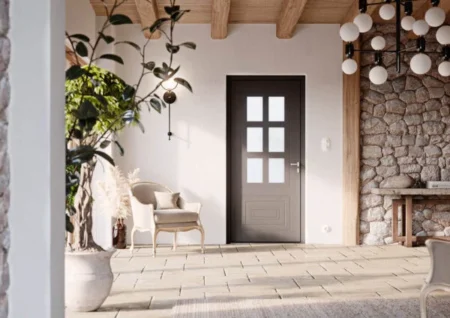
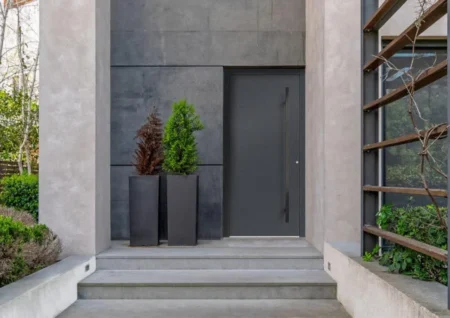
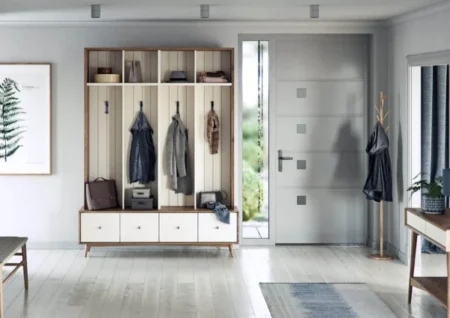
 Robust Construction
Door thickness of 90 mm with panels made from two 3 mm aluminum sheets filled with high-insulation material.
 Thermal Efficiency
Ud-values as low as 0.69 W/m²K, ensuring excellent thermal insulation.
 Security
Certified to RC2 and RC3 resistance classes, featuring a three-point self-locking mechanism (Secury Automatic 2) and a full-height strike plate.
 Customization
Available in over 50 RAL colors, with options for decorative glass, stainless steel elements, and various handle designs.
Technical Highlights
-
Door Thickness: 90 mm
-
Panel Composition: Two 3 mm aluminum sheets with high-insulation material
-
Standard Size: 1,200 x 2,250 mm
-
Thermal Performance: Ud-value as low as 0.69 W/m²K
-
Security Features: RC2 and RC3 resistance classes, three-point self-locking mechanism, full-height strike plate
-
Customization Options: Over 50 RAL colors, decorative glass, stainless steel elements, various handle designs
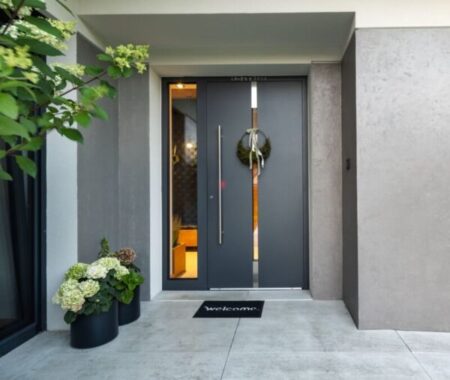
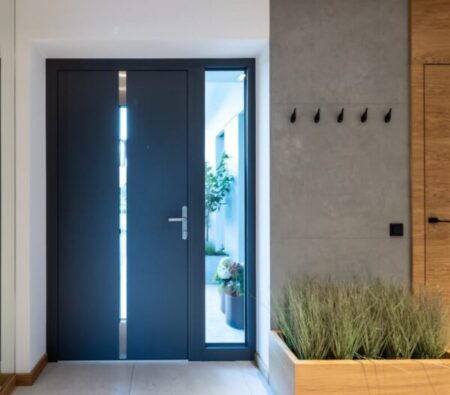

Sidelight options
For projects that demand more than just a standard door, OKNOPLAST Aluminum Front Doors can be equipped with integrated sidelights—fixed side panels that elevate both functionality and curb appeal.
Whether you’re working on a residential build or commercial entryway, sidelights offer a refined way to bring in more natural light, emphasize the door’s geometry, and visually enlarge the entrance area.
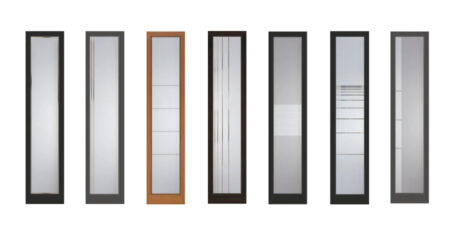
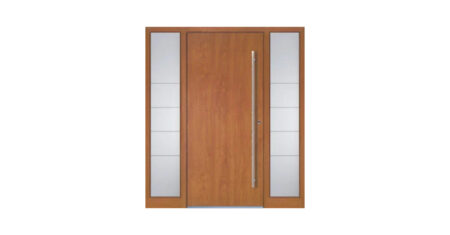
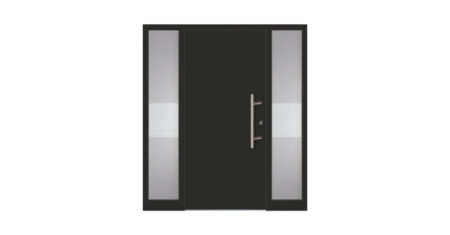

Avalaible panels

Panel
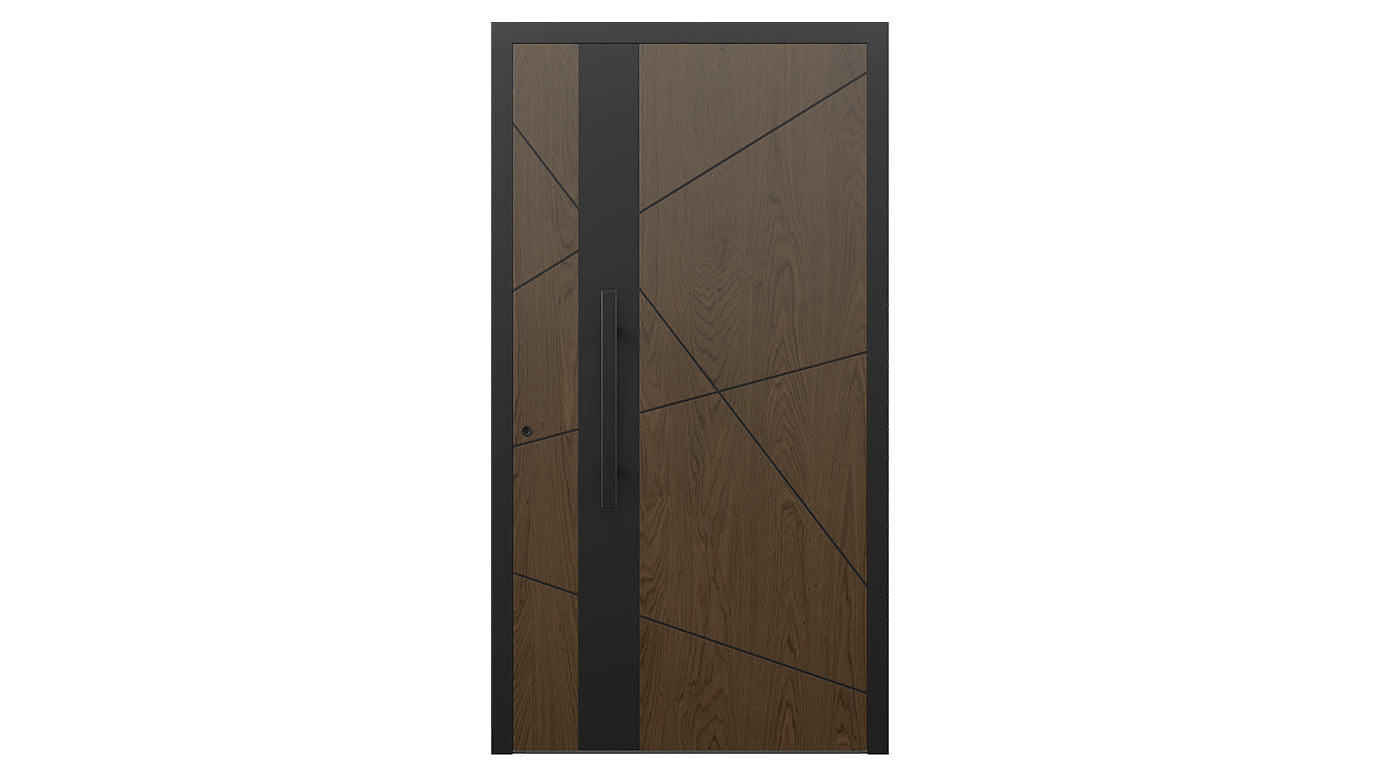 Nero 12
Color: Woodec Toffee
Nero 12
Color: Woodec Toffee
Panel
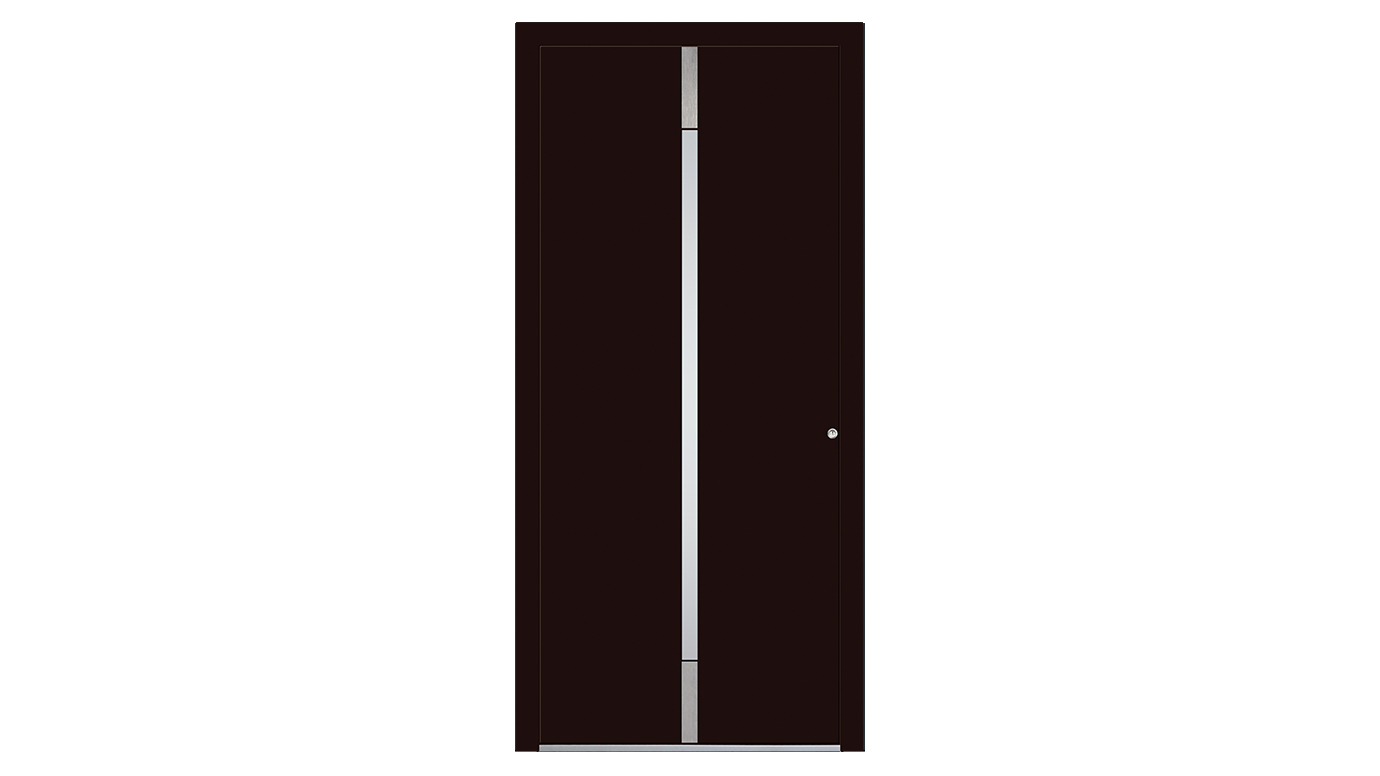 Adora
Color: RAL 8017
Adora
Color: RAL 8017
Panel
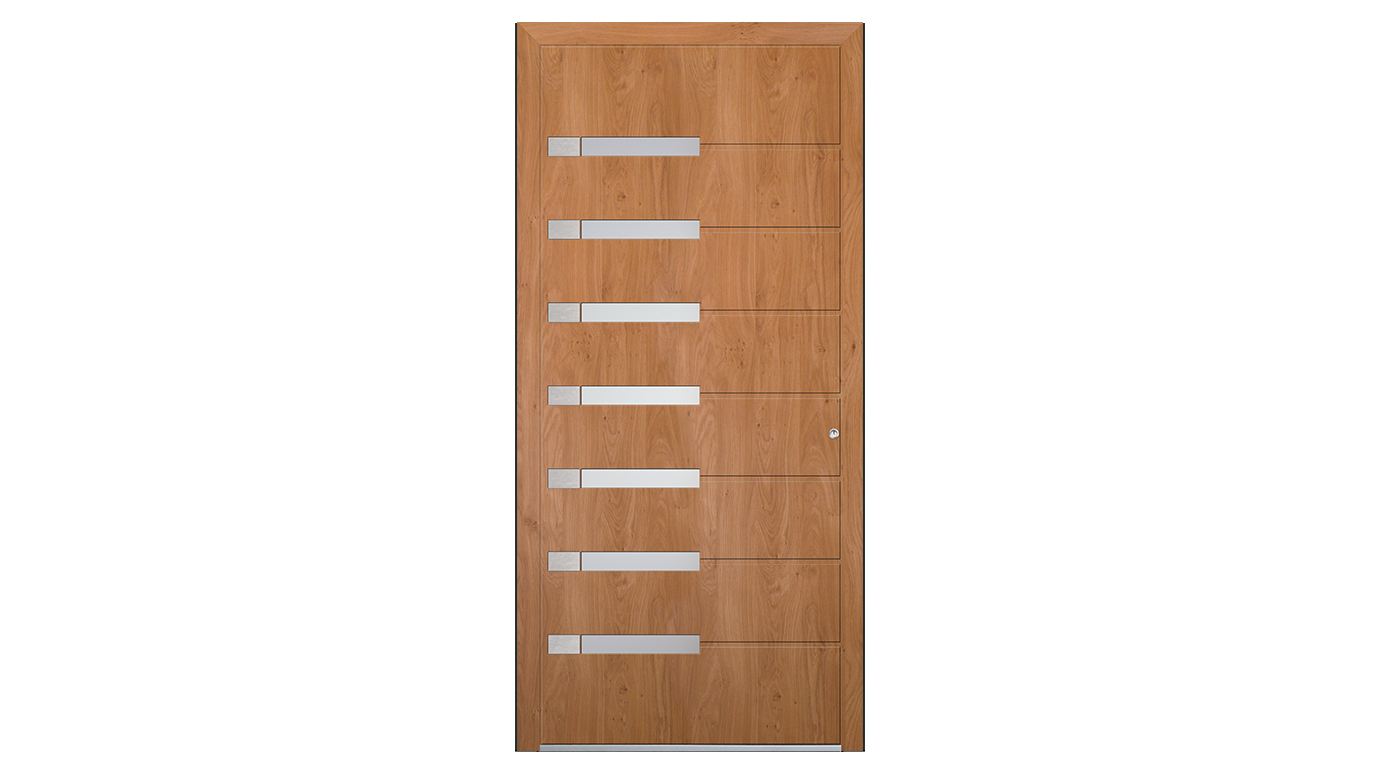 Tiberius
Color: Decoral Winchester
Tiberius
Color: Decoral Winchester
Panel
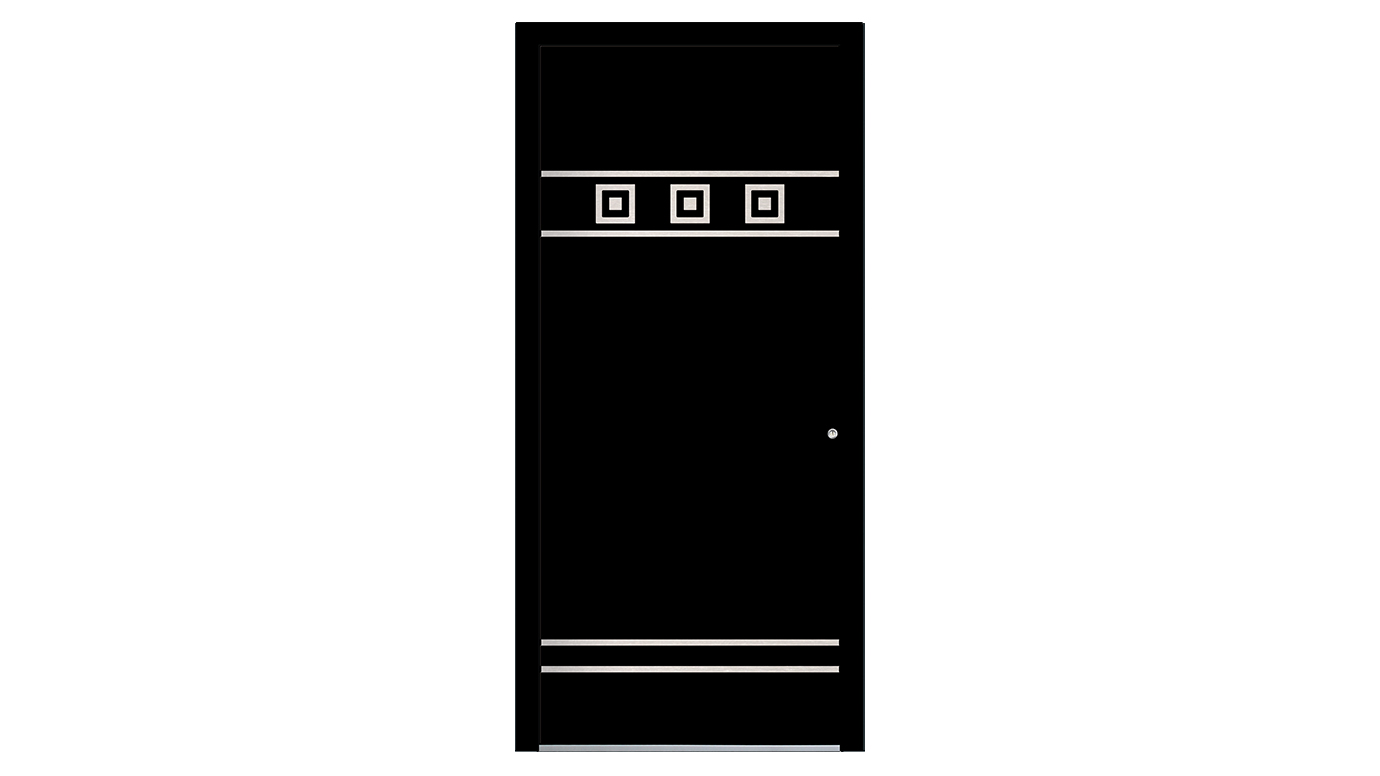 Hubertus
Color: RAL 9005
Hubertus
Color: RAL 9005
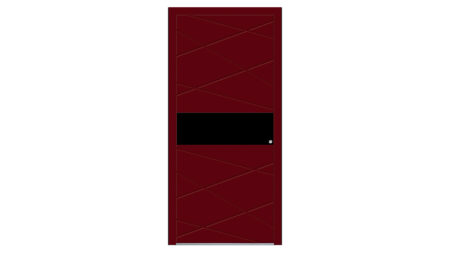
Panel
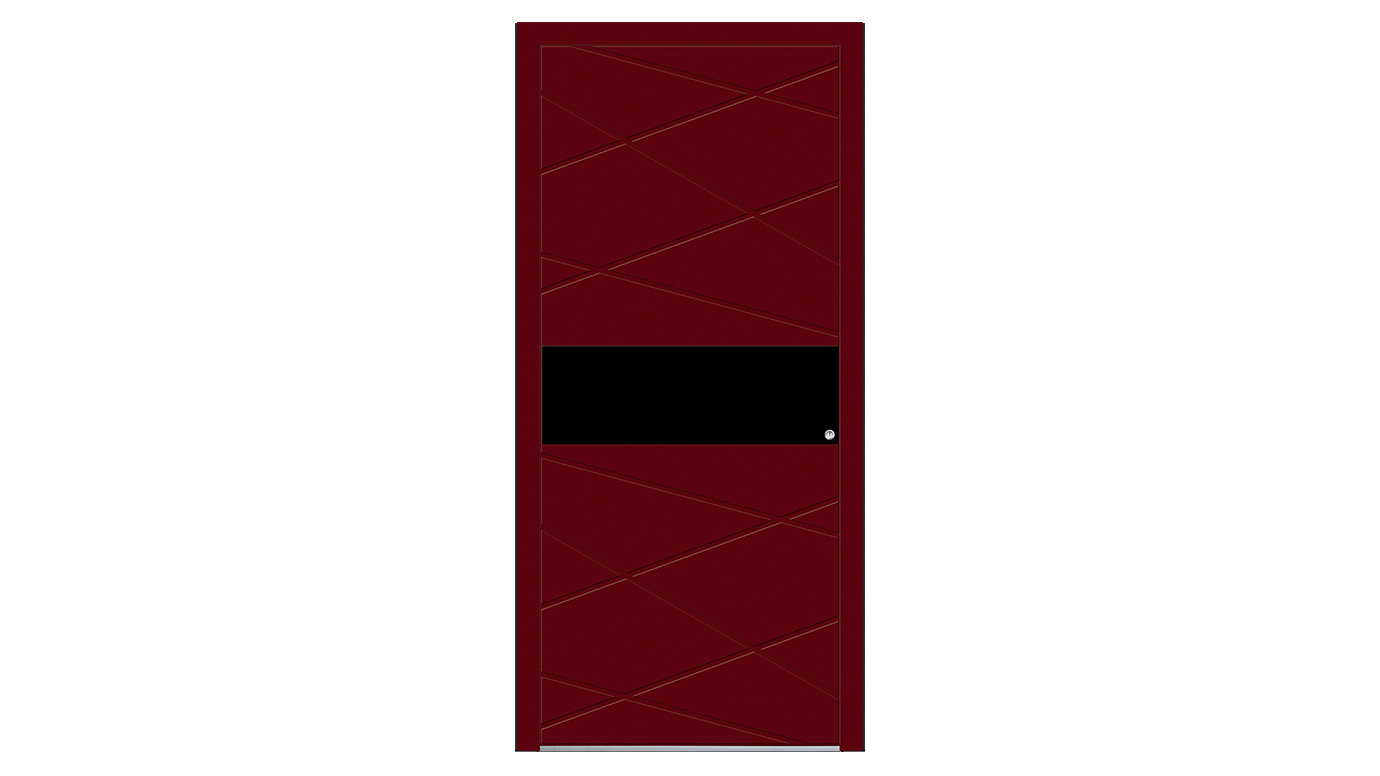 Talus
Color: RAL 3004/9005
Talus
Color: RAL 3004/9005

Panel
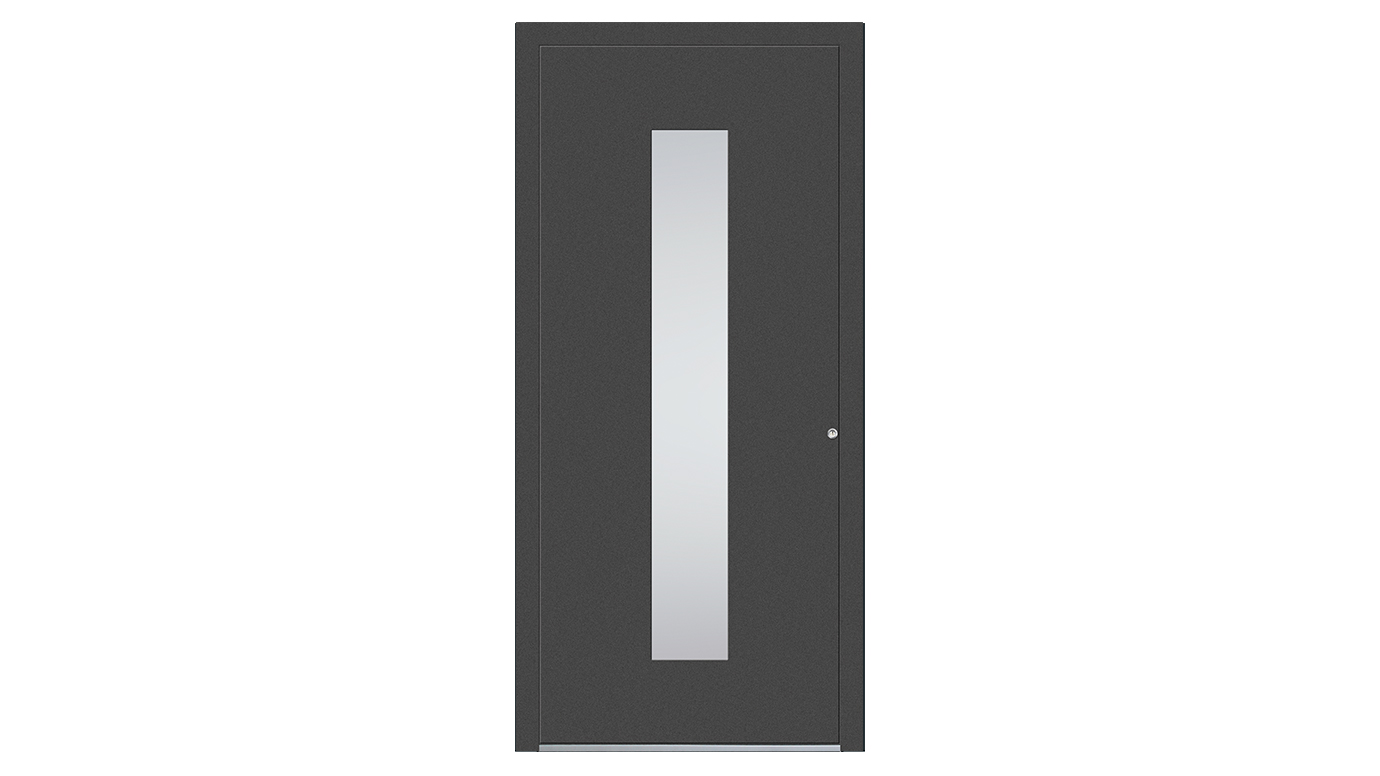 Raisa
Color: Grau Grunge
Raisa
Color: Grau Grunge
Avalaible handles
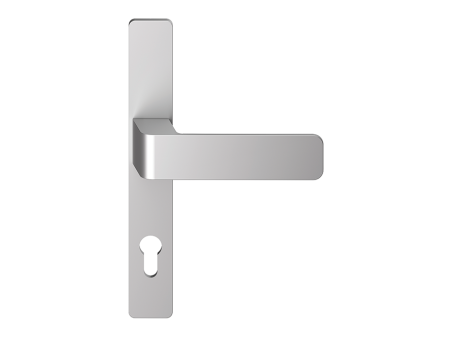
Handle
 H6S36-S5S34 Silver

Handle
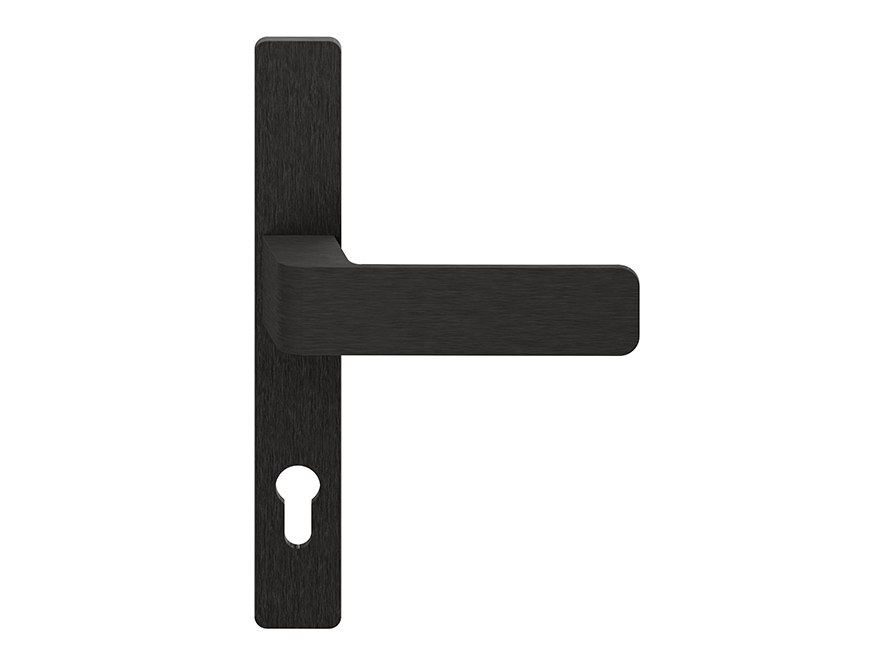 H6S36-S5S34 Black
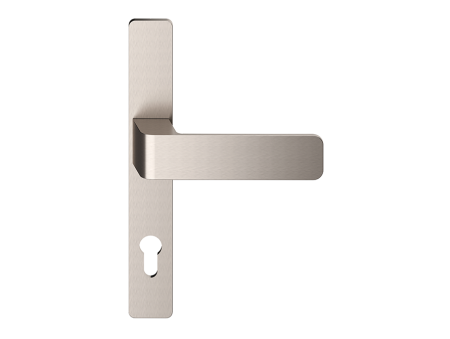
Handle
 H6S36-S5S34 Inox

Handle
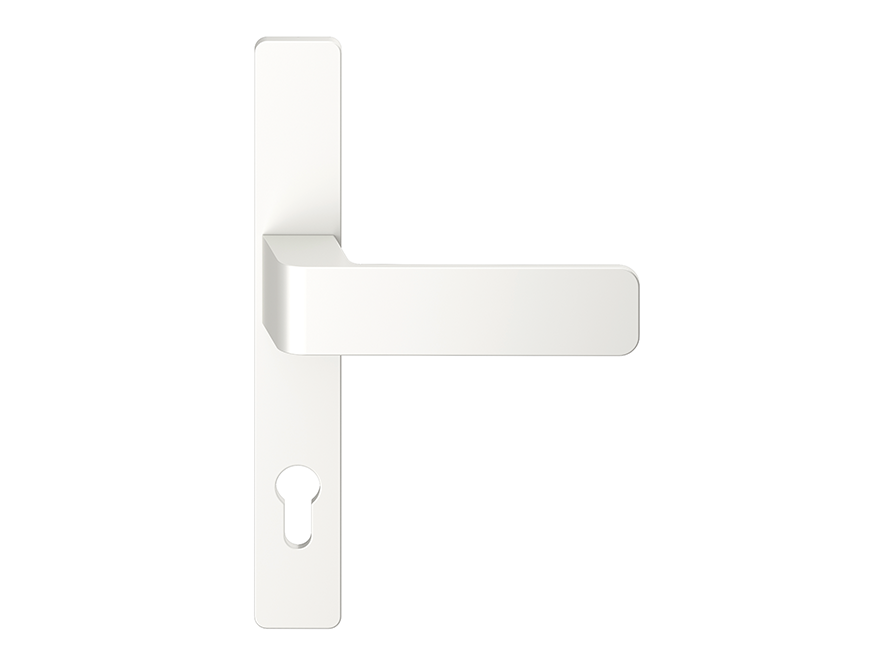 H6S36-S5S34 White
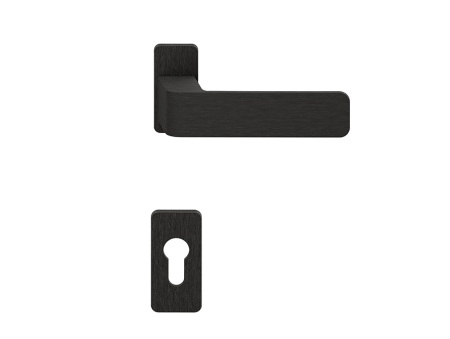
Handle
 H6S36-SK3S34 Black
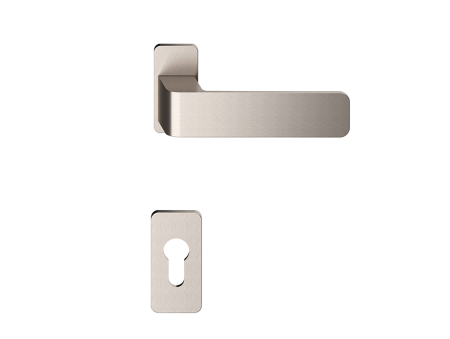
Handle
 H6S36-SK3S34 Inox

Let’s talk about your project!
Request a quote, discuss specifications, or get help choosing the right system
Send a request
"*" indicates required fields
How Thermal Break Technology Improves Energy Efficiency in Aluminum Front Doors
OKNOPLAST US aluminum front doors incorporate thermal break technology – a polyamide or carbon-fiber-reinforced barrier embedded within the aluminum profile – reaching U-Factors as low as 0.14 across all four US climate zones. This is achieved through the combined effect of the thermal break, an insulated panel core, and energy-efficient glazing.
At its core, thermal break technology stops conductive heat transfer between the door frame’s interior and exterior aluminum skins. A low-conductivity barrier – polyamide or carbon-fiber-reinforced – sits inside the aluminum profile, eliminating the direct metal-to-metal path through which heat naturally travels in standard aluminum construction. This one design detail is what fundamentally sets thermally broken entry doors apart from conventional assemblies.
In OKNOPLAST US door profiles, carbon fiber reinforcement serves a dual purpose. It maintains the frame’s structural rigidity under the weight of full-size entry panels while simultaneously acting as the thermal break that cuts conductive energy loss – removing the need for separate structural and insulating components within the profile.
The insulated panel core works in tandem with the thermal break, managing heat flow in both directions. It curbs heat loss through the door slab in winter and limits solar heat gain in summer, supporting consistent performance across Northern, North-Central, South-Central, and Southern climate zones. Premium series configurations reach a construction depth of 90 mm, optimizing both insulation and frame rigidity.
Triple heat protection glazing paired with the thermally broken frame pushes the complete door assembly’s U-Factor even lower. OKNOPLAST US builds these doors to exact project dimensions within an 8-10 week factory lead time.
| Thermal Performance Component | Function | U-Factor Contribution |
| Thermal break barrier (polyamide/carbon-fiber-reinforced) | Interrupts conductive heat transfer between interior and exterior aluminum skins | Reduces frame conductive loss, foundational to overall U-Factor 0.14 |
| Insulated panel core | Reduces winter heat loss and limits summer solar heat gain through the door slab | Lowers slab-level heat transfer across all four US climate zones |
| Triple glazing with argon fill | Adds energy-efficient glazing layer paired with thermal break frame | Further reduces NFRC-certified U-Factor of complete door assembly |
What NFRC-Certified U-Factor Reveals About the Thermal Performance of OKNOPLAST Aluminum Front Doors
OKNOPLAST US aluminum front doors achieve an NFRC-certified U-Factor as low as 0.14 – measured across the complete door assembly, including the 90mm frame, thermal break, insulated core, and glazing. This outperforms the standard 60-70mm profiles common among competitors. Rather than isolating the glazing panel, this U-Factor quantifies heat transfer across the entire door unit, with lower values indicating reduced conductive heat flow. Note that OKNOPLAST US does not currently hold ENERGY STAR certification and is not eligible for the §25C Energy Efficient Home Improvement tax credit.
U-Factor and SHGC are distinct metrics, each tied to different climate priorities. U-Factor captures conductive and convective heat loss, making it the primary consideration for Northern climate zones where retaining indoor heat is essential. SHGC, or Solar Heat Gain Coefficient, measures how much solar heat passes through the glazing – a critical factor in South-Central and Southern zones. IRC fenestration compliance in those Southern zones requires SHGC ≤ 0.25, a threshold entirely separate from Northern-zone U-Factor requirements.
| NFRC Metric | Definition | Climate Zone Relevance |
| U-Factor | Rate of heat transfer through the full door assembly (frame, thermal break, core, glazing) | Northern zone – lower U-Factor retains indoor heat |
| SHGC | Fraction of solar heat admitted through the glazing unit | South-Central and Southern zone – SHGC ≤ 0.25 required per IRC |
The 90mm construction depth is central to the U-Factor gains documented on OKNOPLAST US entry doors. Its expanded thermal break cavity interrupts conductive heat pathways more effectively than the shallower 60-70mm frames typical of competing profiles. Triple-pane glazing with argon fill and warm-edge spacers pushes performance further – argon reduces convective transfer within the sealed cavity, while warm-edge spacers limit conduction at the glass-to-frame junction. Together, these design elements contribute to the 0.14 U-Factor recorded for the full aluminum front door assembly.
How 90mm Panel Construction and Insulated Core Material Enhance Structural Durability
OKNOPLAST US aluminum front doors feature a 90mm construction depth in the premium series – 20-30mm deeper than standard US competitor profiles. That extra depth accommodates a larger thermal break cavity, denser insulated core, and additional structural wall thickness, together achieving a U-Factor of 0.14 alongside robust resistance to forced entry and wind load.
Carbon fiber reinforcements integrated within the aluminum door profile serve a dual purpose: structural and thermal. On the mechanical side, they stiffen the frame cross-section against stress generated by multi-point locking engagement. At the same time, they interrupt conductive heat flow between the exterior and interior aluminum surfaces – all within a single profile component, without introducing separate materials to the frame design.
Built from corrosion-resistant alloy profiles with factory-applied powder-coated finishes. That’s a meaningful advantage over wood and composite alternatives, which are prone to warping, cracking, and swelling – whether from humid Southern climates or freeze-thaw cycling in Northern zones. The 90mm aluminum construction holds its shape across both extremes, avoiding the dimensional degradation common to other frame materials.
| Construction Element | Structural Benefit | Thermal Benefit |
| 90mm Frame Depth | Additional wall thickness resists forced entry and wind load pressure | Larger thermal break cavity supports U-Factor 0.14 |
| Carbon Fiber Reinforcement | Stiffens frame cross-section against locking engagement stress | Interrupts conductive heat flow across aluminum surfaces |
| Insulated Panel Core | Prevents panel flex and deformation under mechanical stress | Blocks thermal bridging between exterior and interior faces |
Every OKNOPLAST US aluminum front door is manufactured to exact project dimensions and ships with a 10-year warranty – reinforcing both corrosion resistance and long-term frame integrity across all US climate zones.
How RC2 and RC3 Burglar-Resistance Ratings and Multi-Point Locking Protect OKNOPLAST Aluminum Front Doors
OKNOPLAST US aluminum front doors carry RC2 and RC3 burglar-resistance ratings under EN 1627 – a European standard that measures how long a door assembly holds up against defined forced-entry tools before failing. RC2 covers hand-tool attacks, while RC3 extends that protection to power tools. Achieving these classifications requires a combination of multi-point locking, a 90mm frame profile, drilling-resistant cylinders, and reinforced subframes working together. Because EN 1627 is a European framework, US homeowners and contractors should request equivalent ANSI/BHMA or ASTM F476 documentation to cross-reference these ratings against testing protocols recognized in the domestic market.
Unlike the single-point deadbolts found on most standard US entry doors, multi-point locking on OKNOPLAST aluminum front doors simultaneously engages locking points at the top, bottom, and sides of the frame the moment the handle is operated. That distributed anchoring geometry is what makes the system effective – though it only performs to RC2/RC3 specification when the surrounding frame is rigid enough to resist deformation under load.
That’s where the 90mm frame depth becomes critical. At this profile depth, the door leaf is structurally prevented from flexing between locking points during a forced-entry attempt – the exact condition EN 1627 tests for. Without that rigidity, even well-placed locking hardware can’t maintain its rated resistance.
For homeowners who want an additional layer of access control, the OneTouch® fingerprint handle is available as a biometric upgrade, integrating fingerprint-based entry directly alongside the mechanical multi-point locking system.
| Security Component | Forced-Entry Vector Addressed |
| Multi-point locking | Frame perimeter anchoring at top, bottom, and lateral points; prevents single-point deadbolt bypass |
| Drilling-resistant cylinder | Lock-picking and drill-out attacks on the cylinder mechanism |
| Safety glass | Impact-based glass panel breakage during forced entry |
| Anti-lever protection | Prying and leverage attacks at the door edge and frame gap |
Durability, Weather Resistance, and Recyclability of Powder-Coated Aluminum Front Doors in US Climates
OKNOPLAST US aluminum front doors come with factory-baked powder-coated finishes engineered to stand up to UV fading, salt-air corrosion, and freeze-thaw cycles.
Traditional entry door materials struggle with the demands of US IRC climate zones. Wood swells, cracks, and rots under moisture cycling, while composite doors delaminate with prolonged Southern sun exposure. Uncoated steel is similarly vulnerable – once the factory coating scratches, rust takes hold at seams and hinges, particularly in coastal salt-air environments across the South-Central and Southern zones.
OKNOPLAST US aluminum frames sidestep all of these failure modes. Rust, warping, cracking, and swelling simply aren’t concerns here. The powder-coated finish bonds pigmented resin directly to the aluminum substrate through an electrostatic, high-temperature baking process – creating a surface that won’t flake, peel, or fade under thermal cycling.
In Southern and South-Central coastal zones, salt-laden humidity accelerates corrosion on ferrous hardware and untreated steel frames. OKNOPLAST US aluminum doors hold up without pitting or surface degradation throughout their lifespan, making them a natural fit for these demanding environments.
Up north, freeze-thaw cycling presents its own challenge. Wood and composite slabs lose dimensional stability over time, opening gaps that let in cold air. OKNOPLAST US aluminum profiles maintain their shape through repeated freeze-thaw exposure, a performance backed by the 10-year exterior color finish warranty covering manufacturing defects in color retention.
| US Climate Challenge | OKNOPLAST US Aluminum Response | vs Wood/Composite |
| UV and solar radiation | Powder-coated finish resists fading and cracking | Composite delaminates; wood finishes require repainting |
| Salt-air/humidity (Southern, South-Central zones) | Corrosion-resistant aluminum substrate, no pitting | Uncoated steel rusts; wood absorbs moisture and rots |
| Freeze-thaw cycling (Northern, North-Central zones) | Dimensional stability, no warping or gap formation | Wood and composite swell, crack, and shift out of frame |
At end of service life, aluminum is fully recyclable – allowing OKNOPLAST US front doors to support LEED documentation for material recyclability. It’s a sustainability advantage that wood, composite, and steel alternatives don’t consistently offer at the disposal stage.
Over 50 RAL Color and Finish Options for OKNOPLAST Aluminum Front Doors
OKNOPLAST US aluminum front doors come in more than 50 RAL colors, spanning solid hues, wood grain decor laminates, metallic textures, and dual-color configurations. Every finish is factory-baked powder-coated, backed by a dedicated 10-year color warranty, and produced to exact specifications within the standard 8-10 week lead time.
One standout feature is the dual-color capability, which allows a warm wood-tone interior face to be paired with a weather-resistant RAL powder-coated exterior – all within a single door unit. This gives homeowners the freedom to satisfy interior design preferences without sacrificing exterior durability. No competitor currently documents this interior/exterior finish split as a standard offering.
Style options range from sleek contemporary anthracite and all-black façades to traditional wood-effect finishes that convincingly replicate solid timber – minus the upkeep. The wood grain decor laminate captures natural texture beautifully, while the powder-coated RAL finishes hold up against UV exposure and temperature extremes across both Southern and Northern US climate zones.
OKNOPLAST’s 10-year warranty explicitly covers the exterior color finish layer, protecting against manufacturing-related defects across the entire RAL palette. Choosing a custom color from the 50+ available options won’t push the production timeline beyond the standard 8-10 week window.
| Finish Type | Aesthetic Application | Durability Feature |
| Solid RAL color | Contemporary anthracite, black, or bold accent façades | Factory-baked powder coating resists UV fading and flaking |
| Wood grain decor laminate | Traditional wood-effect entry door styling | Replicates timber texture without real-wood maintenance demands |
| Dual-color interior/exterior | Warm interior wood tone paired with modern exterior RAL shade | Weather-resistant exterior powder coat independent of interior finish |
What Panel Designs and Glass Insert Options Are Available for OKNOPLAST Aluminum Front Doors
OKNOPLAST US aluminum front doors come in solid panel, partial-glass, and full-glass configurations, with insert options ranging from clear tempered and obscure to laminated safety and decorative glass. All designs sit within the 90mm profile, preserving both structural integrity and multi-point locking performance regardless of how much glass is involved.
Choosing a panel design is essentially about balancing privacy against natural light. Solid panel doors eliminate glazing entirely, maximizing both privacy and thermal mass. Partial-glass designs introduce a defined insert zone – typically in the upper third of the door or as a sidelight – without compromising multi-point locking engagement across the door leaf. Full-glass configurations bring in the most daylight while still sharing the same 90mm aluminum profile depth as their solid counterparts.
The glass type itself determines how the door performs at entry level – whether the priority is privacy, security, thermal control, or aesthetics:
- clear tempered glass delivers maximum light transmission with impact-resistant glazing, making it well-suited to sidelights and full-glass panels,
- obscure and patterned options diffuse visibility while still letting light through, ideal for street-facing entries where privacy matters,
- laminated safety glass adds an interlayer that resists forced entry and dampens sound – a practical choice for ground-floor or high-traffic locations,
- decorative etched or geometric glass ties the door’s appearance to period, contemporary minimalist, or transitional architectural styles.
Glazing builds extend across single-pane, double-pane IGU, and triple-pane IGU configurations, chosen based on thermal and acoustic targets. Argon fill is standard within IGU builds for added thermal insulation.
| Glass Insert Type | Privacy Level | Primary Function |
| Clear tempered | Low | Maximum light transmission, impact-resistant safety glazing |
| Obscure/patterned | High | Privacy glass with diffused light transmission |
| Laminated safety | Medium | Forced-entry resistance, acoustic dampening |
| Decorative etched | Medium | Architectural styling, geometric or etched pattern accent |
Beyond panel design, over 50 RAL color options allow the front door to coordinate seamlessly with window profiles, façade cladding, and interior themes as a unified architectural element. Custom glass insert dimensions are available through made-to-measure manufacturing, with non-standard decorative configurations fitting within the standard 8-10 week lead time.
How Integrated Sidelights Expand Natural Light and Elevate the Architectural Impact of Aluminum Front Doors
OKNOPLAST US aluminum front doors are designed to accommodate integrated sidelights and transoms – fixed or operable glazed panels that share the same 90mm profile, thermal break, and NFRC U-Factor as the primary door leaf. The result is a unified entry assembly that floods the foyer with natural light without sacrificing thermal consistency or visual coherence.
Sidelights can be positioned on one or both sides of the door leaf within a continuous aluminum frame, expanding the total glazed area without requiring a wider rough opening. For entry vestibules and foyers where a single door leaf simply isn’t enough to bring in meaningful daylight, this configuration makes a significant difference.
Glass selection adds another layer of flexibility. Clear glass suits foyers that open onto private, landscaped setbacks, while obscure glass diffuses light and blocks direct sightlines for added privacy. Decorative patterns, particularly effective near the handle and lock area, introduce architectural character where privacy control matters most.
Transom panels sit horizontally above the door leaf, delivering clerestory-style light well above standard entry height. They work equally well paired with sidelights or installed independently over a single-leaf door, extending the glazed envelope upward in either case.
Custom sidelight widths and heights – accommodating the non-standard rough openings common in bespoke residential builds and commercial renovation projects.
| Assembly Component | Natural Light Function | Thermal Consistency |
| Primary door leaf | Baseline glazed area at entry height | 90mm profile, thermal break, NFRC U-Factor rated |
| Integrated sidelight | Expands glazed area flanking door leaf | Matches primary leaf profile depth and thermal break |
| Transom | Adds clerestory light above door height | Shares frame system thermal performance |
How Smart Lock Compatibility Enhances Security and Convenience in Aluminum Entry Doors
OKNOPLAST US aluminum front doors support smart lock compatibility – including OneTouch® fingerprint recognition – as an upgrade that works alongside the existing multi-point locking mechanism rather than replacing it. This means the door retains its RC2/RC3 security rating while gaining keyless biometric access. The biometric handle sits on top of the locking hardware, leaving the perimeter engagement responsible for that classification completely intact.
For households or vacation rental operators who prefer numeric codes over fingerprints, keypad-operated smart locks offer a straightforward alternative. Card-reader systems take things a step further, extending the same multi-point interface to light commercial settings, property managers, and short-term rentals where physical key handoffs create unnecessary friction. Crucially, both options connect to the identical locking mechanism used by OneTouch® handles – so whichever access method you choose, the underlying security hardware doesn’t change.
Finish options for all smart lock types align with the standard handle palette available across OKNOPLAST US aluminum doors, keeping electronic access control visually consistent with the door color and surrounding architecture. Whether you opt for fingerprint, keypad, or card-reader access, the entryway maintains a cohesive, intentional look.
Under smart lock operation, the multi-point system still engages 3-5+ perimeter lock points simultaneously – the same as standard keyed entry. Keyless convenience, in other words, doesn’t come at the cost of fewer engaged lock points. The 10-year warranty covering manufacturing defects in the multi-point locking hardware also extends to the mechanism that all smart lock variants interface with.
| Smart Lock Type | Access Method | Security Level Maintained |
| OneTouch® fingerprint | Biometric recognition | RC2/RC3, 3-5+ lock points engaged |
| Keypad | Numeric code entry | RC2/RC3, 3-5+ lock points engaged |
| Card reader | Proximity card/fob | RC2/RC3, 3-5+ lock points engaged |
How OKNOPLAST Aluminum Front Doors Meet ADA Threshold Requirements for Residential and Commercial Entryways
OKNOPLAST US aluminum front doors can be configured with low-threshold or flush sills that comply with ADA Section 404.2.5’s ½ inch maximum threshold height – all while preserving reliable weather-seal performance. Made-to-measure widths accommodate both the 32-inch minimum and 36-inch preferred clear opening requirements at no additional cost.
ADA Standards for Accessible Design Section 404.2.5 caps threshold height at ½ inch for accessible doorways. Through OKNOPLAST US’s made-to-measure manufacturing program, low-threshold sill configurations meet this limitation directly, replacing the standard non-accessible profile that typically exceeds ADA limits on residential aluminum front doors.
Despite the reduced sill height, the low-threshold assembly effectively blocks water infiltration at the door base across all four US climate zones. OKNOPLAST US backs these components with a 10-year warranty covering manufacturing defects in both the threshold assembly and sill elements of accessible-configuration doors.
ADA Section 404.2.3 mandates a 32-inch minimum clear opening width – a requirement OKNOPLAST US meets through its made-to-measure leaf widths. The same program also accommodates the 36-inch clear width commonly specified for primary commercial entrances, with no custom-width surcharges applied to either dimension.
For commercial entryways demanding wider openings than a single leaf can provide, double-leaf configurations offer a practical solution. The aluminum frame maintains structural rigidity under high-traffic conditions, supporting consistent hardware operation and multi-point locking engagement throughout service life.
FAQ
OKNOPLAST aluminum front doors achieve an NFRC-certified U-Factor as low as 0.14 BTU/hr·ft²·°F in the 90mm thermally broken profile with triple-pane glazing, argon fill, and warm-edge spacers – measured across the complete door assembly including frame, thermal break, insulated panel core, and glazing unit. This falls below the IECC 2021 maximum of 0.27 for Climate Zone 5 fenestration.
OKNOPLAST aluminum front doors achieve a U-Factor as low as 0.14 BTU/hr·ft²·°F – below the IECC 2021 fenestration maximums of 0.27 (Climate Zone 5), 0.20 (Climate Zone 6), and 0.32 (Southern zones). Triple-pane configurations also meet the SHGC ≤ 0.25 threshold required for South-Central and Southern climate zones per IECC 2021 Table R402.1.2. NFRC-certified documentation supports IRC submittal packages.
OKNOPLAST aluminum front doors carry an 8-10 week lead time from order confirmation – approximately 4-5 weeks for made-to-measure production at the manufacturing facility in Poland, plus 4-5 weeks for international shipping transit. The stated window ends when the door leaves the factory. Contractors should coordinate rough opening preparation and installation scheduling around the full transit-inclusive timeline.
OKNOPLAST aluminum front doors resist rust, rot, warping, and moisture absorption – failure modes that affect wood and composite alternatives across U.S. climate extremes. Wood swells and cracks under freeze-thaw cycling in Northern zones; composite delaminates under prolonged Southern UV exposure; uncoated steel corrodes in coastal salt-air environments. The 90mm aluminum profile with factory powder-coated finish maintains dimensional stability across all four climate zones, backed by a 10-year warranty.
OKNOPLAST aluminum front doors are certified to RC2 and RC3 resistance classes under EN 1627 – a European standard measuring how long an assembly withstands defined forced-entry tool attacks before failing. RC2 covers hand tools; RC3 extends to power tools. U.S. contractors and homeowners should request equivalent ANSI/BHMA or ASTM F476 documentation to cross-reference these ratings against testing protocols recognized in the domestic market.
OKNOPLAST aluminum front doors are available in 50+ RAL colors including smooth solids, wood grain decor laminates, metallic textures, and dual-color configurations – with a warm interior wood-tone finish paired against a weather-resistant powder-coated exterior. All finishes are factory-baked and covered by a dedicated 10-year exterior color warranty. Custom color selection does not extend the standard 8-10 week production timeline.
OKNOPLAST aluminum front doors can be configured with low-threshold or flush sills meeting ADA Section 404.2.5’s ½-inch maximum threshold height. Made-to-measure manufacturing accommodates both the 32-inch minimum and 36-inch preferred clear opening widths required under ADA Section 404.2.3, at no additional cost. The 10-year warranty covers manufacturing defects in threshold assemblies across accessible-configuration doors.
OKNOPLAST aluminum front doors support smart lock upgrades – including OneTouch® fingerprint recognition, keypad entry, and card-reader systems – that interface directly with the existing multi-point locking mechanism without replacing it. RC2/RC3 burglar-resistance ratings are preserved across all smart lock configurations because the perimeter locking hardware remains unchanged. All smart lock handle finishes coordinate with the standard 50+ RAL color palette.
OKNOPLAST aluminum front doors accommodate integrated sidelights and transoms sharing the same 90mm thermally broken profile, thermal break, and NFRC U-Factor as the primary door leaf. Sidelights are available in clear, obscure, and decorative glass, positioned on one or both sides of the door leaf within a continuous aluminum frame. Custom sidelight widths and heights fit within the standard 8-10 week made-to-measure production lead time.