


uPVC vs. Aluminum Windows and Doors
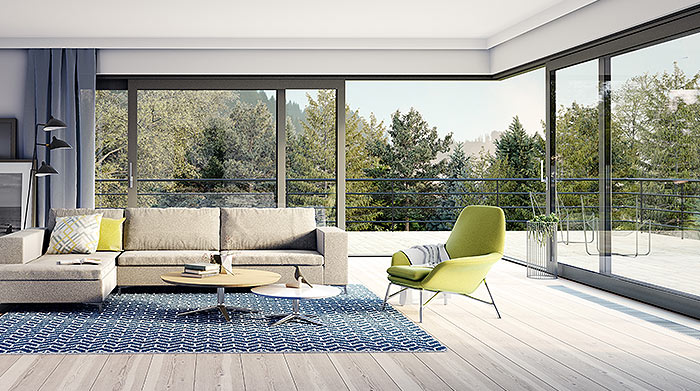

uPVC and aluminum windows and doors differ at the material level in ways that show up directly in published performance data: OKNOPLAST’s uPVC systems (PAVA, PIXEL, COMPACT, HORIZON) carry published U-Factor and, in the case of the two patio doors, DP rating figures, while the aluminum line (MIRU EVO windows and the Aluview patio door family) does not currently carry published U-Factor or DP data in US technical documentation. That gap, along with real dimensional and material-property differences, is more informative for specification than generic claims about which material is “better.”
Key Takeaways:
- The article compares uPVC (PAVA, PIXEL, COMPACT, HORIZON) and aluminum (MIRU EVO windows, Aluview patio doors) systems using OKNOPLAST’s own published specs, deliberately avoiding the “aluminum is superior/premium” framing common in competitor content.
- Specific test data for OKNOPLAST’s RAU-PVC 1406/1476 compounds: tensile strength (44 N/mm²), Vicat softening point (78-82°C), impact resistance at -40°C (no cracking, per DIN EN ISO 179), density, and chemical resistance – countering generic “vinyl becomes brittle” claims with tested values.
- MIRU EVO windows and Aluview patio doors don’t currently carry a published U-Factor or DP rating in US documentation, unlike the uPVC line. The article treats this as a specification limitation to flag, not something to estimate or infer.
- Within OKNOPLAST’s own catalog, some uPVC products actually exceed the largest aluminum options, so the material doesn’t strictly determine maximum size.
uPVC vs. Aluminum: What the Material Actually Determines
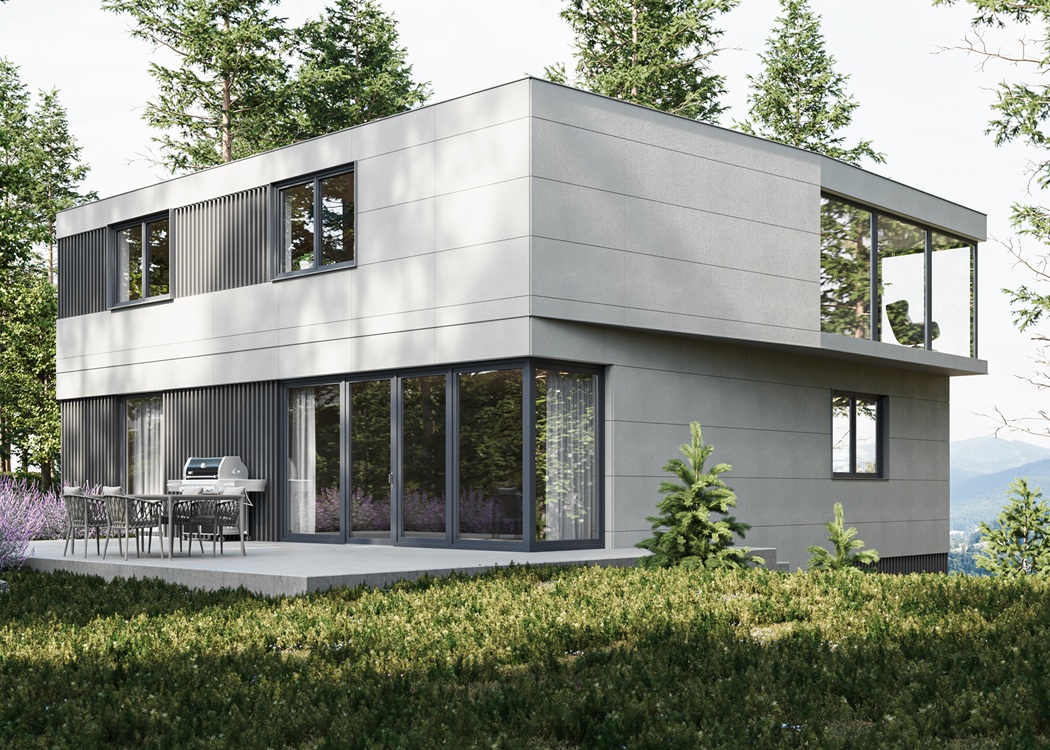
Frame material determines how a window or door manages structural load and heat transfer, not which product tier it belongs to. OKNOPLAST manufactures both materials at a comparable design tier: PAVA and PIXEL uPVC tilt and turn windows use steel-reinforced multi-chamber frames aimed at the same architectural market as MIRU EVO’s four aluminum window variants (Standard, Steel, Hidden, Storefront). Neither material is positioned as the budget option within OKNOPLAST’s US catalog.
This differs from how some manufacturers frame the comparison. A company that only sells aluminum, wood, and fiberglass products has no reason to publish detailed uPVC material data, and general claims about vinyl becoming brittle or fading tend to go unchallenged by specific numbers. OKNOPLAST publishes both material’s data sheets directly, which makes a side-by-side comparison possible using actual test values rather than category-level generalizations.
What Is uPVC? Material Properties Behind the Marketing Claims
OKNOPLAST’s uPVC profiles are manufactured to ISO 1163-PVC-U specification using RAU-PVC 1406 and 1476 compounds, classified as highly impact-resistant under DIN 7748. Tested mechanical properties include a tensile strength of 44 N/mm² and a flexibility module greater than 2,200 N/mm² under DIN EN ISO 527, with a Vicat softening temperature in the range of 78 to 82°C under DIN EN ISO 306.
- uPVC (RAU-PVC 1406/1476) → Impact resistance at room temperature → ≥20 kJ/m² per DIN EN ISO 179
- uPVC (RAU-PVC 1406/1476) → Impact resistance at -40°C → No cracking, per DIN EN ISO 179
- uPVC (RAU-PVC 1406/1476) → Weather resistance → Color change not greater than gray scale degree 4 per ISO 105-A03, tested under DIN EN 513
- uPVC (RAU-PVC 1406/1476) → Density → 1.41-1.46 g/cm³
- uPVC (RAU-PVC 1406/1476) → Chemical resistance → Dilute and concentrated acids (non-oxidizing), bases, mineral and paraffin oils, alcohols, benzene, aliphatic hydrocarbons
The documented no-cracking result at -40°C is a more specific claim than the generic “vinyl becomes brittle in cold temperatures” language common in material comparisons, since it describes a tested outcome at a defined temperature rather than a general tendency.
What Is Aluminum? MIRU EVO and Aluview Construction
OKNOPLAST’s aluminum products split into two families: MIRU EVO for windows, in four variants, and Aluview for patio doors, in four variants including the Fold bi-fold system. MIRU EVO Standard is built for high rigidity, supporting large windows and storefronts in high-wind-load areas, with a frame installation depth of 2 15/16 inches. MIRU EVO Steel adds a steel-look aesthetic aimed at industrial and loft construction, MIRU EVO Hidden conceals the opening sash for a consistent appearance from every side, and MIRU EVO Storefront extends the Standard platform into commercial glazing with a maximum single glass door size of 4’3″ by 9′.
- MIRU EVO Standard → Frame installation depth → 2 15/16″
- MIRU EVO Standard → Maximum sash dimensions → up to 9’6⅕” high by 5’3″ wide (dimension-dependent)
- MIRU EVO Hidden → Maximum sash dimensions → up to 8’8″ high by 4’1″ wide
- MIRU EVO Storefront → Maximum single glass door size → 4’3″ x 9′
- Aluview Sky+ (patio door) → Maximum sash dimensions → up to 13’1″ x 13’1″
Aluminum frame construction manages heat transfer differently than uPVC’s air-chamber approach, typically through a thermal break separating the interior and exterior metal surfaces – a general industry technique rather than a figure OKNOPLAST publishes at the material-data-sheet level for MIRU EVO specifically in current US documentation.
Thermal Performance: Multi-Chamber uPVC vs. Aluminum Thermal Breaks
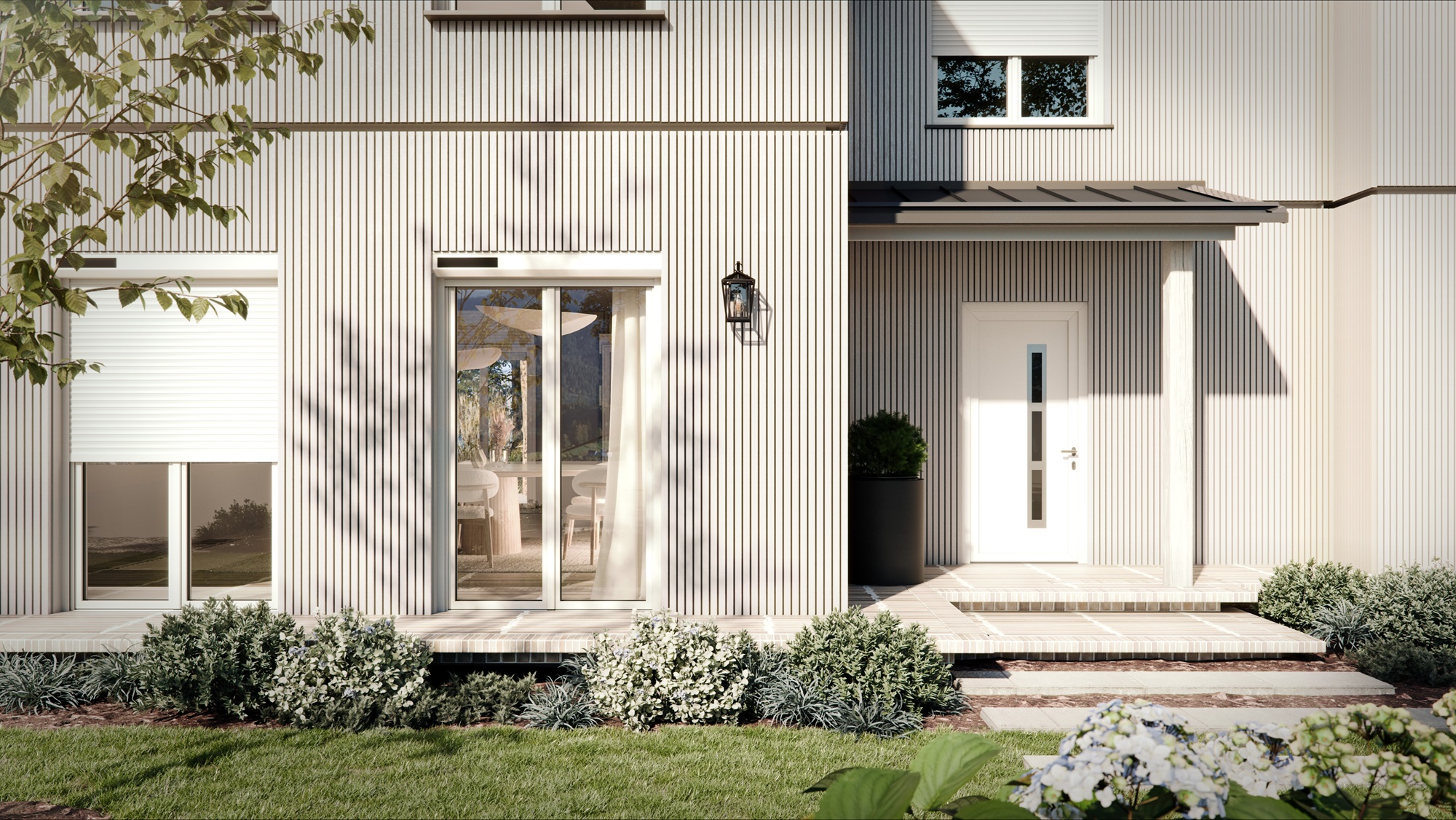
PAVA achieves a U-Factor of 0.14 to 0.26 BTU/hr·ft²·°F and PIXEL achieves 0.16 to 0.29, both through 7-chamber and 6-chamber uPVC frame construction respectively. COMPACT and HORIZON, OKNOPLAST’s uPVC patio doors, achieve U-Factors of up to 0.17 and 0.18 to 0.29. None of the four MIRU EVO window variants or four Aluview patio door variants currently carry a published U-Factor in OKNOPLAST’s US technical documentation.
This does not mean the aluminum systems perform poorly thermally – MIRU EVO Standard is marketed specifically for “exceptional thermal insulation” – but it does mean a side-by-side numeric U-Factor comparison between OKNOPLAST’s uPVC and aluminum lines is not currently possible using published data. An architect needing a documented U-Factor for a MIRU EVO or Aluview specification should request it directly.
Frame Size and Sightlines: Comparing Real Dimensions Within One Catalog
The common claim that aluminum allows larger formats than uPVC holds in some comparisons within OKNOPLAST’s own catalog but not all of them. COMPACT, a uPVC sliding patio door, reaches a maximum width of 157 inches, while Aluview Sky+, OKNOPLAST’s largest aluminum patio door, reaches a maximum sash size of 13’1″ – which is also 157 inches. On the window side, PAVA and PIXEL both reach a maximum sash height of 102½ inches and width of 56 inches, while MIRU EVO’s largest single sash tops out around 9’10” by 5’3″, roughly comparable in width but taller.
Table 1 – Maximum Dimensions: uPVC vs. Aluminum, Windows and Doors
| Product | Material | Maximum Dimension |
|---|---|---|
| PAVA / PIXEL (window) | uPVC | 102.5″ H x 56″ W |
| MIRU EVO Storefront (window) | Aluminum | 9’10” H x 5’3″ W |
| COMPACT (patio door) | uPVC | 157″ wide |
| Aluview Sky+ (patio door) | Aluminum | 13’1″ x 13’1″ (157″) |
| HORIZON (patio door) | uPVC | 236″ wide |
HORIZON, OKNOPLAST’s steel-reinforced uPVC lift and slide door, exceeds every aluminum patio door’s published maximum width in this catalog, which runs against the general assumption that aluminum always supports the largest openings – in this case, the steel reinforcement inside the uPVC frame is doing that structural work instead.
Durability and Weathering: What OKNOPLAST’s Material Data Actually Shows
OKNOPLAST’s uPVC weather-resistance testing (DIN EN 513) documents a color change not exceeding gray scale degree 4 under ISO 105-A03 conditions, and the material is rated for regions with global solar radiation up to 160 to 180 kcal/cm² per year depending on the specific compound. Separately, OKNOPLAST’s product warranty documentation excludes installation within one mile of salt water without added corrosion protection and high-humidity environments like pools or saunas from full coverage – exclusions that apply to hardware and components generally rather than being unique to either uPVC or aluminum framing.
Warping or bowing on OKNOPLAST products is not treated as a covered defect unless it alters the product’s plane by more than ¼ inch, a specific tolerance that gives more concrete guidance than a general statement that one material “won’t warp” while the other might.
Color and Finish: Why “Limited uPVC Colors” Doesn’t Apply Here
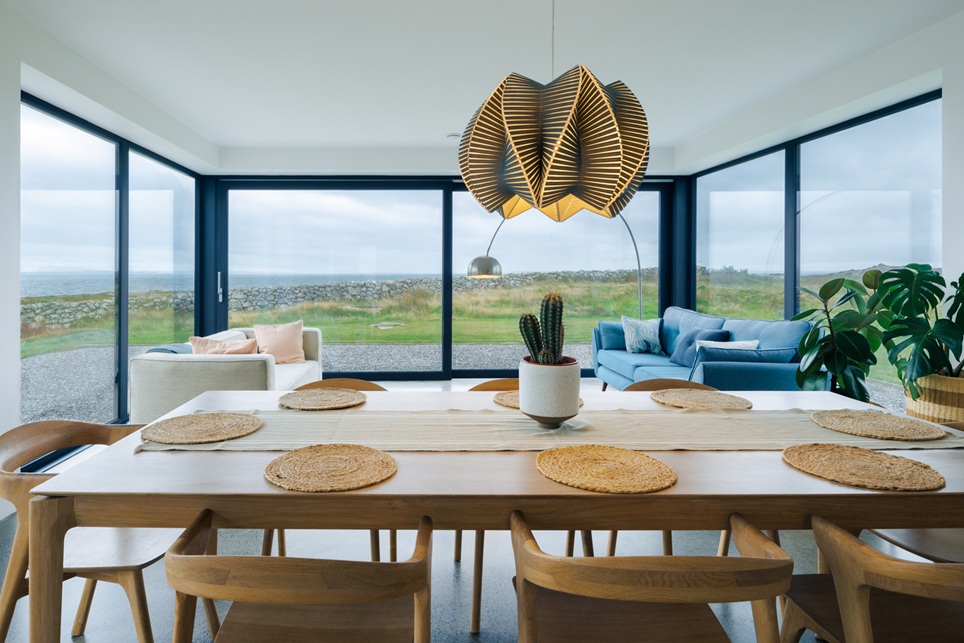
A common claim in material comparisons is that vinyl windows are mostly limited to white or buff because dark exteriors can soften or sag under heat. OKNOPLAST’s PAVA and PIXEL uPVC systems offer more than 50 color and finish combinations, including ColorFull wood-grain finishes (sheffield oak, winchester golden oak, walnut, dark toffee), matte tones, and two-tone interior/exterior configurations – a palette comparable in range to what’s typically associated with aluminum framing rather than a narrower vinyl-specific selection.
Published Performance Data: Where uPVC Leads and Where Aluminum Has Gaps
Across OKNOPLAST’s eight window and patio door systems, published DP rating exists only for COMPACT (50 psf) and HORIZON (30-60 psf), both uPVC. Published U-Factor exists for PAVA, PIXEL, COMPACT, and HORIZON – all four uPVC systems. None of the eight aluminum systems (four MIRU EVO window variants, four Aluview patio door variants) currently carry published DP or U-Factor data in OKNOPLAST’s US technical documentation.
This is a documentation gap, not necessarily a performance gap – MIRU EVO Standard’s marketing language specifically claims high rigidity for high-wind-load areas – but for specification purposes, an architect relying on published test data rather than marketing description will find that data currently concentrated in OKNOPLAST’s uPVC line.
Cost and Maintenance Considerations
Industry-wide, uPVC systems typically carry a lower upfront material cost than comparable aluminum systems, largely reflecting raw material and manufacturing cost differences rather than a performance gap – OKNOPLAST does not publish a specific price differential between its uPVC and aluminum lines, so project-specific cost comparison should come from a dealer quote rather than a general industry percentage. Maintenance requirements are low for both materials in OKNOPLAST’s catalog: uPVC surfaces clean with mild soap and water, and aluminum finishes are similarly low-maintenance, though coastal installations should follow the same corrosion-protection guidance noted in the warranty documentation regardless of which material is specified.
Choosing by Project Type and Climate
For a project prioritizing a documented U-Factor or DP rating today, OKNOPLAST’s uPVC systems – PAVA, PIXEL, COMPACT, HORIZON – are the ones with published figures to specify against. For a project prioritizing MIRU EVO’s storefront-scale commercial glazing, Aluview Sky+’s largest-format patio door, or an industrial-loft aesthetic through MIRU EVO Steel, aluminum remains the right material family, with structural and thermal data to be confirmed directly with OKNOPLAST rather than assumed from the uPVC figures in this guide.
Both material families share the same 10-year product warranty, the same salt-water and humidity exclusions, and access to a comparably broad color palette, which means the choice between them comes down to documented performance needs and project scale rather than a durability or aesthetic tradeoff assumed from general industry comparisons.
Steel Reinforcement vs. Aluminum’s Inherent Strength: Why Frame Material Alone Doesn’t Set the Size Limit
HORIZON’s 236-inch maximum width, wider than any published aluminum patio door in this catalog, comes from galvanized or stainless steel inserts factory-pressed into the load-bearing chambers of its uPVC frame, sash, and mullion profiles. The steel carries the structural load – wind pressure and the dead weight of large glazing units – while the uPVC exterior continues to provide the thermal break and weather barrier. Aluminum systems like MIRU EVO Standard achieve comparable rigidity from the metal itself, which is why OKNOPLAST markets that system’s ability to handle “large windows and storefronts, even in areas with high wind loads” without a separate reinforcement material.
The practical result is that uPVC’s structural ceiling depends on how much steel reinforcement a given system adds, not on a fixed property of the material itself – which is why COMPACT (uPVC, no steel reinforcement, 157″ maximum) and HORIZON (uPVC, steel-reinforced, 236″ maximum) differ from each other by nearly 80 inches despite sharing the same base frame material.
Frame Depth and Sightlines: A Full Comparison Across All Eight Systems
Frame installation depth is the dimension most directly tied to sightline width, and it varies more by specific system than by material family alone. All four MIRU EVO window variants share a frame installation depth of 2 15/16 inches, slightly shallower than PIXEL’s 2¾ inches and meaningfully shallower than PAVA’s 3¼ inches – meaning OKNOPLAST’s slimmest window sightlines currently belong to the aluminum MIRU EVO line, consistent with the general industry pattern, but by a narrower margin than the generic “aluminum is always slimmer” claim implies against PIXEL specifically.
Table 2 – Frame Installation Depth: All Eight Systems
| System | Material | Frame Installation Depth |
|---|---|---|
| PIXEL (window) | uPVC | 2¾” |
| MIRU EVO (all four variants, window) | Aluminum | 2 15/16″ |
| PAVA (window) | uPVC | 3¼” |
| Aluview Fold (patio door) | Aluminum | 3⅜” |
| COMPACT (patio door) | uPVC | 5½” |
| Aluview Standard (patio door) | Aluminum | 4¾”-7 13/16″ |
| Aluview Sky+ (patio door) | Aluminum | 7 1/16″-10 15/16″ |
| HORIZON (patio door) | uPVC | 8¼” |
On the patio door side, the pattern reverses: both uPVC doors (COMPACT, HORIZON) install shallower than the deepest Aluview configurations, since patio door frame depth scales more with rail count and structural span than with material family.
Glazing Package Compatibility Across Materials
PIXEL’s uPVC frame accepts glazing packages across several thickness ranges between 23 mm and 44 mm depending on sash and frame profile selected, while COMPACT’s uPVC patio door frame accepts glazing from 15/16 inch to 1 9/16 inches. Aluview Sky+, OKNOPLAST’s top-tier aluminum patio door, ships with triple glazing as standard rather than an optional thickness range, which reflects a different specification approach: the uPVC systems offer glazing-package flexibility within one frame, while Aluview Sky+ standardizes on a single high-performance glazing configuration.
Neither approach is inherently better for every project – a uPVC system’s glazing flexibility suits a project balancing budget against thermal performance across different openings, while Aluview Sky+’s fixed triple-glazing standard suits a project where consistent top-tier glazing across every opening matters more than per-opening customization.
MIRU EVO Storefront and Commercial-Scale Aluminum Applications
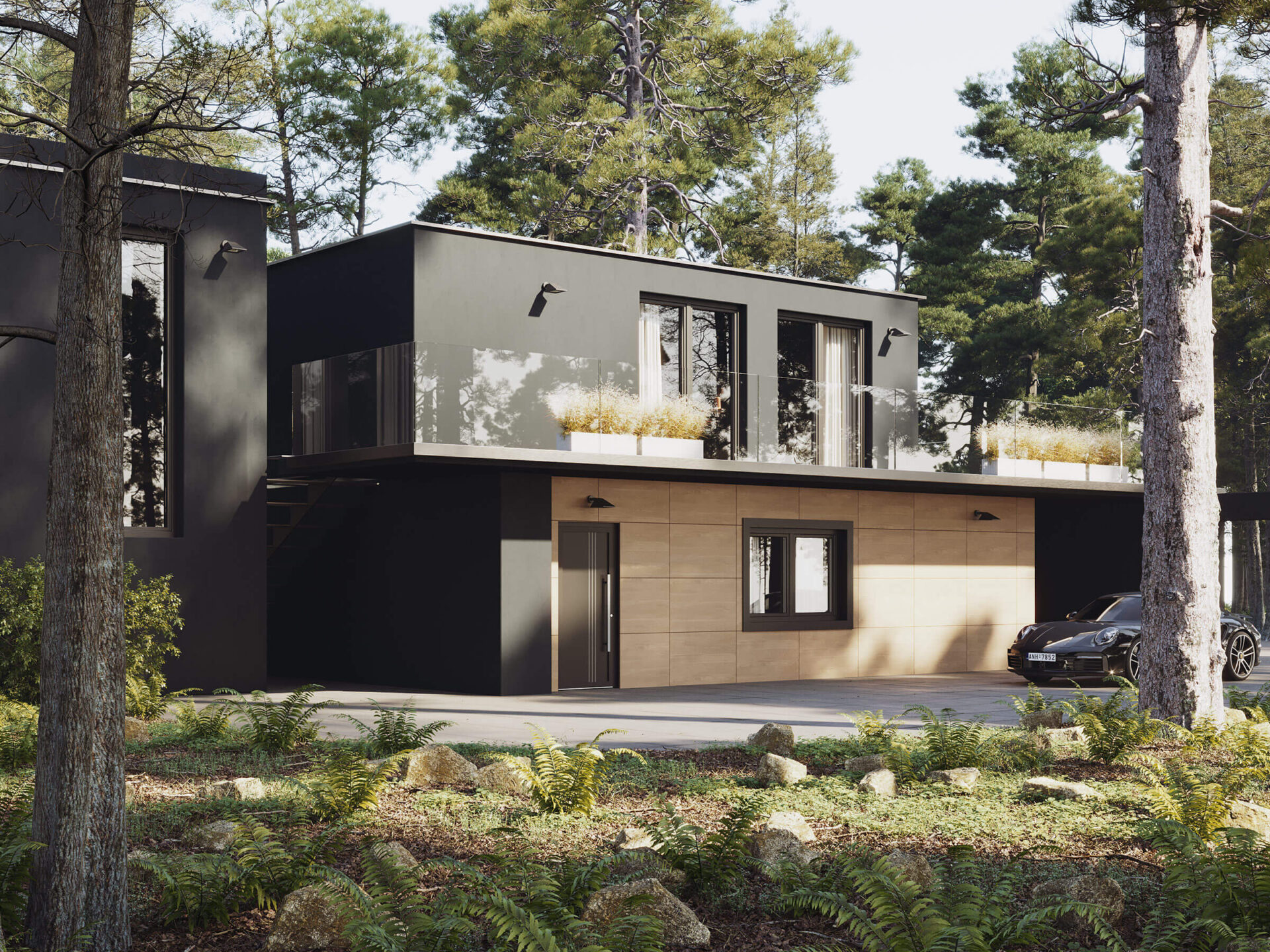
MIRU EVO Storefront extends the MIRU EVO Standard platform into commercial glazing applications, supporting a maximum single glass door size of 4’3″ by 9′ with a minimum mullion width of 3 1/16 inches. This is a use case with no direct uPVC equivalent in OKNOPLAST’s current US catalog – PAVA and PIXEL are positioned as residential and light-commercial window systems, not commercial storefront glazing, which makes MIRU EVO Storefront the material and product-line choice by default rather than by comparison against a uPVC alternative.
This is a case where the material decision is largely made by project type rather than by weighing uPVC and aluminum performance data against each other: a storefront or mixed-use ground-floor glazing package points to MIRU EVO Storefront regardless of how the rest of the building’s window package is specified.
Balcony and Secondary Openings: Win-Step vs. MIRU EVO Hidden
Both material families offer a route to a balcony or Juliet-style opening within their window platform rather than requiring a full patio door. PAVA and PIXEL uPVC windows support a Win-Step threshold configuration at roughly 0.8 inch in height, while MIRU EVO Hidden, the aluminum window variant with an invisible opening sash and consistent appearance from every side, explicitly lists balcony doors as an available configuration.
The choice between them again comes down to which material platform the rest of the elevation uses rather than a performance gap: a uPVC-window building extends its balcony opening through Win-Step on the same PAVA or PIXEL frame, while an aluminum-window building extends it through MIRU EVO Hidden on the same aluminum platform, keeping sightlines and finish consistent either way.
Warranty Parity: Why Material Doesn’t Change Coverage
OKNOPLAST’s 10-year Limited Warranty applies to “Covered Products” as a category in the warranty documentation, without a separate coverage tier or duration tied to uPVC versus aluminum construction. The same salt-water, high-humidity, and ¼-inch warping tolerance exclusions apply regardless of which material family a given window or door belongs to, which means the warranty itself is not a factor that should drive a material decision between OKNOPLAST’s uPVC and aluminum lines.
This differs from how some material comparisons frame the decision, where a longer aluminum lifespan claim implicitly suggests a longer or stronger warranty as well; within OKNOPLAST’s documentation, warranty duration and coverage terms are identical across both material families.
FAQ
Frame material changes how heat transfer and structural load are managed – uPVC uses multi-chamber air spaces and steel reinforcement, aluminum uses a thermal break and the metal’s inherent strength. Within OKNOPLAST’s catalog, both materials are manufactured at a comparable design tier.
OKNOPLAST’s RAU-PVC 1406/1476 compound is tested to show no cracking at -40°C under DIN EN ISO 179, which is a more specific claim than the general “brittle in cold” language common in material comparisons.
PAVA (0.14-0.26), PIXEL (0.16-0.29), COMPACT (up to 0.17), and HORIZON (0.18-0.29) – all uPVC. MIRU EVO and Aluview aluminum systems do not currently carry a published U-Factor.
Only COMPACT (50 psf) and HORIZON (30-60 psf), both uPVC. No MIRU EVO window or Aluview patio door variant currently carries a published DP rating.
Not within OKNOPLAST’s catalog. HORIZON, a steel-reinforced uPVC lift and slide door, reaches 236 inches wide, exceeding every published aluminum patio door width, because the steel reinforcement handles the structural load instead of the frame material alone.
Not for OKNOPLAST’s PAVA and PIXEL systems, which offer more than 50 color and finish combinations including wood-grain ColorFull finishes and two-tone configurations.
A 10-year product warranty applies to both materials, with exclusions for installation near salt water without added corrosion protection and high-humidity environments. Warping or bowing is only treated as a defect if it alters the product’s plane by more than ¼ inch.
Industry-wide, uPVC typically carries a lower upfront cost than aluminum, but OKNOPLAST does not publish a specific price differential between its lines – confirm project-specific pricing with a dealer.
MIRU EVO Storefront is built specifically for commercial glazing, supporting single glass doors up to 4’3″ by 9′, which is the more direct fit for that application than OKNOPLAST’s uPVC window systems.
Both are low-maintenance in OKNOPLAST’s catalog – uPVC cleans with mild soap and water, aluminum finishes are similarly low-upkeep, though coastal installations should follow the same corrosion-protection guidance for either material.
Aluview Sky+ ships with triple glazing as a standard configuration rather than a selectable thickness range, unlike PIXEL or COMPACT’s uPVC frames, which accept glazing across several thickness options.




Let’s talk about your project!
Request a quote, discuss specifications, or get help choosing the right system
Send a request
"*" indicates required fields