


Aluminum Windows
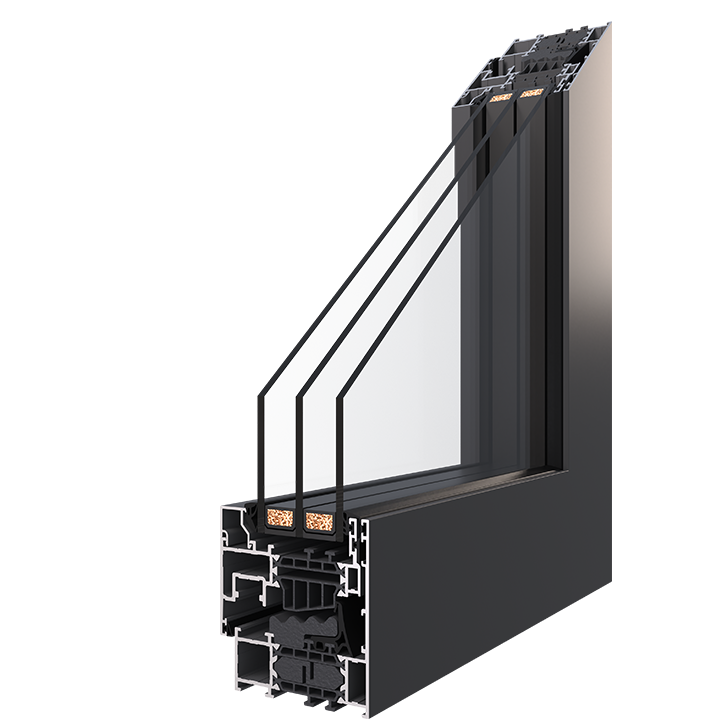
MIRU EVO Hidden
MIRU EVO HIDDEN redefines minimalism with a concealed sash design, delivering a flush, frameless exterior. Combining architectural elegance with thermal efficiency, it's ideal for modern residential and commercial spaces.


MIRU EVO Steel
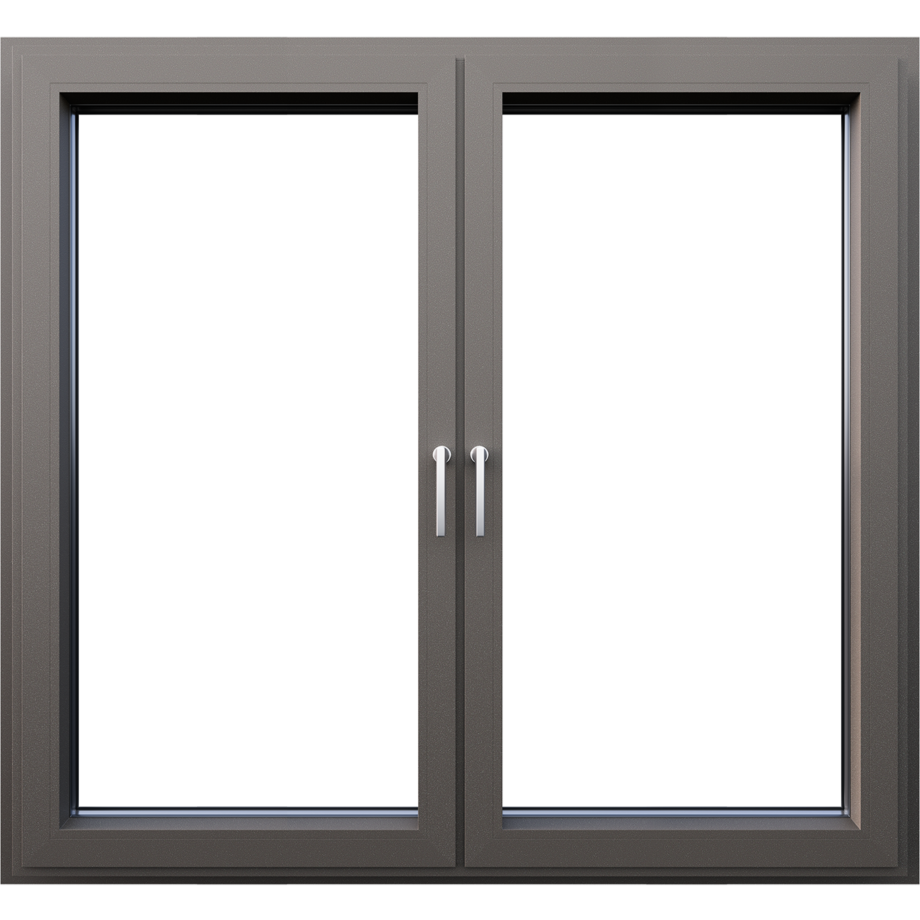
MIRU EVO STEEL combines the timeless character of traditional steel windows with the strength and insulation of aluminum. Ideal for industrial and loft-style projects, this system offers durability, minimalist design, and exceptional height potential.

MIRU EVO Standard
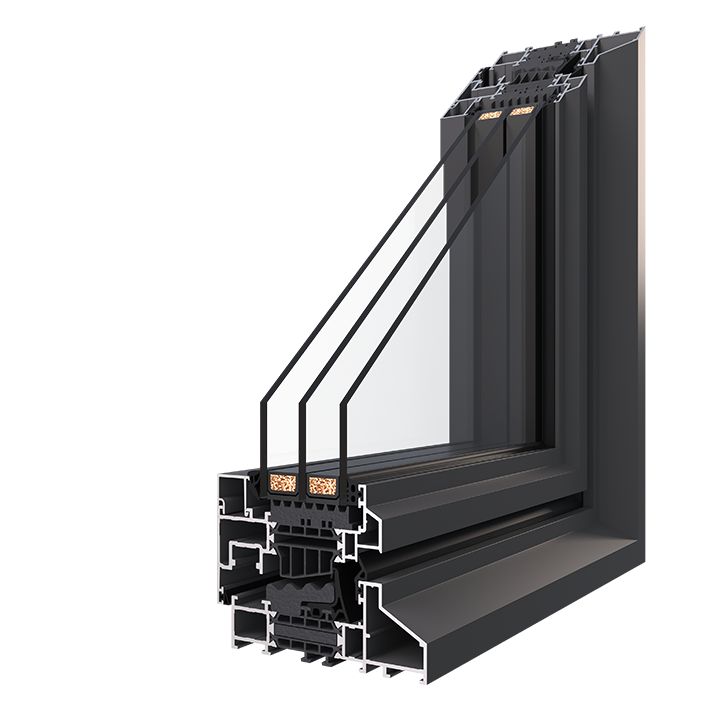
Experience the perfect balance of form and function with MIRU EVO Standard aluminum windows. Engineered for superior insulation and designed with modern aesthetics, they offer durability and style for any architectural vision.

MIRU EVO Storefront
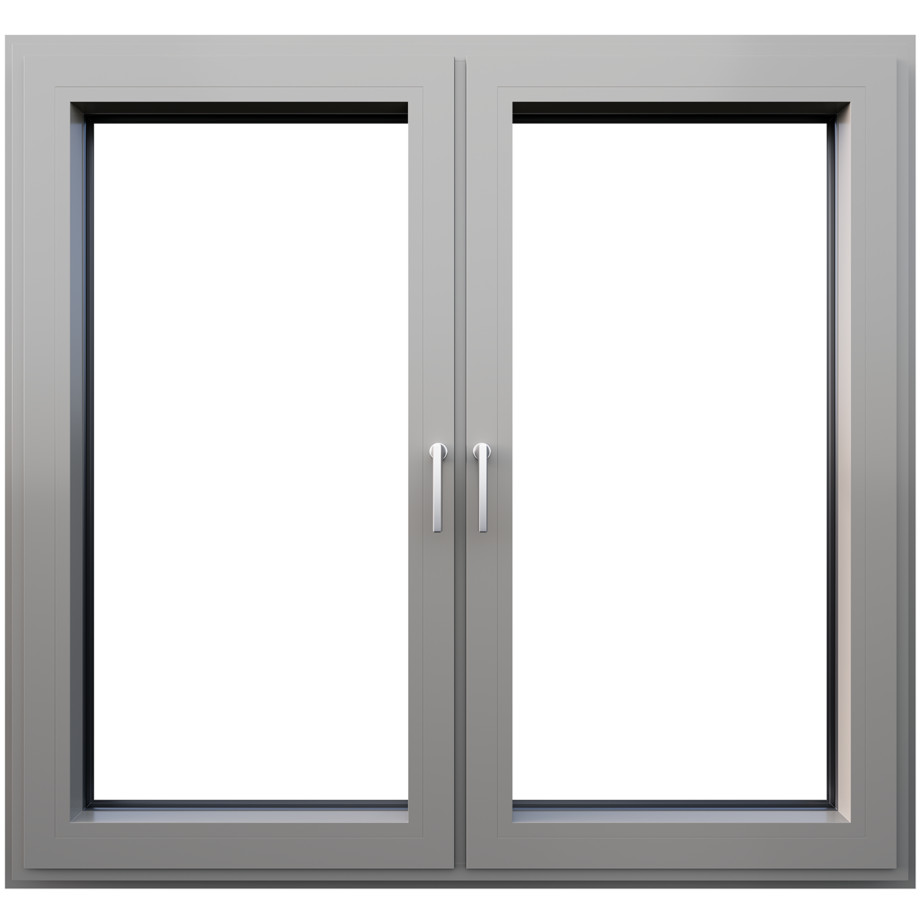
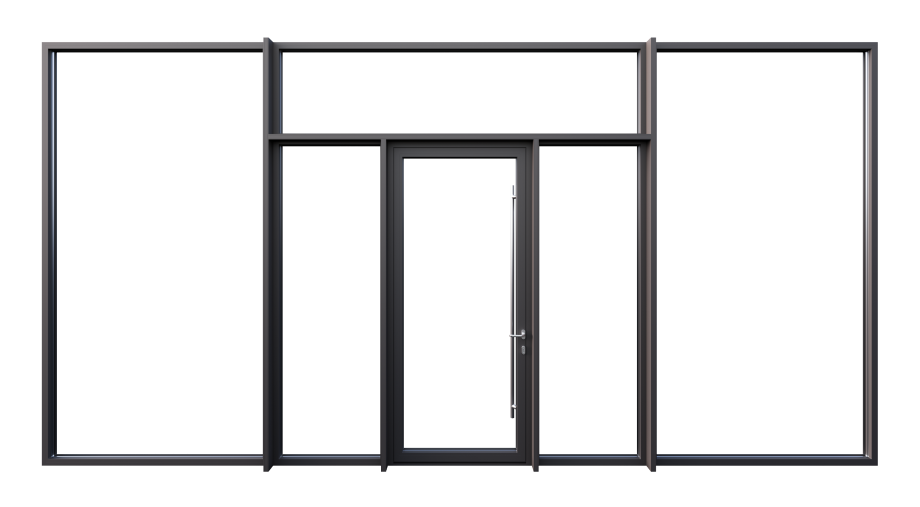
MIRU EVO Storefront combines sleek aluminum design with high performance, providing architects and builders with a versatile solution that ensures exceptional air tightness and thermal insulation.

Let’s talk about your project!
Request a quote, discuss specifications, or get help choosing the right system
Send a request
"*" indicates required fields
Aluminum Windows – Strong, Modern, and Energy-Efficient Solutions for U.S. Homes
OKNOPLAST MIRU EVO aluminum windows comprise a four-system thermally broken Tilt and Turn window and door line manufactured in Poland, available for the U.S. market in frame depths from 2 15/16″ to 4 1/8″ and maximum sash heights from 8’8″ to 10’2″. The MIRU EVO line covers four distinct performance and aesthetic specifications: MIRU EVO STANDARD (residential and light commercial, max 10’2″ × 5’3″); MIRU EVO STEEL (steel-look industrial and loft aesthetic, max 9’6″ × 5’3″); MIRU EVO HIDDEN (concealed hardware and flush sash, max 8’8″ × 4’1″); and MIRU EVO STOREFRONT (commercial curtainwall integration, max 9’10” × 5’3″, compatible with MIRU EVO STANDARD). All four systems operate as Tilt and Turn windows – a dual-function mechanism achieving air infiltration below 0.10 CFM/ft² at 25 Pa (ASTM E283), compared to 0.20-0.40 CFM/ft² for standard aluminum casement windows. NFRC-certified U-Factor values depend on glazing configuration; confirm with NFRC product label at time of specification. Lead time to U.S. delivery is 8-10 weeks from order confirmation. All systems carry a 10-year product guarantee.
What Are Aluminum Windows and How Do They Differ from uPVC and Wood?
Aluminum windows are fenestration systems with frames extruded from aluminum alloy – most commonly 6063-T5, with a yield strength of approximately 21,000 psi (145 MPa) per ASTM B221 – delivering the structural capacity for large-format sash sizes and narrow exterior sight lines that uPVC and wood frame systems cannot achieve at equivalent profile depth. The defining characteristic of aluminum as a frame material is the ratio of rigidity to cross-sectional mass: an aluminum frame of 2 15/16″ (75 mm) installation depth supports sash heights up to 10’2″ under standard residential wind load conditions, compared to the 102½” ceiling for uPVC profiles of equivalent depth.
Aluminum window frames are produced by forcing heated aluminum alloy billets through precision steel dies – the extrusion process – yielding profiles of consistent cross-section along the full frame length, with tight dimensional tolerances across production runs. This manufacturing precision is what makes large-scale commercial and multifamily projects feasible under a single system specification: a single extrusion die produces frames for a 3-story residential window and a 10-story curtainwall mullion to the same dimensional standard.
As a structural material, aluminum is approximately 2.7 times lighter than steel at equivalent volume, while maintaining a Young’s modulus of 69 GPa – roughly one-third of steel, but sufficient to carry the dead weight of large insulating glass units and design wind pressures without frame deflection at the sash sizes relevant to residential and commercial construction. This strength-to-weight ratio is the structural basis for aluminum’s dominance in curtainwall, storefront, and large-format operable window applications where uPVC is structurally insufficient.
The primary thermal limitation of aluminum is its thermal conductivity of approximately 205 W/(m·K) – roughly 8,000 times higher than still air and far higher than the multi-chamber uPVC compound it competes with. Without intervention, an aluminum frame conducts heat directly between interior and exterior, producing whole-unit U-Factor values of 0.60-1.20 BTU/hr·ft²·°F with standard double glazing – above IECC 2021 Table R402.1.2 thresholds for all eight U.S. climate zones. Modern thermally broken aluminum profiles address this by inserting a low-conductivity polymer barrier – typically polyamide (PA 66) – between the interior and exterior aluminum sections, reducing frame U-Factor to 0.35-0.55 BTU/hr·ft²·°F in properly configured profiles. All four MIRU EVO systems use this thermally broken construction as standard.
OKNOPLAST’s MIRU EVO line covers the full range of aluminum window applications in the U.S. market: tilt and turn residential windows in standard and steel-look profiles, concealed-hardware configurations for high-end residential and hospitality, and commercial-grade storefront systems compatible with the residential product family. The four-system line – MIRU EVO STANDARD, STEEL, HIDDEN, and STOREFRONT – addresses every specification context where aluminum is the required or preferred material over uPVC.
What Are Thermally Broken Aluminum Windows and Why Does the Thermal Break Configuration Matter?
Thermally broken aluminum windows insert a low-conductivity polymer barrier between the interior and exterior aluminum frame sections, reducing the frame U-Factor (Uf) from ≥ 1.0 BTU/hr·ft²·°F in non-broken aluminum to 0.35-0.55 BTU/hr·ft²·°F in properly broken profiles with triple low-E glazing – per LBNL THERM frame simulation methodology referenced in NFRC 100.
Aluminum’s thermal conductivity of approximately 205 W/(m·K) – equivalent to ~1,420 BTU·in/(hr·ft²·°F) – is roughly 8,000 times higher than still air (~0.026 W/m·K) and approximately 800 times higher than polyamide PA 66 (~0.25 W/m·K), per NIST materials data and ASHRAE Handbook of Fundamentals. Without a thermal break, an aluminum frame conducts heat directly from exterior to interior across the full frame cross-section, producing whole-unit U-Factor values of 0.60-1.20 BTU/hr·ft²·°F with standard double glazing – above IECC 2021 Table R402.1.2 thresholds for all eight climate zones. The polymer break insert interrupts this conductive pathway, making the frame thermally equivalent to a two-section assembly connected only through the low-conductivity barrier.
The configuration of the thermal break – its width, material, and bonding method – determines how much frame conductance is reduced. Wider breaks produce lower frame Uf values; the European industry standard for high-performance thermally broken aluminum is a polyamide (PA 66) break of 24-34 mm width, achieving frame Uf in the 0.35-0.45 BTU/hr·ft²·°F range per EN ISO 10077-2 simulation and NFRC THERM modeling. Narrow breaks below 14 mm, common in commodity-grade U.S. aluminum windows, achieve frame Uf of only 0.55-0.75 BTU/hr·ft²·°F – insufficient for IECC compliance in Climate Zones 4-8.
The MIRU EVO systems use factory-integrated thermal break construction throughout the frame, sash, and mullion profiles. The third perimeter seal on MIRU EVO STANDARD and MIRU EVO STEEL – in addition to the standard frame and sash gaskets – provides additional air infiltration resistance at the sash-to-frame interface, supporting the sub-0.10 CFM/ft² air leakage performance (ASTM E283) that Tilt and Turn multi-point locking delivers.
MIRU EVO System Comparison: Standard, Steel, Hidden, and Storefront The MIRU EVO STANDARD (frame depth 2 15/16″, max sash 10’2″ × 5’3″), MIRU EVO STEEL (frame depth 4 1/8″, max sash 9’6″ × 5’3″), MIRU EVO HIDDEN (frame depth 2 15/16″, max sash 8’8″ × 4’1″), and MIRU EVO STOREFRONT (max sash 9’10” × 5’3″, compatible with MIRU EVO STANDARD) are OKNOPLAST’s four thermally broken aluminum Tilt and Turn systems for the U.S. market, each addressing a distinct architectural and structural specification.
The four MIRU EVO systems cover the following specifications. MIRU EVO STANDARD: frame installation depth 2 15/16″ (75 mm), frame with sash depth 3 5/16″ (84 mm), frame and sash height 3 3/8″ (86 mm), maximum sash height 10’2″, maximum sash width 5’3″, Tilt and Turn operation, thermally broken, third perimeter seal, integrated nailing fin, compatible with MIRU EVO STOREFRONT, contemporary narrow sight lines – primary application: residential and light commercial. MIRU EVO STEEL: frame installation depth 4 1/8″ (105 mm), frame with sash depth 4 1/2″ (114 mm), frame and sash height 3 1/4″ (83 mm), maximum sash height 9’6″, maximum sash width 5’3″, Tilt and Turn operation, thermally broken, third perimeter seal, steel/industrial/loft aesthetic – primary application: industrial, loft, Crittall-inspired projects. MIRU EVO HIDDEN: frame installation depth 2 15/16″ (75 mm), frame with sash depth 3 5/16″ (84 mm), frame and sash height 3 7/16″ (87 mm), maximum sash height 8’8″, maximum sash width 4’1″, Tilt and Turn operation, thermally broken, concealed hardware, balcony doors available, flush/fixed-glaze exterior appearance – primary application: high-end residential and hospitality. MIRU EVO STOREFRONT: frame installation depth 2 15/16″ (75 mm), frame and sash height 2 1/6″ (52 mm), maximum sash height 9’10”, maximum sash width 5’3″, minimum mullion width 3 1/16″, maximum single glass door size 4’3″ × 9′, Tilt and Turn and fixed operation, thermally broken, compatible with MIRU EVO STANDARD, commercial curtainwall aesthetic – primary application: mid-rise multifamily and commercial. All four systems carry a 10-year product guarantee.
System selection decision tree:
-
Sash height > 102½” required: any MIRU EVO system (max 10’2″) vs uPVC systems (max 102½”)
-
Steel/industrial aesthetic required: MIRU EVO STEEL
-
Concealed hardware or hospitality specification: MIRU EVO HIDDEN
-
Curtainwall or storefront integration: MIRU EVO STOREFRONT
-
Standard residential or light commercial Tilt and Turn in aluminum: MIRU EVO STANDARD
How Does Tilt and Turn Operation in Aluminum Differ from Aluminum Casement Windows?
OKNOPLAST MIRU EVO aluminum Tilt and Turn windows achieve air infiltration below 0.10 CFM/ft² at 25 Pa (ASTM E283) – compared to 0.20-0.40 CFM/ft² for aluminum casement windows of equivalent structural grade – because the 3-to-5-point multi-point locking system draws the sash uniformly against the EPDM perimeter gasket at every compression point simultaneously, rather than relying on a single espagnolette rod or push-button latch.
The Tilt and Turn mechanism gives the aluminum sash two distinct operating positions from a single handle. At 90° rotation, the sash tilts inward from the top on a horizontal axis – the tilt opening is mechanically limited to 4-6 inches, providing ventilation while the multi-point lock holds all other perimeter points fully engaged. At 180° rotation, the sash swings fully inward on a vertical axis for cleaning, egress, or through-ventilation.
For aluminum specifically, the tilt position addresses a real-world installation concern: exterior casement windows require a full swing arc cleared of obstructions on the building exterior, limiting their use in tight urban sites, balcony-adjacent façades, or locations with solar shading fins. The inward tilt avoids the swing arc entirely while maintaining cross-ventilation performance.
Air infiltration performance comparison for aluminum windows by operation type:
By operation type, typical air leakage values (ASTM E283) are: Tilt and Turn with 5-point lock, below 0.10 CFM/ft² at 25 Pa (per AAMA 101/I.S.2/A440 and ASTM E283); casement with single espagnolette, 0.15-0.30 CFM/ft² at 25 Pa (AAMA Grade R); double-hung with single-point cam lock, 0.25-0.50 CFM/ft² at 25 Pa (AAMA Grade R); sliding non-lift, 0.30-0.60 CFM/ft² at 25 Pa (AAMA Grade R).
At infiltration rates below 0.10 CFM/ft² (ASTM E283), thermally broken aluminum Tilt and Turn windows contribute to PHIUS 2021+ envelope airtightness targets (≤ 0.05-0.08 CFM50/ft² of envelope) – a threshold significantly harder to achieve with standard sliding or casement aluminum systems, which typically contribute 0.20-0.60 CFM/ft² per window area at 25 Pa.
What Is MIRU EVO STEEL and How Does It Deliver Steel-Window Aesthetics Without Thermal Bridging?
The MIRU EVO STEEL system delivers the narrow sight lines and divided-light appearance of traditional steel-framed windows – the Crittall-style aesthetic associated with early 20th-century industrial and loft architecture – from a 4 1/8″ (105 mm) thermally broken aluminum frame that eliminates the 1.0-2.0 BTU/hr·ft²·°F thermal bridging penalty of genuine solid steel window profiles.
Traditional steel windows (W20, W40, and equivalent European cold-rolled profiles) achieve their characteristic narrow sight lines because mild steel’s yield strength – approximately 36,000 psi (250 MPa) per ASTM A36 for structural-grade mild steel used in window profiles – allows marginally thinner frame sections under equivalent loads than 6063-T5 aluminum at approximately 21,000 psi (145 MPa) yield per ASTM B221. The tradeoff is thermal performance: mild steel has a thermal conductivity of approximately 50 W/(m·K) (~347 BTU·in/(hr·ft²·°F)) – lower than aluminum but still approximately 2,000 times higher than still air (per NIST thermophysical data) – and cold-rolled steel profiles carry no thermal break at all, producing whole-unit U-Factor values of 0.55-0.90 BTU/hr·ft²·°F. For IECC 2021 compliance in Climate Zones 3-8, solid steel profiles fail the U-Factor requirement at the frame level regardless of glazing specification.
MIRU EVO STEEL reproduces the visual proportions of steel window profiles – including the characteristic divided-light sash geometry and the 4 1/8″ profile depth that approximates historic steel frame mass – while incorporating the same thermally broken aluminum construction as MIRU EVO STANDARD. The result is a system that meets IECC 2021 Table R402.1.2 U-Factor requirements in all climate zones where thermally broken aluminum qualifies (Zones 1-5 with appropriate glazing), while presenting a façade profile that satisfies the design intent of industrial, loft, adaptive-reuse, and historically inspired residential projects.
MIRU EVO STEEL is specified in:
-
Adaptive-reuse projects converting industrial buildings to residential occupancy, where the historic steel window pattern is a design constraint
-
New loft-aesthetic multifamily in Climate Zones 3-5, where cold-rolled steel windows would fail IECC compliance
-
High-end residential in urban markets (NYC, Chicago, San Francisco) where Crittall-style aesthetics command specification by name
The 4 1/8″ (105 mm) frame depth of MIRU EVO STEEL – vs 2 15/16″ for MIRU EVO STANDARD – reflects the heavier visual mass of the steel-reference profile geometry, not a structural requirement. Maximum sash height (9’6″) and width (5’3″) are comparable to MIRU EVO STANDARD.
MIRU EVO HIDDEN: How Does the Concealed Sash System Work and What Projects Specify It?
The MIRU EVO HIDDEN system conceals all hardware within a 2 15/16″ (75 mm) frame depth, producing a flush exterior sash appearance indistinguishable from a fixed glazing panel when closed – without the structural constraints of structural silicone glazing systems (SSGS) that cannot be operable.
The concealment mechanism relocates the hinge hardware from the exterior sash face to the interior frame-to-sash interface, eliminating, from the exterior surface, the visible hinge leaf, gap reveal, and operator hardware typical of standard Tilt and Turn windows. From the exterior, the MIRU EVO HIDDEN presents as a continuous planar glazing surface consistent across fixed and operable panels. From the interior, the handle and Tilt and Turn operation function identically to MIRU EVO STANDARD.
This system operates within a narrower maximum sash envelope than MIRU EVO STANDARD: 8’8″ maximum sash height (vs 10’2″) and 4’1″ maximum width (vs 5’3″). The size constraint reflects the structural consequence of concealing the hinge – the load path from sash dead weight and wind pressure passes through a modified internal hinge geometry that limits the maximum supportable sash area. Balcony door configurations are available within the system’s size envelope.
MIRU EVO HIDDEN is specified for:
-
High-end residential: Projects where the exterior façade treatment requires zero visible hardware – flush window walls, minimalist architectural envelopes, and all-glass exterior elevations where operable panels must be invisible from street level. Luxury residential in NYC, Miami, and coastal California consistently specify concealed-hardware systems as a façade uniformity requirement.
-
Hospitality (hotels, resorts): Hotel room windows and public-area glazing where the visible Tilt and Turn hardware conflicts with interior design specifications. International hotel brands operating in the U.S. market frequently specify concealed-sash systems from European suppliers; MIRU EVO HIDDEN is the OKNOPLAST product meeting this specification.
-
Contemporary multifamily: Mid-rise wood-frame and concrete multifamily projects in Climate Zones 3-5 where the exterior façade reads as a glass panel grid – operable MIRU EVO HIDDEN units are interspersed with MIRU EVO STOREFRONT fixed panels to maintain visual grid consistency.
MIRU EVO STOREFRONT: Curtainwall Integration and Residential System Compatibility
The MIRU EVO STOREFRONT system supports single-glass door openings up to 4’3″ × 9′ and spans up to 9’10” sash height with a minimum mullion width of 3 1/16″ – and is directly compatible with MIRU EVO STANDARD, allowing mixed operable and fixed fenestration within a single mid-rise envelope using one thermal break construction standard and one finish specification.
Storefront aluminum systems are the primary fenestration specification for commercial podium and mixed-use multifamily in the U.S. market. ASHRAE 90.1 (referenced by IECC for commercial construction) sets U-Factor and SHGC requirements for commercial fenestration by climate zone and building type; thermally broken aluminum storefront systems meeting these requirements are a standard commercial specification item. MIRU EVO STOREFRONT’s compatibility with MIRU EVO STANDARD means that a mid-rise building can specify one aluminum family across ground-floor storefront, residential unit windows, and balcony doors – a logistical and aesthetic simplification that reduces field coordination between frame systems, finish specifications, and installation trade sequences.
The 3 1/16″ minimum mullion width is a structural and optical specification: narrow mullions maximize the glass-to-opaque ratio of a curtainwall grid. At 3 1/16″, the MIRU EVO STOREFRONT mullion falls within the narrow-profile range of domestic commercial aluminum storefront systems, enabling glass-to-opaque ratios comparable to slim-stile domestic specifications. The consequence is a higher effective VT (Visible Transmittance) at the building envelope level, independent of the glazing unit’s VT rating, because less façade area is occupied by opaque frame material.
Maximum single glass door size in the MIRU EVO STOREFRONT system is 4’3″ × 9′ – covering standard commercial door openings without requiring a separate door system.
IECC 2021 and ENERGY STAR Compliance for Thermally Broken Aluminum Windows
Thermally broken aluminum windows with triple low-E glazing meet IECC 2021 Table R402.1.2 U-Factor requirements for Climate Zones 1-4 (≤ 0.30 BTU/hr·ft²·°F) across the MIRU EVO product range; Climate Zones 5-6 compliance (≤ 0.27 BTU/hr·ft²·°F) depends on glazing configuration and is verified at the unit level by NFRC certification at time of specification.
Aluminum Window Compliance by Climate Zone
In Climate Zones 1-2 the IECC 2021 maximum U-Factor is 0.40; thermally broken aluminum with triple low-E typically achieves 0.28-0.38, and all MIRU EVO configurations comply. In Zones 3-4 the maximum is 0.30; MIRU EVO configurations in the lower end of the 0.28-0.38 typical range comply. In Zones 5-6 the maximum is 0.27; optimized triple-glazed MIRU EVO configurations achieving 0.24-0.30 comply in selected configurations – verify NFRC unit-level values at time of specification. In Zones 7-8 the maximum is 0.22; thermally broken aluminum typically achieves 0.26-0.35 and compliance is rarely achievable – specify the PAVA uPVC system for those zones.
U-Factor ranges represent industry-typical values for thermally broken aluminum with triple low-E argon fill per NFRC THERM frame simulation methodology. Actual NFRC-certified unit values depend on sash size, glazing specification, and thermal break configuration. Verify with NFRC product label at time of specification.
ENERGY STAR 2025 – U-Factor Thresholds by Climate Zone
ENERGY STAR 2025 sets the following U-Factor and SHGC thresholds by climate zone: Northern ≤ 0.27 (no SHGC requirement); North-Central ≤ 0.28 with SHGC ≤ 0.40; South-Central ≤ 0.30 with SHGC ≤ 0.25; Southern ≤ 0.32 with SHGC ≤ 0.25. MIRU EVO systems in optimized triple-glazed configurations fall within these thresholds for Zones 1-5. ENERGY STAR certification for MIRU EVO systems is currently pending EPA approval – verify current status at energystar.gov before specifying for projects with ENERGY STAR compliance requirements.
For commercial projects, ASHRAE 90.1 governs fenestration U-Factor and SHGC requirements; compliance is verified through NFRC-certified whole-unit values, not center-of-glass values. MIRU EVO STOREFRONT, as a thermally broken system, is the appropriate specification for ASHRAE 90.1 commercial compliance – non-broken aluminum storefront systems cannot meet ASHRAE 90.1 requirements in Climate Zones 3-8.
The assumption that thermally broken aluminum cannot compete with uPVC on energy code compliance understates what properly specified European aluminum systems deliver: MIRU EVO STANDARD in optimized triple-glazed configurations meets IECC 2021 Table R402.1.2 U-Factor requirements for Climate Zones 1-5 – covering the majority of the U.S. population – while providing large-format sash heights and commercial-grade structural ratings that uPVC systems categorically cannot reach. The specification choice is not aluminum vs uPVC on thermal performance alone; it is aluminum vs uPVC on the full set of project requirements, of which U-Factor is only one.
Which Building Types, Climate Zones, and Project Standards Specify Thermally Broken Aluminum Tilt and Turn Windows?
MIRU EVO aluminum Tilt and Turn windows are specified when the project requires sash dimensions above 102½” height (the uPVC ceiling), narrow aluminum sight lines with thermally broken performance, steel-look industrial aesthetics, concealed hardware for high-end or hospitality applications, or commercial-grade curtainwall integration – contexts where uPVC profiles are structurally insufficient, architecturally inappropriate, or logistically incompatible.
Large-format residential – Climate Zones 3-6: Sash heights above 102½” (8’6.5″) exceed the structural capacity of both the PAVA and PIXEL uPVC systems. MIRU EVO STANDARD supports sash heights to 10’2″ – a 20% increase in maximum sash height – enabling full-height operable window specifications in standard 9-foot (108″) and 10-foot (120″) ceiling heights without fixed-panel workarounds. In a 9-foot ceiling residence where the rough opening header begins at 108″, a uPVC unit is structurally limited to 102½” – 5.5 inches below that ceiling height – while MIRU EVO STANDARD reaches the full 108″ opening without supplemental fixed panels.
Industrial and adaptive-reuse projects: Converting warehouse or industrial buildings to residential occupancy typically requires fenestration that matches or references the original steel window pattern. MIRU EVO STEEL satisfies this design intent while meeting IECC 2021 code requirements that original cold-rolled steel profiles cannot. Specifiers in Chicago, Brooklyn, and Philadelphia’s adaptive-reuse markets have increasingly adopted thermally broken aluminum as the code-compliant substitute for historic steel windows.
Luxury residential and hospitality – any climate zone: MIRU EVO HIDDEN is specified wherever the exterior façade must present a uniform glazing plane without visible hardware. Five-star hotel rooms, luxury multifamily tower units, and high-end custom homes in warm and mixed climates (FL, CA, TX, NC) frequently specify concealed-hardware aluminum systems specifically because standard Tilt and Turn hardware is architecturally incompatible with the interior design package.
Mid-rise multifamily new construction – Climate Zones 3-6: MIRU EVO STOREFRONT with MIRU EVO STANDARD integration addresses the full fenestration scope of 5-12 story mixed-use and residential buildings under a single product family. ASHRAE 90.1 references IECC commercial fenestration requirements, which thermally broken aluminum meets where non-broken alternatives fail. Specifying one MIRU EVO product family throughout the building simplifies the coordination: one manufacturer, one thermal break standard, one installation sequence, one warranty.
Specification decision by project type:
For high-end residential projects where sash height does not exceed 8’8″ and concealed hardware is required, specify MIRU EVO HIDDEN – the flush exterior appearance is the primary driver. For standard residential or light commercial Tilt and Turn in aluminum at any height up to 10’2″, specify MIRU EVO STANDARD – the widest sash range and third perimeter seal make it the baseline specification. For loft, industrial, or adaptive-reuse projects where Crittall-style aesthetics are a design requirement, specify MIRU EVO STEEL – thermally broken aluminum with steel-window visual proportions. For mid-rise multifamily or commercial projects requiring mixed operable and fixed fenestration with ASHRAE 90.1 compliance, specify MIRU EVO STOREFRONT combined with MIRU EVO STANDARD – curtainwall integration under a single product family.
Thermally Broken Aluminum vs. uPVC: When Does the Project Require Aluminum?
Thermally broken aluminum achieves a structural weight-to-rigidity ratio that allows the MIRU EVO STANDARD to support 10’2″ sash heights – 20% above the 102½” uPVC ceiling of the PAVA and PIXEL systems – but carries a thermal performance differential: aluminum frames at equivalent depth typically produce frame U-Factor (Uf) of 0.35-0.55 BTU/hr·ft²·°F, compared to 0.20-0.35 BTU/hr·ft²·°F for 7-chamber uPVC at equivalent depth, per NFRC THERM frame simulation methodology.
The specification decision between aluminum and uPVC resolves into four distinct conditions:
-
-
Condition 1 – Sash height: For any operable unit requiring sash height above 102½”, aluminum is the required specification. uPVC cannot structurally support this format without intermediate fixed panels.
-
Condition 2 – Aesthetic: Contemporary aluminum sight lines, steel-window aesthetics (MIRU EVO STEEL), or concealed hardware (MIRU EVO HIDDEN) are specification requirements that uPVC cannot satisfy. Color-matched aluminum also holds powder-coat finish more precisely than uPVC foil lamination across large exterior surface areas subject to differential thermal expansion.
-
Condition 3 – Building type: Commercial mid-rise, storefront, and curtainwall applications call for aluminum under ASHRAE 90.1 and standard commercial specification practice. uPVC is not specified for curtainwall integration in U.S. commercial construction.
-
Condition 4 – Thermal performance priority: For projects where U-Factor ≤ 0.20 is required (PHIUS 2021+, IECC Zone 7-8), the PAVA uPVC system (U-Factor 0.14-0.26) delivers lower whole-unit U-Factor than thermally broken aluminum in equivalent glazing configurations. For passive house projects in Climate Zones 5-8, uPVC Tilt and Turn is the more thermally efficient specification.
-
Material Decision Matrix
The key decision factors between aluminum and uPVC are as follows. Maximum operable sash height: MIRU EVO STANDARD reaches 10’2″; uPVC PAVA/PIXEL is limited to 102½”. Frame U-Factor (Uf): aluminum at 0.35-0.55 BTU/hr·ft²·°F; 7-chamber uPVC at 0.20-0.35 BTU/hr·ft²·°F. Steel-window aesthetic: available in MIRU EVO STEEL; not achievable in uPVC. Concealed hardware: available in MIRU EVO HIDDEN; not available in uPVC. Curtainwall and storefront integration: MIRU EVO STOREFRONT; uPVC is not specified for curtainwall in U.S. commercial construction. PHIUS passive house specification: uPVC PAVA is the recommended choice due to lower Uf; MIRU EVO aluminum is not recommended for PHIUS-targeting projects. IECC Zone 7-8 compliance: rarely achievable in aluminum; achievable in PAVA selected configurations. Air infiltration with Tilt and Turn operation: below 0.10 CFM/ft² (ASTM E283) in both material systems. Exterior finish: powder coat (RAL colors, anodized option) for MIRU EVO; co-extruded color foil for uPVC. §25C eligibility: verify with your authorized dealer – ENERGY STAR certification is pending for both material systems.
Color Finishes, Anodized Coatings, and Custom Configurations
All MIRU EVO systems are available in powder-coated finish applied at 60-80 microns dry film thickness – standard exterior colors include black (RAL 9005), anthracite grey (RAL 7016), white (RAL 9010), and silver-grey (RAL 7001) – with Class I anodized finish (20-25 microns, per AAMA 611) available for coastal and high-exposure applications. Powder coating is applied electrostatically and cured at high temperature, producing a uniform, hard surface resistant to UV degradation, chipping, and scratching under standard residential and commercial use conditions.
For coastal applications within 5 miles of saltwater, anodized finishes are available on all MIRU EVO systems. Anodizing creates an electrochemically bonded aluminum oxide layer on the profile surface – not a coating but a conversion of the aluminum itself – providing corrosion resistance superior to powder coat in chloride-laden environments. Anodize thickness of 20-25 microns (Class I) is the commercial specification for high-exposure coastal locations, per AAMA 611 Voluntary Specification for Anodized Architectural Aluminum.
All four MIRU EVO systems support custom non-rectangular shapes – arched, radius, and trapezoidal – fabricated to order, consistent with OKNOPLAST’s made-to-order production model. MIRU EVO STOREFRONT accepts custom mullion configurations for column cover, corner-mullion, and head/sill cap profiles.
Dual-color finishing (different interior and exterior colors within the same frame) is available across the MIRU EVO line, a specification common in mid-rise multifamily where exterior facade uniformity requires one color and interior finishes require another.
Lead Time, Production, and Logistics for U.S. Projects
OKNOPLAST MIRU EVO aluminum windows carry an 8-10 week lead time from confirmed order to delivery on U.S. soil: approximately 4-5 weeks production at the production facility in Poland, plus 4-5 weeks ocean freight and U.S. customs clearance. All units are made-to-order; production specifications are fixed at order confirmation. This lead time is consistent across all four MIRU EVO systems, all finish colors, and all non-standard shapes within each system’s size envelope.
For mid-rise multifamily and commercial projects specifying MIRU EVO STOREFRONT with MIRU EVO STANDARD, your authorized OKNOPLAST dealer can provide coordinated shop drawing review for the full fenestration scope – aligning frame depths, mullion alignments, and rough opening dimensions across the mixed system specification. This is particularly relevant for projects where MIRU EVO STOREFRONT units and MIRU EVO STANDARD or MIRU EVO HIDDEN units appear on adjacent elevations.
Production capacity across all OKNOPLAST production operations in Poland is 2.3 million units per year. All MIRU EVO systems carry a 10-year product guarantee. ISO 14001 environmental management certification covers the full production operation.
FAQ
A thermally broken aluminum window inserts a low-conductivity polymer barrier – typically polyamide (PA 66) – between the interior and exterior aluminum frame sections, reducing frame U-Factor (Uf) from ≥ 1.0 BTU/hr·ft²·°F in non-broken aluminum to 0.35-0.55 BTU/hr·ft²·°F in broken profiles with triple low-E glazing, per NFRC THERM simulation methodology. The break interrupts the direct aluminum-to-aluminum heat conduction path across the frame cross-section.
OKNOPLAST offers four thermally broken aluminum Tilt and Turn systems for the U.S. market: MIRU EVO STANDARD (residential/light commercial, max 10’2″ × 5’3″), MIRU EVO STEEL (steel-look industrial aesthetic, max 9’6″ × 5’3″), MIRU EVO HIDDEN (concealed hardware, max 8’8″ × 4’1″), and MIRU EVO STOREFRONT (curtainwall integration, max 9’10” × 5’3″, compatible with MIRU EVO STANDARD). All systems carry a 10-year guarantee.
Thermally broken aluminum with triple low-E glazing meets IECC 2021 Table R402.1.2 U-Factor requirements for Climate Zones 1-4 (≤ 0.30 BTU/hr·ft²·°F) and, in optimized configurations, Climate Zones 5-6 (≤ 0.27 BTU/hr·ft²·°F). Zone 7-8 compliance (≤ 0.22) is rarely achievable with aluminum; specify the PAVA uPVC system for those zones. Verify NFRC-certified unit-level values for the specific glazing configuration at time of specification.
MIRU EVO STANDARD uses a 2 15/16″ (75 mm) frame installation depth with modern narrow sight lines – the standard residential and light commercial specification. MIRU EVO STEEL uses a 4 1/8″ (105 mm) frame installation depth, replicating the heavier visual mass of traditional steel window profiles (Crittall-style) in a thermally broken aluminum construction. Both operate as Tilt and Turn windows. Specify MIRU EVO STEEL for industrial, loft, or adaptive-reuse aesthetics; specify MIRU EVO STANDARD for standard contemporary residential or commercial specifications.
MIRU EVO HIDDEN relocates the hinge and hardware from the exterior sash face to an internal frame-to-sash interface, producing a flush exterior appearance indistinguishable from fixed glazing when closed. From the interior, the Tilt and Turn handle and operation are standard. Maximum sash dimensions are 8’8″ height and 4’1″ width. Balcony door configurations are available. The system is specified for high-end residential, luxury hospitality, and contemporary multifamily where visible hardware conflicts with the exterior facade specification.
MIRU EVO aluminum Tilt and Turn windows achieve air infiltration below 0.10 CFM/ft² at 25 Pa (ASTM E283) – compared to 0.20-0.40 CFM/ft² for aluminum casement windows – because the 3-to-5-point multi-point locking system simultaneously engages all perimeter lock points, drawing the sash uniformly against the EPDM gasket. This level supports PHIUS 2021+ airtightness targets (envelope ≤ 0.05-0.08 CFM50/ft²) for projects in Climate Zones 3-5.
Specify aluminum (MIRU EVO) when: the sash height exceeds 102½” (the uPVC ceiling); the aesthetic requires steel-look or concealed hardware; the project is commercial mid-rise referencing ASHRAE 90.1; or curtainwall/storefront integration is required. Specify uPVC (PAVA or PIXEL) when maximum thermal performance is the priority (PHIUS, Zone 7-8 IECC). Both material systems achieve sub-0.10 CFM/ft² air infiltration with Tilt and Turn operation (ASTM E283). For impact-resistant applications in Florida, contact your authorized OKNOPLAST dealer for current product availability and applicable certifications.
All MIRU EVO systems are available in powder-coated RAL colors including black (RAL 9005), anthracite grey (RAL 7016), white (RAL 9010), and custom RAL shades. Anodized finishes (Class I, 20-25 microns, per AAMA 611) are available for coastal applications requiring corrosion resistance beyond powder coat. Dual-color specifications (different interior and exterior colors) are available across all systems.
Lead time is 8-10 weeks from confirmed order to U.S. delivery: 4-5 weeks production at the facility in Poland and 4-5 weeks ocean freight and customs clearance. All units are made-to-order. Contact your authorized OKNOPLAST dealer for shop drawing review and order coordination.
Yes. MIRU EVO STOREFRONT is compatible with MIRU EVO STANDARD, enabling mixed operable-and-fixed fenestration within a single residential or mixed-use building under one aluminum family. It is specified in mid-rise multifamily (5-12 stories), ground-floor commercial podium, and contemporary residential applications where floor-to-ceiling glazing with commercial-grade structural performance is required. Maximum single glass door size is 4’3″ × 9′.
ENERGY STAR certification for MIRU EVO systems has been submitted to the EPA and is currently pending approval. Verify current certification status at energystar.gov before specifying for projects with ENERGY STAR compliance requirements. MIRU EVO systems in optimized triple-glazed configurations produce U-Factor values within ENERGY STAR thresholds for Climate Zones 1-5.