


Windows Near Highways & Airports: How Many Decibels Can You Actually Cut?


If your project is near a highway or airport, the right windows can make a noticeable difference indoors. In some high-performance configurations, noise reduction can reach several tens of decibels. But there is no simple answer: the glass, frame, seals and installation all affect the result. Ultimately, it depends.
Key Takeaways:
- A high-performance window can reduce exterior traffic noise by tens of decibels.
- OITC is particularly useful when specifying windows for transportation noise, while STC helps compare resistance to airborne sound transmission.
- Asymmetric glass thickness can improve sound attenuation by shifting the critical frequencies of individual panes.
- A high acoustic rating can be undermined by air leakage, making continuous frame seals and properly sealed rough openings essential.
- Window acoustic performance depends on the complete assembly, including glazing, frame, dimensions and installation.

How climate and traffic noise characteristics affect window soundproofing choices
The right window for a noisy site depends on the building’s climate zone and the frequency profile of the noise it needs to block. Highway traffic noise can contain substantial low-frequency energy, particularly from heavy trucks, while aircraft noise has a broader and more complex frequency profile. Climate adds another consideration: glazing must balance soundproofing with insulation and solar-control requirements.
In Northern and North-Central projects, thermal performance and airtightness are major considerations alongside traffic noise. In South-Central and Southern zones, solar heat gain becomes increasingly important, so glazing must also meet the project’s SHGC requirements.
Noise barriers can reduce the sound reaching a building, but windows can become a weaker acoustic path than a properly designed opaque wall. The complete façade therefore needs to be considered when specifying soundproofing for sites near highways or airports.
Made-to-measure manufacturing can also accommodate non-standard openings, including non-rectangular formats, but final thermal and acoustic performance should be confirmed for the specific configuration and dimensions.
| Climate Zone | Primary Challenge | OKNOPLAST US Solution |
| Northern | Cold temperatures, heating demand and traffic noise | Triple-pane glazing with a U-Factor as low as 0.14, combined with airtight frames |
| North-Central | Seasonal temperature changes and transportation noise | Multi-pane glazing with strong thermal and acoustic performance |
| South-Central | Heat gain combined with traffic noise | Acoustic glazing selected alongside project-specific SHGC requirements |
| Southern | Solar heat gain, cooling loads and exterior noise | High-performance glazing with appropriate SHGC and airtight installation |
Field Note: Start with the actual noise source, not simply the distance to a highway or airport. Two sites at the same distance can require different soundproofing strategies.
How Sound Transmission Class (STC) ratings inform window selection for noise mitigation
Sound Transmission Class (STC) is a standardized rating for comparing airborne sound transmission, but it is not the number of decibels a window removes from outdoor noise. A higher STC generally means greater resistance to airborne sound transmission under standardized laboratory conditions.
So, how many decibels can you actually cut? In one published OKNOPLAST example, optimized triple-pane laminated windows rated STC 45 / OITC 38 reduced 75 dB of arterial road traffic to approximately 30–32 dB indoors. This is a specific example, not a universal reduction for every window or building.
For transportation noise, OITC can provide additional information because it is designed around outdoor-indoor sound attenuation from transportation sources. STC and OITC should therefore be treated as acoustic performance ratings, not as a simple number to subtract from the outdoor sound level.
When comparing window acoustic performance, keep three points in mind:
- STC compares resistance to airborne sound transmission under standardized laboratory conditions.
- OITC is particularly relevant when evaluating outdoor transportation noise, including highway and aircraft sources.
- Neither rating should be treated as a direct decibel reduction from the exterior sound level.
The same caution applies when comparing noise reduction strategies such as acoustic laminated glass or secondary glazing. Both can improve acoustic performance, but their effectiveness depends on the complete window assembly and the way it is installed. Actual indoor performance also depends on walls, doors, roofs, ventilation openings and other potential paths for sound.
| STC Range | Window Type | Best For |
| STC 28 | Basic glazing configuration | Lower exterior noise exposure |
| STC 35–40 | Enhanced acoustic configuration | Homes near busy roads and urban traffic |
| STC 45+ | High-performance acoustic configuration | Particularly demanding noise environments when supported by tested data |
Field Note: When reviewing acoustic submittals, look beyond the headline STC number and check the tested configuration, OITC rating and available frequency-band data.
Current OKNOPLAST PAVA documentation lists STC 32–46 and OITC 26–37, with tested or calculated parameters depending on construction type and element dimensions.

How acoustic laminated glass reduces noise near highways and airports
Acoustic laminated glass can improve noise reduction by using a damping interlayer that reduces vibration through the glass. This makes it useful for soundproofing homes exposed to highways, airports and other persistent exterior noise.
Its performance depends on the complete glazing configuration, including glass thickness, asymmetry, cavity dimensions and the interlayer. Acoustic laminated glass therefore works best as part of a complete window assembly rather than as a standalone acoustic upgrade.
For highways, the glass configuration should account for traffic noise, including the low-frequency component associated with heavy vehicles. For airports, the broader and more complex aircraft spectrum makes tested acoustic data particularly valuable.
| Noise Source | Frequency Range | Acoustic Glass Benefit |
| Highway tire noise | Broad spectrum, with significant mid- and higher-frequency content | Laminated glass can improve damping and sound attenuation |
| Heavy truck low-frequency noise | Strong low-frequency component | Appropriate glass mass and configuration can improve low-frequency performance |
| Airport noise | Broad and complex spectrum | Acoustic laminated glass can contribute to improved outdoor-indoor sound attenuation |
Field Note: Adding laminated glass is not the same as specifying an acoustic window. Glass thickness, cavity and frame still need to work together.
How double-pane and triple-pane windows improve soundproofing and insulation
Triple-pane windows provide an additional glass layer and sealed cavity compared with double-pane windows, improving thermal insulation and potentially increasing sound attenuation — but the final acoustic performance depends on the complete glazing and window configuration.
A double-pane IGU has two glass layers separated by one sealed cavity, while a triple-pane IGU adds a third glass layer and a second cavity. This creates additional mass and separation within the glazing assembly, which can improve resistance to sound transmission while also reducing heat transfer.
How the configurations compare
- Single-pane: One glass layer and no insulating cavity, providing the least thermal and acoustic separation.
- Double-pane: Two glass layers and one sealed cavity, providing a significant improvement over single glazing.
- Triple-pane: Three glass layers and two sealed cavities, providing additional thermal insulation and another barrier within the glazing assembly.
- Triple-pane + acoustic laminated glass: Adds a damping mechanism to the multi-layer configuration and can further improve sound attenuation.
The acoustic benefit of moving from double to triple glazing still depends on the complete configuration. When comparing systems, consider:
- Glass thickness: Different pane thicknesses can affect sound transmission independently of the number of panes.
- Pane asymmetry: Using panes of different thicknesses can help address weaknesses at specific frequencies.
- Cavity dimensions: The size and configuration of the sealed cavities influence both thermal and acoustic performance.
- Acoustic laminated glass and frame seals: A PVB interlayer can add sound damping, while the frame and seals help prevent sound from bypassing the glazing.
For thermal performance, the additional glass layer and sealed cavity reduce heat transfer through the glazing. Argon-filled cavities primarily support thermal performance; argon should not be treated as the main reason a window achieves a high acoustic rating.
| Configuration | U-Factor | Key Acoustic Advantage |
| Single-pane | Varies by glazing and system | Basic configuration with limited acoustic and thermal performance |
| Double-pane argon | Varies by complete window configuration | Two glazing layers separated by a sealed cavity improve thermal and acoustic performance |
| Triple-pane argon + acoustic glass | PAVA: 0.14–0.26 | Multiple glass layers and cavities combined with acoustic glazing can improve sound attenuation |
Field Note: More panes do not automatically mean more noise reduction. Compare the tested acoustic performance of the complete window assembly.
For PAVA, current documentation lists a U-Factor of 0.14–0.26, with performance depending on the specific construction and element dimensions.
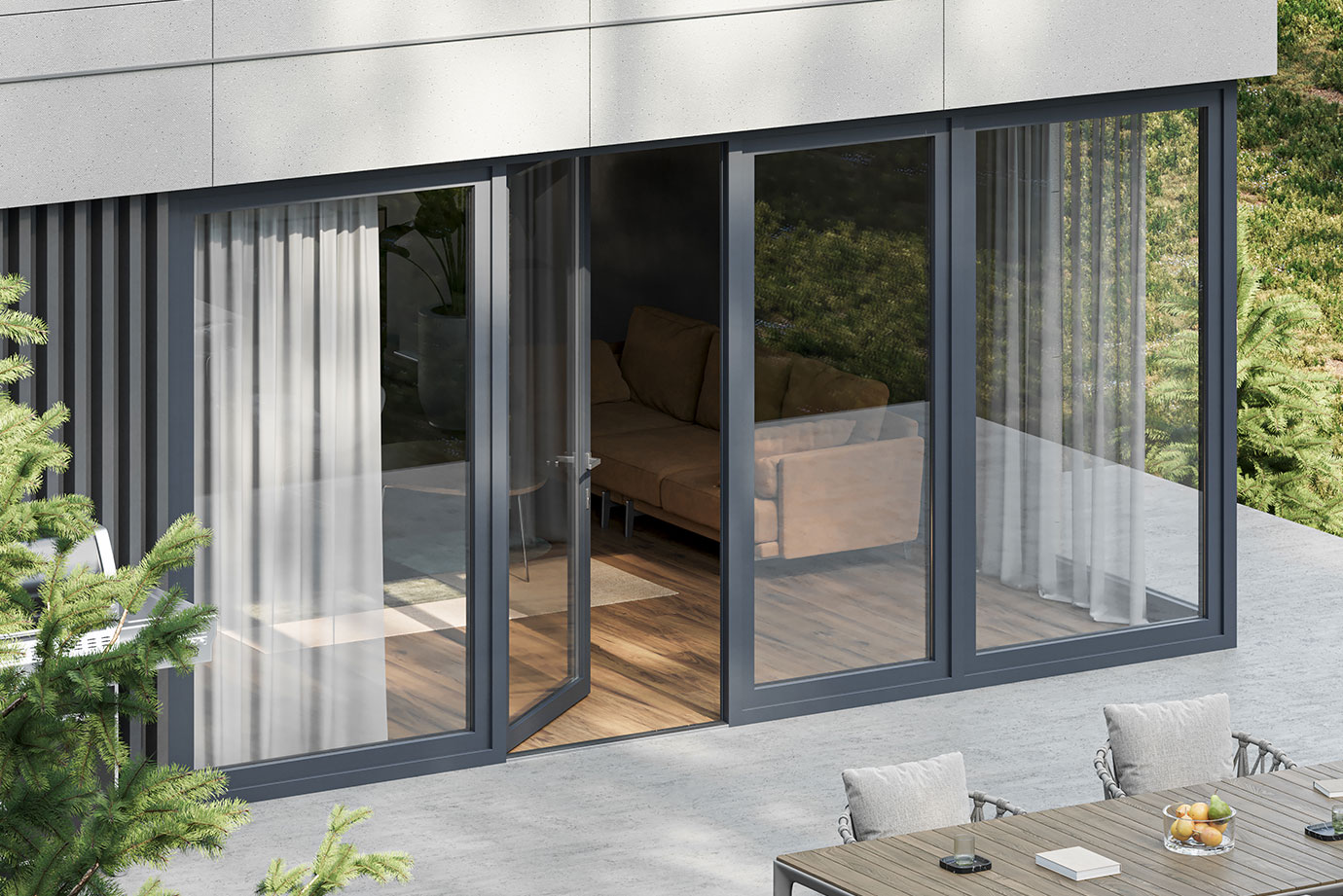
How asymmetric glass thickness enhances sound transmission class (STC) ratings
Asymmetric glass thickness can improve sound attenuation by changing the way individual panes respond to sound vibration. Different pane thicknesses shift their critical frequencies, helping reduce weaknesses that can occur when panes have identical thicknesses.
A combination such as 4 mm and 6 mm glass can be used as an example of asymmetric glazing, but it should not be treated as a universal formula for achieving a particular STC. The final result depends on the complete glazing configuration.
The reason is related to the coincidence effect: at certain frequencies, a glass pane can vibrate more efficiently in response to incoming sound, reducing its transmission loss. Using panes with different thicknesses shifts these critical frequencies, which can help prevent the same acoustic weakness from occurring across the glazing assembly at the same frequency.
Adding a PVB interlayer can provide another acoustic mechanism by damping glass vibration. When asymmetric glass and laminated glass are combined, the different pane thicknesses and the damping effect of the interlayer can work together to improve overall noise reduction.
| Glass Configuration | Coincidence Effect | STC Benefit |
| Symmetric equal-thickness | Similar critical-frequency behavior | Less opportunity to optimize the acoustic response |
| Asymmetric thickness only | Different critical frequencies | Can improve sound attenuation across parts of the frequency range |
| Asymmetric + PVB interlayer | Different critical frequencies plus damping | Can provide stronger overall noise reduction |
Field Note: Asymmetric glass is a design variable, not a guaranteed STC formula. Always use the tested or calculated performance of the actual glazing.
How window frame materials and tight seals prevent noise leakage
A well-designed frame and continuous seals are essential because even a small air path can undermine acoustic performance. The glass may have excellent acoustic properties, but sound can bypass it through gaps around the sash, frame or rough opening.
Vinyl windows can provide strong acoustic performance when paired with appropriate frame geometry and compression seals. Fiberglass windows and aluminum systems can also perform well when the complete assembly is properly designed and sealed.
For example, OKNOPLAST US uPVC systems use multi-chamber profiles with steel reinforcement and continuous EPDM compression gaskets. This combination provides structural rigidity and helps maintain a continuous seal around the sash, supporting the acoustic performance of the complete window assembly.
The important issue is not the frame material alone but continuous frame seals and effective air sealing between the window and the building envelope. Exterior noise barriers can reduce exposure, but they do not replace a properly sealed window.
| Frame Material | Thermal Conductivity | Acoustic Advantage |
| uPVC | Low | Multi-chamber profiles and continuous seals can support strong acoustic performance |
| Aluminum | Higher than uPVC or fiberglass | Can perform well with appropriate glazing and airtight seals |
| Fiberglass | Low | Rigid construction can support stable, well-sealed assemblies |
Field Note: For noise control, specify the frame, glazing and seals as one acoustic system. Material choice alone does not determine performance.
How window design types influence noise reduction and air tightness
Window design types influence noise reduction because the way a sash closes determines how continuously it can seal against the frame. Compression-sealed designs generally offer strong air tightness because the sash presses against gaskets when closed.
OKNOPLAST US Tilt and Turn Windows use a compression-seal approach. Casement windows can also provide strong acoustic performance with continuous compression seals, while double-hung windows and sliding windows require particular attention to their moving interfaces.
Sliding and double-hung designs have moving interfaces where maintaining continuous compression can be more challenging than in a fully compression-sealed design. The operating style should therefore be evaluated together with the complete frame, hardware and seal design.
| Window Type | Seal Type | Noise Leakage Risk |
| OKNOPLAST US Tilt and Turn Windows | Continuous compression gaskets | Lower leakage risk when correctly installed and adjusted |
| Casement windows | Compression seals | Low when the sash closes evenly against the gasket |
| Double-hung windows | Sliding/compression interfaces | Greater attention required at meeting rails and seals |
| Sliding windows | Sliding seals | Potentially higher leakage through moving interfaces |
Field Note: When noise reduction is a priority, check how the sash seals when fully closed and locked—not just the window’s glass specification.

How weatherstripping and low expansion spray foam improve window noise sealing
Proper installation prevents noise leakage through the joints between the window and the building envelope. Weatherstripping seals moving parts, while rough opening sealing addresses the perimeter between the frame and wall.
Weatherstripping addresses the moving sash and operating interfaces, while rough opening sealing addresses the fixed perimeter between the window frame and wall. Low expansion spray foam can be appropriate for insulating and sealing the rough opening when it is compatible with the manufacturer’s installation requirements. Wider or irregular joints may require a backer rod and appropriate acoustical sealant.
ASTM E2112 addresses installation details including the rough opening, insulating the gap and continuity between fenestration and the building envelope.
| Sealant Type | Application | Noise Benefit |
| Low expansion foam | Insulating and sealing the rough opening | Reduces air paths through the frame-to-wall joint |
| Backer rod + acoustical caulk | Wider or irregular perimeter joints | Helps maintain a continuous acoustic seal |
| Weatherstripping | Sash and operating interfaces | Limits noise leakage through moving joints |
Good air sealing supports both acoustic performance and energy efficiency.
Field Note: If the window performs well in laboratory testing but the room remains noisy, inspect the installation perimeter for air paths before replacing the window.
How energy efficiency and noise reduction benefits combine for home comfort
Energy efficiency and noise reduction can be addressed in the same window specification, but they should be evaluated using different performance metrics. U-Factor and SHGC describe thermal performance, while STC and OITC address acoustic performance.
Triple-pane glazing with argon-filled cavities can improve insulation and reduce heat transfer, while acoustic laminated glass, asymmetric panes and full-perimeter gaskets can address sound transmission. A low U-Factor does not automatically indicate a high acoustic rating.
Made-to-measure sizing can help adapt the window to the opening, but the final thermal and acoustic values should be confirmed for the specific construction type and dimensions.
| Feature | Energy Benefit | Noise Benefit |
| Triple-pane argon IGU | Lower heat transfer | Additional glazing barrier |
| Full-perimeter gasket seal | Reduces air leakage | Limits sound leakage |
| Warm-edge spacer | Reduces edge heat transfer | Helps maintain IGU seal integrity |
| Made-to-measure sizing | Helps optimize the opening | Can reduce perimeter gaps when properly installed |
Field Note: Never use U-Factor as a proxy for acoustic performance. A window can be highly energy efficient without having the acoustic configuration needed for a noisy site.

How noise mitigation grants support upgrading windows near highways and airports
Noise mitigation grants and programs are site-specific, so eligibility and required window performance must be confirmed with the applicable airport, state DOT or local program.
FAA-supported airport sound-insulation programs can provide assistance for qualifying properties within approved airport noise programs. Eligibility depends on the particular airport program, location, noise exposure and other requirements.
For qualifying properties, airport sound-insulation programs may support improvements such as replacement windows as part of a broader package of building treatments intended to reduce indoor noise. The exact scope of eligible work, window specifications and documentation varies by airport program.
Highway noise programs work differently. 23 CFR Part 772 establishes a framework for traffic-noise analysis and abatement associated with qualifying highway projects; it is not a general federal grant program that pays homeowners for window replacement.
For funded work, the required acoustic performance and documentation should come from the applicable program rather than from a universal STC requirement.
| Grant program | Administrator | STC requirement | Documentation needed |
| FAA Part 150 | FAA / participating airport | Project-specific | Eligibility, noise exposure and program documentation |
| State DOT / 23 CFR Part 772 | State DOT / highway agency | Project-specific | Noise analysis and project-specific abatement documentation |
If you are considering window replacement because of airport noise or highway noise, verify the applicable program before assuming that funding is available.
Field Note: Do not choose the window first and look for funding later. Check the program’s eligibility and acoustic requirements before finalizing the specification.
What should you specify for a home near a highway or airport?
The right specification starts with the noise source, then matches the glazing, frame, seals and installation to that source. For a demanding project, look at STC/OITC ratings, glass thickness and configuration, acoustic laminated glass, frame construction, air sealing and the actual window dimensions.
The 30–40 dB range is a useful indication of what high-performance configurations can achieve, not a universal guarantee. In the published OKNOPLAST example, 75 dB of arterial traffic was reduced to approximately 30–32 dB indoors with an optimized triple-pane laminated configuration.
For thermal performance, check U-Factor and SHGC separately from acoustic ratings. For acoustic performance, use the tested or calculated data for the actual window configuration rather than relying on generic terms such as “soundproof” or “triple-pane.”
What to prioritize by noise source
- Highway traffic: Pay particular attention to OITC, low-frequency traffic components from heavy vehicles, glass thickness and asymmetry, acoustic laminated glass, and continuous air sealing.
- Airport noise: Prioritize OITC and, where available, frequency-specific sound transmission data for the complete window assembly, because aircraft noise has a broad and complex frequency profile.
- Highway or airport: Specify the frame, glazing, hardware, seals and installation as one acoustic system, and confirm performance for the actual window dimensions and configuration.
A high acoustic rating can still be undermined by sound transmission through walls, doors, vents or installation joints. The window should therefore be specified as part of the complete acoustic envelope rather than as an isolated product.
FAQ
There is no universal decibel reduction. In one published OKNOPLAST example, optimized triple-pane laminated windows reduced 75 dB of arterial traffic to approximately 30–32 dB indoors.
OITC is generally more relevant to outdoor transportation noise, including highway and aircraft noise. STC remains useful for comparing airborne sound transmission.
Not necessarily. Glass thickness, cavity dimensions, laminated interlayers, frame construction and seals all affect acoustic performance.
Yes, it can improve sound attenuation by damping vibration through its interlayer. Its effectiveness depends on the complete glass configuration.
Yes, gaps around the sash, frame or rough opening can create direct paths for airborne sound and reduce the benefit of acoustic glazing.
No, NFRC covers thermal metrics such as U-Factor and SHGC, while STC and OITC are separate acoustic ratings.




Let’s talk about your project!
Request a quote, discuss specifications, or get help choosing the right system
Send a request
"*" indicates required fields