


Privacy Glass Windows: Types, Cost and How to Choose


Key Takeaways:
- Patterned (obscure) glass blocks a clear view in both directions, day and night, while still passing daylight – most glass manufacturers rate the effect on a 1-to-5 obscuration scale, from least to greatest.
- A pattern rolled into the glass itself does not meaningfully change a window’s thermal performance: the textured pane typically sits on surface 2 of the insulated glass unit, with the low-E coating unaffected, per window-manufacturer thermal documentation.
- Reflective and tinted glass give privacy only during the day – once it’s dark outside and a light is on inside, the effect reverses and the window becomes visible from outside.
- IRC R308.4.5 treats glazing in a wall enclosing or facing a tub or shower, with its lowest exposed edge under 60 inches above the floor, as a hazardous location requiring safety glazing, with an exception for glazing more than 60 inches away horizontally from the water’s edge.
- Window film is the lowest-cost way to add privacy to existing glass, but film manufacturers’ own compatibility checklists exclude warranty coverage for film applied to triple-pane glass and to textured or patterned glass.
- Switchable (smart) glass runs far higher than patterned glass or film – commonly $50 to $150 per square foot installed, against roughly $1 to $24 per square foot for film, per cost-guide data.
- Specifying privacy glass when a window is ordered keeps the pattern sealed inside the insulated glass unit from the start, avoiding the film-compatibility and warranty questions that come with adding privacy to existing glass later.
Privacy glass solves one specific problem: letting daylight into a room without letting anyone outside see in, or anyone inside see out. Patterned, frosted, reflective, tinted and switchable glass, plus applied film, all do this differently, with different cost, different nighttime behavior and different limits on where building code allows a given option. Three questions decide which fits a specific window: who is looking – a neighbor’s upper floor, the street, a shared stairwell – when they might be looking, and how close that sightline runs to the glass.
What Is Privacy Glass?
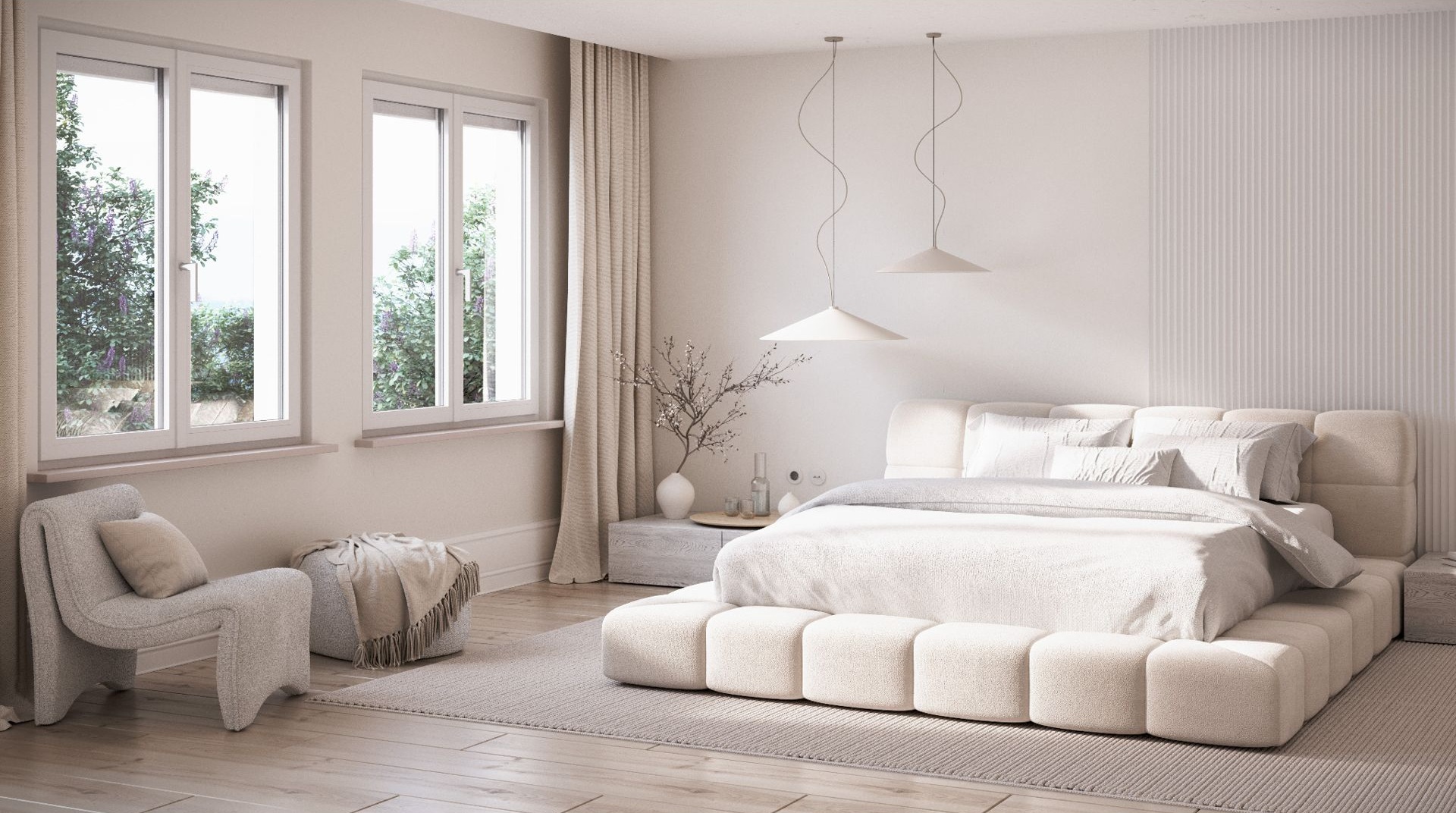
Privacy glass is any glazing engineered to obscure a clear view through the pane while still passing daylight. The category splits into permanent options built into the glass itself – patterned, frosted, reflective and tinted – and an on-demand option, switchable glass, that changes transparency electronically rather than staying fixed one way. A window treatment like a pleated blind adds privacy without touching the glass at all, which makes it a partner to any of these options rather than a substitute. OKNOPLAST’s glass accessory lineup covers several ornamental patterns alongside Stopsol solar-control glass, plus tempered and laminated glass for bathrooms and doors.
Types of Privacy Glass
Patterned (Obscure) Glass
Patterned glass, also called obscure or textured glass, has a design rolled into one surface of the pane during manufacturing, scattering light so a clear image can’t form through it in either direction, day or night. OKNOPLAST’s glass accessory line lists eight ornamental patterns: Cathedral, Chinchila clean, Delta mat, Kura brun, Kura clean, Master carre, Master ligne and Satinato. Many glass manufacturers rate pattern obscuration on a 1-to-5 scale, from least to greatest – worth asking about for a specific pattern before ordering based on obscuration alone, since the rating is not always obvious from a photo of the glass.
Frosted, Satin and Acid-Etched Glass
Frosted, satin and acid-etched glass use a chemical or mechanical process to roughen the glass surface uniformly, producing an even, matte look rather than a repeating pattern. Compared with patterned glass, the visual result is more uniform and less decorative, but the privacy effect is the same: constant, day and night, with no mirror or tint behavior to account for.
Reflective and Tinted Glass (Daytime-Only Privacy)
Reflective glass uses a thin metallic coating, and tinted glass uses darker glass itself, to make the exterior surface harder to see through from outside during the day. Both effects reverse after dark: once an interior light is on and it’s darker outside than inside, the glass stops acting as a one-way mirror and the window becomes visible from the outside, per glass-industry and window-film guidance. Daytime privacy without any night-time privacy is the trade-off for a window style that otherwise looks clear from inside at all times.
Smart (Switchable) Glass
Switchable glass changes between a clear and an obscured state on demand using an electrical current, rather than being permanently one or the other. The three common technologies are PDLC (polymer-dispersed liquid crystal), electrochromic and suspended-particle (SPD) glass. PDLC glass needs continuous low-voltage AC power, commonly in the 42–70 V range at roughly 1–3 watts per square meter, to stay clear – cutting power returns it to its default obscured state, per smart-glass industry cost and specification guidance. OKNOPLAST’s current glass accessory lineup does not include switchable glass.
Privacy Window Film
Window film is a laminate sheet applied to the inside surface of existing glass, available in frosted, reflective and blackout finishes, and it is the lowest-cost way to add privacy without replacing the glass. The trade-off is compatibility: 3M’s own glass checklist excludes warranty coverage for film applied to triple-pane glass used in an interior application and to textured or patterned glass, and film manufacturers separately warn that the added heat absorption can create enough thermal stress to crack glass or break an insulated unit’s seal.
Blinds as a Privacy Partner
Pleated blinds mounted on the sash rail move with the window during tilt and turn operation, adding adjustable privacy without altering the glass itself. OKNOPLAST’s pleated blind line offers more than 580 fabrics and 14 profile colors in widths from 4.75 to 59 inches, sized to the opening rather than the glass pattern – a useful layer on top of clear glass, or an adjustable complement to a permanently obscured pane.

Privacy Levels Explained (1–5 Scale)
Many glass manufacturers rate obscure glass patterns on a 1-to-5 obscuration scale, where 1 is the least obscuring – closest to clear – and 5 is the most obscuring – closest to fully opaque while still passing light. The scale is an industry convention, used mainly by European and UK glass manufacturers, and it is not a US building-code standard, so a pattern’s rating is a design reference rather than a safety rating.
| Level | Visual effect |
|---|---|
| 1 | Minimal obscuration – subtle texture; shapes and colors still recognizable up close |
| 2 | Light obscuration – recognizable shapes blur further; common for decorative sidelights |
| 3 | Moderate obscuration – most shapes unrecognizable beyond a few feet; general-purpose privacy glass |
| 4 | Strong obscuration – only light and color variation visible; little shape detail |
| 5 | Maximum obscuration – closest to fully opaque while still passing light; no discernible shapes |
OKNOPLAST’s eight ornamental patterns fall somewhere on this scale, but the specific rating for each pattern has not been published. Ask the glass supplier for the obscuration level of a specific pattern before specifying it for a high-privacy application, such as a bathroom window or one close to a neighbor’s sightline.
How Much Does Privacy Glass Cost?
Cost ranges for privacy glass vary by option more than by brand, with film the cheapest and switchable glass the most expensive, per multiple cost-guide sources. The figures below are typical ranges reported by cost guides and specialty retailers, not OKNOPLAST pricing – OKNOPLAST does not publish a public price list for ornamental-glass upgrades, and pricing is quoted per project.
| Option | Typical cost range | Source |
|---|---|---|
| Frosted glass replacement in an existing window | $300–$800 per window | Angi, HomeGuide |
| New double-pane window with frosted glass | $450–$1,100 per window | Angi |
| Switchable (smart) glass, installed | $50–$150 per sq ft (PDLC roughly $85–$130 per sq ft) | HomeAdvisor |
| Privacy film, material only (DIY) | $1–$5 per sq ft | Window Film Depot |
| Privacy film, professional installation | $5–$24 per sq ft | Window Film Depot, CoolVu |
How to Choose Privacy Glass by Room
A bathroom window needs privacy around the clock, so patterned, frosted or acid-etched glass – options with no day/night reversal – fits better than reflective or tinted glass, and IRC safety-glazing rules apply to any window near a tub or shower regardless of the glass pattern chosen. An entry sidelight sees daytime foot traffic close to the glass, which favors a higher obscuration level on the 1-to-5 scale rather than a light decorative pattern. A street-facing bedroom window often only needs evening and nighttime privacy, which is exactly when reflective and tinted glass stop working, making patterned or frosted glass, or a pleated blind, the more reliable choice. A window facing directly into a neighbor’s window benefits from a higher obscuration level year-round regardless of time of day. A stairwell or interior sidelight, where privacy matters less than light transmission, can often use a lower obscuration level on the same 1-to-5 scale.
Bathroom Windows: Privacy and Safety Glass Rules
IRC Section R308.4.5 classifies glazing in a wall enclosing or facing a bathtub or shower as a hazardous location requiring safety glazing when the glazing’s lowest exposed edge sits less than 60 inches above the standing or walking surface, with an exception for glazing more than 60 inches away, measured horizontally, from the water’s edge. The code requires safety glazing meeting CPSC 16 CFR 1201 Category II or ANSI Z97.1 Class A – tempered glass is the common market choice for meeting that standard, but it is not the only one, and laminated glass can also qualify. A window in a wall perpendicular to, rather than facing, a tub or shower may fall under a different code section instead, so confirm the specific requirement with the local building department, since some states publish additional guidance of their own on which bathroom windows require safety glazing.
OKNOPLAST offers tempered glass, described as up to four times stronger than standard annealed glass, and laminated glass, which holds together when broken and adds UV protection, per OKNOPLAST’s own glass accessory documentation. Ask OKNOPLAST or the installing dealer to confirm which of the eight ornamental patterns are available as tempered or laminated glass, and in a triple-pane configuration, for a specific bathroom project.
Does Privacy Glass Affect Energy Efficiency?
Patterned and obscure glass does not meaningfully change a window’s thermal performance: the textured surface typically sits on surface 2 of the insulated glass unit – the inward-facing side of the outer pane – while the low-E coating stays on its usual surface, with window-manufacturer thermal documentation describing the effect on efficiency as negligible. Adding privacy film after the fact is a different situation. Film manufacturers’ own glass-compatibility checklists exclude warranty coverage for film applied to triple-pane glass used in an interior application and to textured or patterned glass, and film makers separately warn that the added heat absorption can create thermal stress severe enough to crack glass or break an insulated unit’s seal. Specifying privacy glass at the time a window is ordered keeps the ornamental pane inside the sealed insulated glass unit from the start, avoiding the film-compatibility and warranty questions that come with adding privacy to an existing triple-pane window later.
Privacy Glass in Tilt and Turn Windows
A tilt and turn window adds a ventilation option that keeps most of the privacy benefit of a closed, obscured pane: in the tilt position, the sash opens only a few inches at the top, so the window vents without exposing the full opening the way a swung-open casement does. OKNOPLAST’s uPVC Tilt and Turn line offers triple low-E glazing and a solar-control low-E option with SHGC at or below 0.25, available alongside ornamental, tempered and laminated glass options for the same uPVC frame. Pleated blinds mounted on the sash rail add an adjustable privacy layer that moves with the sash in either the tilt or turn position, rather than needing to be removed to open the window.
FAQ
Privacy glass is any glazing – patterned, frosted, reflective, tinted or switchable – engineered to obscure a clear view through the pane while still letting daylight through, as distinct from a window treatment like a blind, which blocks the view from outside the glass instead of through it.
It depends on the type: patterned, frosted and acid-etched glass stay obscured around the clock, but reflective and tinted glass give privacy only during the day – once a light is on inside after dark, the mirror effect reverses and the window becomes visible from outside.
Frosted (or satin, acid-etched) glass has a uniformly roughened surface with an even matte look, while obscure or patterned glass has a specific design rolled into the surface during manufacturing – both block a clear view, but patterned glass is decorative and frosted glass is plain.
Patterned and frosted glass still pass daylight – they scatter it rather than block it – though a higher obscuration level on the 1-to-5 scale generally diffuses more light than a lower one, so a heavily obscured pattern can read slightly dimmer than clear glass of the same size.
Not privacy glass specifically, but safety glazing is required in many cases: IRC R308.4.5 calls for safety glazing in a window within 60 inches of a tub or shower’s water edge, and that requirement is independent of whether the glass also happens to be patterned or frosted for privacy.
Check the film manufacturer’s compatibility documentation first – 3M’s own glass checklist excludes warranty coverage for film applied to triple-pane glass in an interior application, and other film makers warn of thermal-stress and seal-failure risk on insulated units, which is why specifying privacy glass at the factory is the lower-risk route for a new triple-pane window.
Switchable glass typically runs $50 to $150 per square foot installed, with PDLC glass averaging roughly $85 to $130 per square foot, per cost-guide data – several times the cost of patterned glass or film for the same opening, and it also needs ongoing low-voltage power to stay clear.
Tempered and laminated glass are both available from OKNOPLAST and both can meet bathroom safety-glazing requirements, but confirm with OKNOPLAST or the installing dealer which specific ornamental patterns are available tempered or laminated, and in a triple-pane configuration, before specifying a combination for a given project.




Let’s talk about your project!
Request a quote, discuss specifications, or get help choosing the right system
Send a request
"*" indicates required fields