


ENERGY STAR Window Ratings
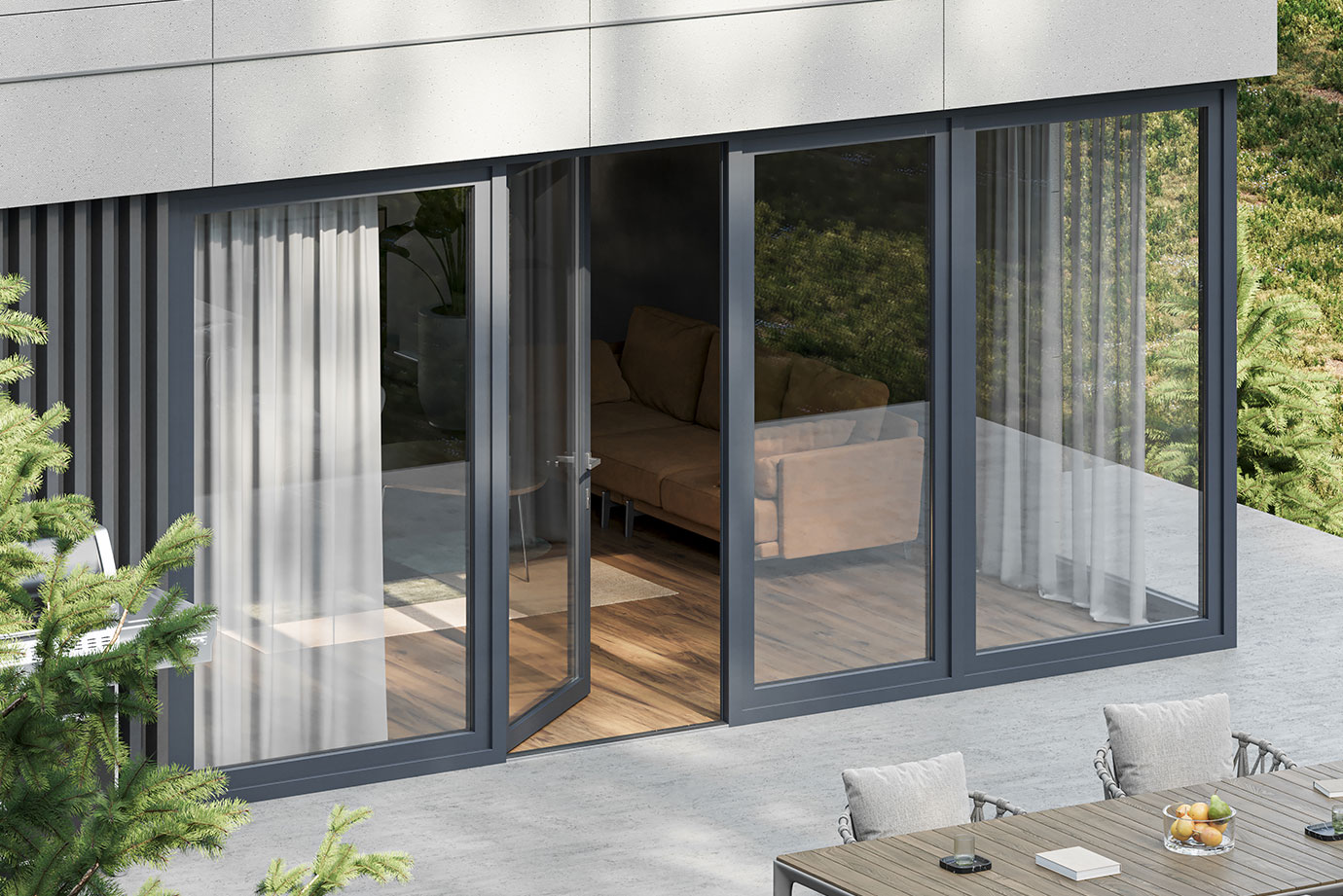

ENERGY STAR window ratings make it easier to compare residential windows using standardized NFRC performance data. Heat gain and heat loss through windows account for up to 25-30% of residential heating and cooling energy use. Understanding these ratings helps homeowners and builders choose better-performing products for different U.S. climate zones.
Key Takeaways:
- ENERGY STAR uses NFRC data to determine whether a window meets climate-specific requirements.
- ENERGY STAR Version 7.0 sets updated U-factor and SHGC requirements for each U.S. climate zone.
- Whole-window U-factor-not center-of-glass performance-is the rating that matters when comparing residential windows.
- Low-E coatings, multi-pane glazing, insulated frames, and warm-edge spacers improve thermal performance.
- Climate zone and window orientation should guide SHGC selection-not one rating alone.

What Differentiates ENERGY STAR Window Ratings from Standard NFRC Label Ratings for Residential Windows?
An NFRC label discloses U-factor, SHGC, Air Leakage, and Visible Transmittance for every residential window, regardless of energy efficiency. ENERGY STAR certification adds a second layer, confirming those NFRC ratings meet EPA climate-zone-specific energy performance criteria and climate-zone-specific performance standards. Oknoplast.us uPVC Tilt and Turn windows achieve NFRC-rated U-factor and SHGC values aligned with ENERGY STAR climate zone thresholds.
Think of the NFRC label as a universal energy performance disclosure issued for every residential window. ENERGY STAR acts as a filter, using those standardized ratings to determine whether a window meets EPA requirements for a specific climate zone.
Every NFRC label reports four standardized metrics.
| NFRC Metric | What it tells you |
| U-factor | Measures heat transfer through the entire window assembly. Lower values improve thermal insulation. |
| Solar Heat Gain Coefficient (SHGC) | Measures how much solar heat passes through the glazing. Lower values reduce unwanted solar heat gain in cooling-dominated climates. |
| Air Leakage (AL) | Measures air infiltration through a closed window. Lower values help reduce drafts. |
| Visible Transmittance (VT) | Measures how much visible daylight passes through the glazing. Higher values increase natural daylight indoors. |
An NFRC label alone does not mean a window qualifies as one of the ENERGY STAR certified windows. ENERGY STAR evaluates only U-factor and SHGC against climate-zone-specific energy performance criteria. Air Leakage and Visible Transmittance are reported on every NFRC label but are not ENERGY STAR pass/fail criteria.
| Metric | NFRC Label (Required) | ENERGY STAR Pass/Fail Criterion |
| U-factor | ✓ | ✓ |
| SHGC | ✓ | ✓ |
| Air Leakage (AL) | ✓ | – |
| Visible Transmittance (VT) | ✓ | – |
Oknoplast.us Tilt & Turn windows combine steel-reinforced multi-chamber uPVC profiles with triple-glazed argon-filled glazing to achieve NFRC-rated U-factor and SHGC values aligned with ENERGY STAR climate-zone thresholds. Their continuous perimeter seal helps maintain low Air Leakage ratings.
What U-Factor and SHGC Requirements Do ENERGY STAR Window Ratings Set for Each US Climate Zone?
ENERGY STAR Version 7.0 sets climate-specific U-factor and Solar Heat Gain Coefficient (SHGC) requirements for four U.S. climate zones, reflecting different heating and cooling priorities across the country. Oknoplast.us triple-pane argon-filled uPVC windows achieve NFRC-rated U-factor and SHGC values aligned with ENERGY STAR climate-zone requirements. Verify each product’s ENERGY STAR status at energystar.gov before claiming available tax credits.
ENERGY STAR Version 7.0 divides the United States into four climate zones because window performance requirements vary with local weather patterns. Lower U-factor values improve thermal insulation, while lower SHGC values reduce unwanted solar heat gain and improve energy savings. Low-E coatings help control SHGC, while triple-pane glazing with argon gas fills improves U-factor. Together, these technologies help manufacturers optimize window performance for different climate zones while reducing greenhouse gas emissions.
According to the U.S. Department of Energy, replacing outdated windows with ENERGY STAR-qualified products can reduce household heating and cooling costs by up to 13% nationwide. Heat gain and heat loss through windows account for 25-30% of residential heating and cooling energy use.
ENERGY STAR Climate Zone Requirements
| ENERGY STAR Climate Zone | Maximum U-factor | SHGC Requirement | Primary Load |
| Northern | ≤ 0.22 | ≥ 0.17 | Heating-dominated |
| North-Central | ≤ 0.25 | ≤ 0.40 | Mixed |
| South-Central | ≤ 0.28 | ≤ 0.23 | Mixed/Cooling |
| Southern | ≤ 0.32 | ≤ 0.23 | Cooling-dominated |
Products recognized as ENERGY STAR Most Efficient designation may qualify homeowners for the 25C Energy Efficient Home Improvement Credit of up to $600 per unit under current IRS rules. Always verify a product’s certification status in the official ENERGY STAR Product Finder before claiming the credit.
Northern and North-Central Climate Zones: U-factor ≤ 0.22 & SHGC ≤ 0.40
The Northern zone ENERGY STAR threshold of U-factor ≤ 0.22 is the most demanding in the U.S. framework. Achieving it typically requires triple-pane argon-filled glazing, warm-edge spacer bars, and steel-reinforced multi-chamber uPVC profiles that minimize heat transfer. Windows meeting current ENERGY STAR requirements may also qualify homeowners for the Section 25C tax credit, subject to current IRS eligibility rules.
Northern states such as Minnesota, Wisconsin, Maine, and the Upper Midwest have long heating seasons, making heat loss the primary design challenge. The Northern zone limits whole-window U-factor to ≤ 0.22 and requires SHGC ≥ 0.17 to balance insulation with passive solar heat gain. The North-Central zone requires U-factor ≤ 0.25 and SHGC ≤ 0.40, allowing greater flexibility in balancing thermal insulation and solar heat gain with high-performance double-pane glass.
Key components are:
- Triple-pane glass with argon-filled glazing improves thermal insulation.
- Warm-edge spacer bars reduce heat loss around the edge of the glazing.
- Steel-reinforced multi-chamber uPVC profiles help reduce heat transfer through the frame.
ENERGY STAR evaluates whole-window U-factor, not center-of-glass performance. Center-of-glass values are lower because they exclude the frame and edge-of-glass area. Oknoplast.us triple-pane Tilt & Turn windows achieve NFRC-rated performance values aligned with ENERGY STAR Northern climate-zone requirements. Verify each product’s ENERGY STAR status at energystar.gov before claiming available tax credits.
South-Central and Southern Climate Zones: U-factor ≤ 0.28 / ≤ 0.32 & SHGC ≤ 0.23
South-Central and Southern ENERGY STAR climate zones impose the strictest solar control requirement-SHGC ≤ 0.23-reflecting cooling-dominated climates in states such as Florida, Texas, and Arizona. Solar-control low-emissivity (low-E) glass tuned to this threshold reduce HVAC cooling loads, and windows meeting current ENERGY STAR requirements may also qualify homeowners for the Section 25C tax credit, subject to current IRS eligibility rules.
In Florida, Texas, Arizona, and the Gulf Coast, limiting solar heat gain is the priority. ENERGY STAR Version 7.0 sets a maximum U-factor of ≤ 0.28 for the South-Central zone and ≤ 0.32 for the Southern zone, while both climate zones require SHGC ≤ 0.23. Compared with Northern climates, the higher U-factor limits reflect the greater importance of cooling performance.
Achieving SHGC ≤ 0.23 requires several components to work together:
- Solar-control low-E coatings selectively reduce solar infrared heat while maintaining visible daylight.
- Glazing configuration helps achieve the required SHGC without unnecessarily reducing natural light.
- Multi-chamber uPVC frames have lower thermal conductivity than aluminum frames without thermal breaks.
Lower solar heat gain reduces HVAC cooling demand and greenhouse gas emissions associated with electricity generation while improving UV protection. Oknoplast.us uPVC Tilt & Turn windows achieve NFRC-rated U-factor and SHGC values aligned with ENERGY STAR energy performance criteria. Verify each product’s ENERGY STAR status at energystar.gov before claiming available tax credits.
How Do Low-Emissivity Coatings and Double- or Triple-Pane Glass Enhance ENERGY STAR Thermal Performance?
Low-emissivity (low-E) glass reflects infrared heat back toward its source while transmitting visible light. Combined with argon-filled triple-pane glass, it enables center-of-glass U-factor values below 0.15 in optimized configurations and provides UV protection by blocking up to 99% of ultraviolet radiation that can fade interior furnishings.
Low-E coatings are microscopically thin metallic oxide layers that reduce heat transfer by reflecting long-wave infrared radiation. Depending on the glazing design, they are typically applied to surface 2, 3, or 4.
Glazing Performance Overview
| Glazing Configuration | Center-of-Glass U-factor Range | Typical ENERGY STAR Climate Zone* |
| Double-pane (no low-E) | Above 0.30 | Limited applications |
| Double-pane low-E + argon | 0.25-0.30 | North-Central, South-Central, Southern |
| Triple-pane dual low-E + argon | Below 0.15 | Northern |
* Actual compliance depends on the complete NFRC-rated window assembly, not glazing alone.
Double-pane glass typically supports North-Central, South-Central, and Southern applications, while triple-pane glazing provides the thermal performance needed for Northern climates.
According to the U.S. Department of Energy, replacing inefficient windows with products that meet ENERGY STAR requirements can reduce household heating and cooling costs by up to 13% nationwide. Heat gain and heat loss through windows account for 25-30% of residential heating and cooling energy use.
Oknoplast.us Tilt & Turn windows combine triple-pane argon-filled glazing, low-E coatings, and warm-edge spacer bars to achieve NFRC-rated performance values aligned with ENERGY STAR climate-zone requirements. Verify whether each product meets current ENERGY STAR requirements at energystar.gov.
How Do uPVC and Aluminum Frame Designs Affect ENERGY STAR Window Ratings?
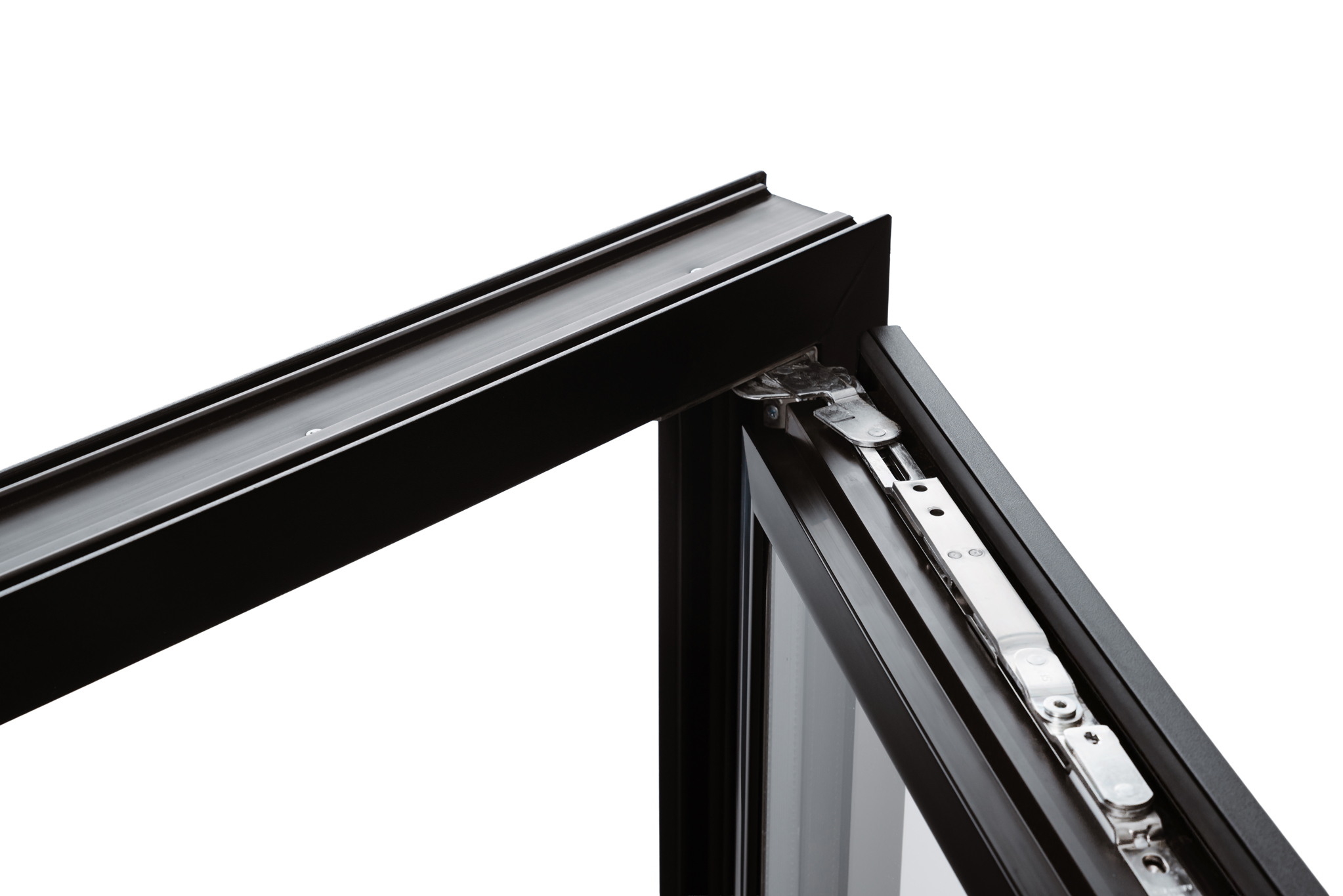
uPVC thermal conductivity of approximately 0.17 W/(m·K), compared with approximately 160 W/(m·K) for aluminum, makes multi-chamber uPVC frames inherently superior thermal insulators, improving energy efficiency. Steel-reinforced multi-chamber uPVC profiles achieve whole-window U-factor values consistent with Northern ENERGY STAR thresholds without the polyamide thermal break inserts required in aluminum frames.
Different framing materials affect heat transfer. For example, multi-chamber uPVC profiles naturally reduce it, while aluminum frames typically require continuous polyamide thermal break inserts to achieve comparable ENERGY STAR thermal performance, particularly in Northern and North-Central climate zones.
Frame Material Comparison
| Frame Material | Thermal Conductivity | Northern Zone U-factor ≤ 0.22 Achievable | Maintenance Required |
| Multi-chamber uPVC | ~0.17 W/(m·K) | Yes | No painting required |
| Aluminum with thermal break | ~160 W/(m·K) | Yes | Periodic maintenance |
| Aluminum without thermal break | ~160 W/(m·K) | No | Periodic maintenance |
Several design features improve whole-window thermal performance:
- Multi-chamber uPVC profiles reduce heat transfer through the frame.
- Steel reinforcement maintains frame geometry under heavy sash weights and wind loads without increasing frame thermal conductance.
- Continuous polyamide thermal break inserts reduce heat transfer through aluminum frames.
NFRC determines whole-window U-factor using THERM/WINDOW simulations defined in NFRC 100, combining frame, edge-of-glass, and glazing performance into a single rating. Whole-window U-factor is therefore always higher than center-of-glass U-factor.
Beyond thermal performance, uPVC requires no painting, remains dimensionally stable, and helps reduce long-term maintenance. Oknoplast.us Tilt & Turn windows use steel-reinforced multi-chamber uPVC profiles that achieve NFRC-rated whole-window U-factor values aligned with Northern ENERGY STAR climate-zone requirements. Verify whether each product meets current ENERGY STAR requirements at energystar.gov before claiming the Section 25C tax credit.
How Do ENERGY STAR Climate Zones Align with IRC Code Requirements for Residential Windows?
ENERGY STAR Northern climate-zone U-factor ≤ 0.22 is more stringent than the IRC/IECC Zone 5-8 maximum of ≤ 0.32. Windows carrying ENERGY STAR certification for the Northern zone automatically satisfy IRC code minimums, supporting energy efficiency and helping contractors streamline permit and inspection processes in the coldest U.S. states.
ENERGY STAR is a voluntary EPA program that establishes energy performance criteria, while the IRC and International Energy Conservation Code (IECC) establish minimum building-code requirements adopted by states and local jurisdictions.
ENERGY STAR divides the U.S. into four climate zones, while the IECC uses eight. Although the maps differ, both frameworks match window performance to local climate conditions.
The key differences in performance standards are straightforward:
- Northern ENERGY STAR requirements are more demanding than IRC minimums, with a maximum whole-window U-factor of ≤ 0.22 compared with ≤ 0.32 for IECC Climate Zones 5-8.
- Southern ENERGY STAR SHGC ≤ 0.23 aligns with IRC/IECC solar heat gain requirements for Climate Zones 1-3.
- ENERGY STAR certification documentation can simplify permit reviews by showing code compliance.
Oknoplast.us Tilt & Turn windows achieve NFRC-rated U-factor and SHGC values aligned with both ENERGY STAR climate-zone requirements and IRC performance targets. Verify whether each product meets current ENERGY STAR requirements at energystar.gov before using it for code compliance.
IRC and ENERGY STAR Climate Zone Comparison
| IECC Climate Zone | IRC Maximum U-factor | IRC SHGC Requirement | Closest ENERGY STAR Climate Zone |
| Zones 1-2 | ≤ 0.40 | ≤ 0.25 | Southern |
| Zones 3-4 | ≤ 0.35 | ≤ 0.25* | South-Central |
| Zones 5-6 | ≤ 0.32 | Varies by jurisdiction | North-Central |
| Zones 7-8 | ≤ 0.32 | Not required | Northern |
*Local code adoption may vary.

How Window Orientation Optimizes ENERGY STAR Ratings for Heating and Cooling Savings
Window orientation changes the optimal ENERGY STAR Solar Heat Gain Coefficient (SHGC) target. South-facing windows in Northern climate zones benefit from higher SHGC to capture winter solar heat gain, while east- and west-facing windows generally perform best with SHGC values approaching ≤ 0.23 to reduce summer overheating. Oknoplast.us Tilt & Turn windows complement this strategy with passive ventilation that maintains NFRC Air Leakage performance.
The same NFRC-rated SHGC performs differently depending on window orientation, so glazing selection should consider both climate zone and building orientation to improve energy efficiency.
A simple orientation strategy can improve seasonal performance and energy savings:
- South-facing windows in Northern and North-Central climates benefit from higher SHGC values that capture passive solar heat during winter.
- North-facing windows receive little direct sunlight, making U-factor the primary performance consideration.
- East- and west-facing windows are exposed to low-angle morning and afternoon sun, so SHGC values approaching ≤ 0.23 help reduce unwanted summer heat gain.
- Mixed climates (IECC Zones 3-4) require balancing winter solar gain and summer overheating using whole-window NFRC ratings.
The Tilt & Turn ventilation position provides passive cooling while maintaining the continuous perimeter seal that supports NFRC Air Leakage performance.
Orientation and SHGC Strategy
| Window Orientation | Recommended SHGC Strategy | Primary Energy Benefit |
| South-facing | Higher SHGC where permitted | Capture passive winter solar heat |
| North-facing | Prioritize low U-factor | Reduce conductive heat loss |
| East-facing | SHGC approaching ≤ 0.23 | Limit morning solar heat gain |
| West-facing | SHGC approaching ≤ 0.23 | Reduce afternoon overheating |
Common ENERGY STAR Window Myths
Five persistent ENERGY STAR window myths reduce energy efficiency and cost homeowners money. ENERGY STAR is a minimum performance threshold-not a performance ceiling. Not every ENERGY STAR window qualifies for the Section 25C tax credit. NFRC U-factor measures the whole window, not just the glass. Energy-efficient windows reduce but do not eliminate condensation. Solar Heat Gain Coefficient (SHGC) requirements also vary by climate zone.
Myth 1: “ENERGY STAR means you’re buying the most efficient window available.”
ENERGY STAR sets a minimum performance threshold, not the highest available level. Products recognized as ENERGY STAR Most Efficient represent the program’s highest efficiency tier. Verify a product’s current designation at energystar.gov.
Myth 2: “Any ENERGY STAR window qualifies for the Section 25C tax credit.”
No. Eligibility depends on current IRS Section 25C requirements. The credit covers 30% of product costs, up to $600 per year for qualifying windows. Installation labor is not eligible.
Myth 3: “NFRC U-factor measures only the glass.”
The NFRC label reports whole-window U-factor, including the frame, glazing, and edge-of-glass areas. As a result, the NFRC value is always higher than the center-of-glass U-factor used in glazing specifications.
Myth 4: “ENERGY STAR windows eliminate condensation.”
Triple-pane glazing and warm-edge spacer systems raise interior glass temperatures, but condensation still occurs below the indoor air’s dew point.
Myth 5: “The same SHGC works everywhere.”
SHGC requirements vary by climate zone. South-Central and Southern climate zones limit SHGC to ≤ 0.23, while Northern projects benefit from higher SHGC values for passive winter solar gain. Using the wrong SHGC increases annual energy use.
Every residential window project has different performance priorities. Explore Oknoplast’s high-performance uPVC window systems to compare NFRC-rated options designed for different U.S. climate zones.
FAQ
ENERGY STAR adds climate-zone-specific requirements to NFRC ratings. Not every NFRC-rated window qualifies for ENERGY STAR certification.
U-factor measures heat transfer through the entire window assembly. Lower values indicate better insulation.
No. Products must also meet current IRS Section 25C requirements. Installation costs are not eligible.
Low-E coatings reduce heat transfer while transmitting visible light. They also block up to 99% of UV radiation.
Frame material affects whole-window U-factor. Multi-chamber uPVC frames reduce heat transfer more effectively than aluminum without thermal breaks.
Use the official ENERGY STAR Product Finder at energystar.gov.
South-facing windows generally benefit from higher SHGC, while east- and west-facing windows usually require lower SHGC.
ENERGY STAR is a minimum performance standard. Performance, condensation resistance, SHGC, and tax-credit eligibility vary by product and climate zone.





Let’s talk about your project!
Request a quote, discuss specifications, or get help choosing the right system
Send a request
"*" indicates required fields