


How Much Does It Cost to Replace Windows in 2026?


The national average cost to replace a window in the US is $1,047 installed, based on data from more than one million completed homeowner projects tracked by Modernize. Material choice is the biggest lever on that number: vinyl windows typically run $300 to $1,300 per unit, while wood windows commonly run $800 to $1,900, a gap that adds up quickly across a whole-house project.
Key Takeaways:
- The national average window replacement cost is $1,047 installed, based on over one million real homeowner projects (Modernize).
- Vinyl windows account for the majority of US replacements and typically cost less than wood, fiberglass, or premium aluminum systems.
- Professional installation following AAMA InstallationMasters standards protects both window performance and the manufacturer’s warranty.
- The §25C tax credit covered 30% of qualifying window costs, capped at $600/year within a shared $1,200 annual limit, but it was repealed under the One Big Beautiful Bill Act and expired after December 31, 2025; it no longer applies to windows purchased in 2026. OKNOPLAST windows were not ENERGY STAR certified and did not participate in the ENERGY STAR or §25C programs.
How Much Does It Cost to Replace a Window in 2026?
The national average cost to replace a single window is $1,047 installed, according to Modernize’s analysis of over one million completed homeowner projects, though individual quotes commonly range from roughly $300 for a basic vinyl unit to $2,200 or more for a premium fiberglass or wood window.
| Number of Windows | Estimated Total Cost |
| 8 | $8,000-$14,000 |
| 12 | $12,000-$21,000 |
| 15 | $15,000-$26,000 |
These per-window and whole-house figures are derived from the $1,047 national average rather than a separate survey, and assume a mid-range vinyl or aluminum window under standard installation conditions. Premium materials, oversized openings, or a full-frame replacement instead of an insert replacement all push a project toward the higher end of these ranges or beyond them.
Location adds another layer of variation on top of material and scope: coastal metro labor markets commonly run 18% to 48% above the national median due to higher wages, stricter permitting, and, in hurricane-prone areas, impact-resistance requirements that add reinforced glass and stronger frames. A quote well above the national averages above is not automatically a red flag; it may simply reflect local labor costs and code requirements rather than an inflated bid.
What Drives the Price Difference Between Vinyl, Wood, Fiberglass, and Aluminum?
Frame material typically drives 50% to 65% of total window cost, and the four common materials sit in a consistent order across most contractor pricing: vinyl least expensive, aluminum close behind but thermally weaker, fiberglass in the middle to upper range, and wood the most expensive of the four.
| Frame Material | Typical Installed Cost per Window | Notes |
| Vinyl | $300-$1,300 | Accounts for the majority of US residential window replacements |
| Aluminum | $400-$850 | Lowest material cost, but prone to thermal bridging in cold climates |
| Fiberglass | $500-$2,200 | Strong and stable; wide range reflects basic to premium tiers |
| Wood | $800-$1,900 | Highest material and maintenance cost; strongest resale-value association |
Vinyl’s combination of low material cost, minimal maintenance, and strong thermal performance is why it covers most US residential replacements. Aluminum costs less than vinyl in some markets but conducts heat and cold far more readily unless thermally broken, which is why it performs poorly in cold climates without added engineering. Fiberglass splits the difference: more dimensionally stable than vinyl at larger sizes, at a real cost premium. Wood commands the highest price and, according to the Journal of Light Construction’s 2025 Cost vs. Value report, also carries the strongest association with resale value, adding an average of $18,764 compared to $16,657 for vinyl in that report’s national data.
Glazing package is a separate cost driver from frame material and applies across all four options above: a Low-E coating combined with argon gas fill commonly adds $90 to $185 per window over clear glass with no gas fill, an upgrade that affects thermal performance independent of which frame material it is paired with.
Opening type is a third factor across the broader US window market: fixed and simple casement or awning styles generally cost less than sliding or double-hung units of the same size. Tilt and turn windows, the mechanism built around a single handle that shifts between a tilt position for ventilation and a full turn position for cleaning access, sit toward the upper end of the market on hardware complexity alone, before frame material or glazing package are factored in.
What Hidden Costs Should You Expect Beyond the Window Itself?
Several cost factors sit outside the base per-window price and are worth confirming before comparing contractor quotes, since leaving them out of an estimate is one of the most common ways a project’s final bill exceeds its initial quote.
- Insert versus full-frame replacement: an insert replacement fits a new window into the existing frame and costs less, while full-frame replacement removes the old frame entirely, costs more, and is required when a frame is rotted, being resized, or changing material
- Removal and disposal of the old window, typically bundled into the installed price but worth confirming is included
- Oversized or custom shapes, which commonly add 30% to 80% to the per-unit price over a standard rectangular window of similar area
- Multi-story access, since upper-floor windows may require staging, ladders, or lift equipment that adds labor time
- Interior or exterior trim and casing repair, particularly relevant when the new window’s frame depth differs from the one it replaces
What Does Professional Installation Actually Involve?
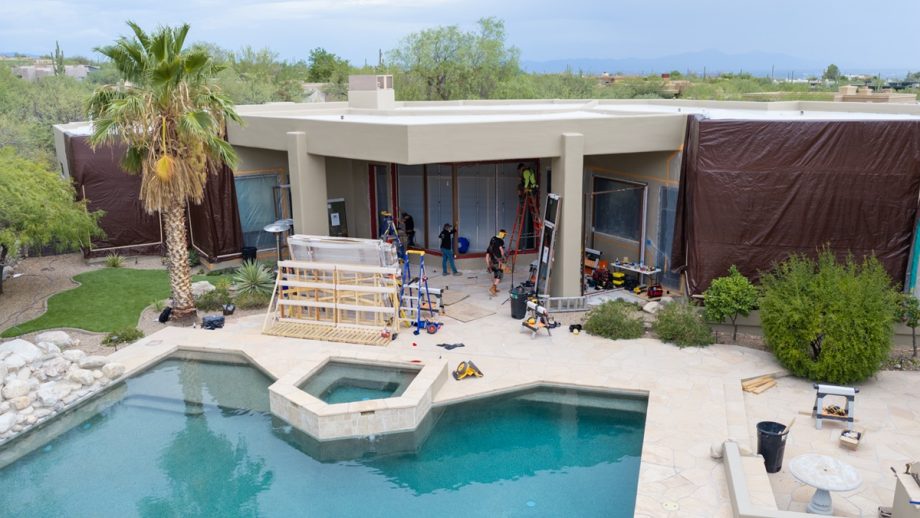
Professional window installation in the US follows standards set out in the AAMA InstallationMasters program, a certification created jointly by the US Department of Energy and the American Architectural Manufacturers Association that covers proper air sealing, water management, and structural anchoring for both new construction and replacement projects.
The AAMA InstallationMasters curriculum covers several AAMA installation practices addressing different wall types and exposure conditions, the same body of technical detail that separates a window that performs to its rated U-Factor from one that underperforms due to gaps or improper flashing at the rough opening. Asking whether an installer holds AAMA InstallationMasters certification is a reasonable question to include when comparing contractor quotes, alongside standard requirements such as EPA Lead-Safe Certification for work on any home built before 1978.
OKNOPLAST manufactures windows to order with an 8-to-10-week lead time from confirmed specification to delivery, which needs to be factored into a project timeline alongside whatever installation date a contractor proposes.
What Should You Know About Window Replacement in an Older Home?
Older homes typically add cost and complexity to a window replacement project beyond the base per-window price, most often through deteriorated framing that requires repair, non-standard opening sizes that rule out simple insert replacement, and, for any home built before 1978, a federal requirement for lead-safe work practices.
The EPA’s Lead-Safe Certification requirement applies to renovation, repair, and painting work on pre-1978 housing, since these homes may contain lead-based paint that disturbing during window removal can turn into hazardous dust; a certified contractor follows specific containment and cleanup procedures required by federal law, not just a best practice. Replacing significantly more efficient windows in a home with poorly insulated walls can also shift where condensation forms, moving it from the old, colder glass to the now-comparatively-colder wall surfaces and window reveals; OKNOPLAST has covered the mechanics of that condensation shift and how to prevent it in a dedicated article, since it is a separate topic from the cost considerations here.
Do You Need a Permit to Replace a Window?
Replacing a window with the same size, shape, and opening as the one it replaces typically does not require a permit in most US jurisdictions, but changing the opening size, converting a window type, or replacing a bedroom or basement egress window almost always does, and permit costs for a standard project commonly run $50 to $250.
Egress windows, the emergency escape and rescue openings required in bedrooms and basements under IRC Section R310, are the clearest exception to the like-for-like rule: a permit and inspection is required in all 50 states whenever an egress opening is created or altered, even in areas that otherwise allow permit-free window replacement. OKNOPLAST has covered the specific size, height, and window-well requirements egress openings must meet in a dedicated guide, since those code details are a separate topic from the cost and permitting overview here.
Homes in a designated historic district or with individual landmark status carry an additional layer of review beyond a standard building permit: a local historic preservation commission typically has to approve the replacement window’s appearance, and in many districts, exact material or divided-light pattern matching is required rather than left to the homeowner’s preference. Confirming historic district status with the local planning department before ordering windows avoids a mismatch between what was purchased and what the commission will approve.

Did the §25C Tax Credit Ever Apply to Window Replacement?
The §25C Energy Efficient Home Improvement Credit covered 30% of the cost of qualifying ENERGY STAR-certified windows, up to $600 per year, while it was in effect, with that $600 sitting within a combined $1,200 annual cap shared with skylights, insulation, and electrical panel upgrades. The program was repealed under the One Big Beautiful Bill Act and expired for property placed in service after December 31, 2025, so it does not apply to windows purchased or installed in 2026.
| §25C Detail (Program Expired December 31, 2025) | Requirement While Active |
| Credit rate | 30% of product cost (installation labor excluded) |
| Annual cap | $600/year for windows and skylights combined, within a shared $1,200 cap that also covers insulation and electrical panel upgrades |
| Qualifying metric | NFRC-certified whole-unit U-Factor and SHGC meeting ENERGY STAR climate-zone thresholds |
| Eligible property | Existing primary residence only; new construction does not qualify |
While active, the credit applied to product cost only; installation labor was excluded from the calculation. It was also limited to an existing primary residence, so windows installed as part of new construction never qualified. Homeowners who completed a qualifying window purchase by December 31, 2025 may still be able to claim the credit retroactively on that tax year’s return; a tax advisor can confirm eligibility. OKNOPLAST windows were not ENERGY STAR certified and did not participate in the ENERGY STAR or §25C programs while the credit was active.
SHGC, the other metric the §25C thresholds referenced alongside U-Factor, measures how much solar heat passes through the glass rather than how well the window insulates. A lower SHGC matters most on south- and west-facing windows in warmer climate zones, where blocking solar heat gain reduces cooling load; a higher SHGC can be an advantage on south-facing windows in colder zones, where passive solar heat gain offsets some heating demand in winter. ENERGY STAR still sets separate SHGC thresholds by climate zone for exactly this reason, independent of whether a federal tax credit is tied to them.
Does Window Replacement Pay for Itself Over Time?
Heat gain and heat loss through windows account for 25% to 30% of a home’s residential heating and cooling energy use, according to the US Department of Energy, and replacing older windows with units designed to meet ENERGY STAR performance thresholds can reduce a home’s energy bills by an average of 12% nationwide compared to non-qualifying products, according to ENERGY STAR program data.
Beyond the recurring energy savings, window replacement is also associated with a measurable resale-value return: the Journal of Light Construction’s 2025 Cost vs. Value report found that vinyl window replacement recoups an average of $16,657 and wood window replacement recoups an average of $18,764 at resale, figures that vary by region and by how the rest of the home compares to similar listings. Between lower utility bills and that resale association, most homeowners should expect a window replacement to offset a meaningful share of its cost over the life of the windows, even before factoring in reduced condensation risk and improved comfort near window openings.
Noise reduction is a separate, non-financial return that matters most in urban settings and near busy roads or airports, and it is measurable through a window’s Sound Transmission Class (STC) rating: OKNOPLAST’s PAVA and PIXEL systems are rated STC 47 with laminated glazing and STC 40 with standard glazing, a range that reflects meaningfully better sound isolation than a typical older single-pane window. Some jurisdictions, particularly urban areas and locations near airports, also regulate minimum STC ratings for replacement windows and doors, which is worth confirming with a local building department before finalizing a glazing package in those locations.
How Much Does It Cost to Replace a Patio Door?
Patio doors cost more than a standard window of similar wall-opening size because of their larger glass area, heavier structural requirements, and more complex hardware, a gap that holds regardless of which manufacturer or material is being compared.
OKNOPLAST’s COMPACT sliding patio door and HORIZON lift and slide system both prioritize different trade-offs within that higher cost tier. COMPACT is a space-efficient sliding design suited to standard residential openings, while HORIZON is built for larger openings where a sliding door’s hardware would exceed standard weight limits, a lift and slide mechanism that carries more glass and frame per unit than a comparable window. Getting an accurate quote for either system requires the same project-specific factors that affect window pricing: opening size, glazing package, and installation complexity. A patio door replacement is worth quoting on its own rather than estimating it as a large window.
A whole-house exterior project sometimes includes the front entry door alongside windows and patio doors, and OKNOPLAST’s BASIC and PREMIUM uPVC entry door lines follow the same logic as the window tiers above: BASIC covers standard residential entry applications, while PREMIUM adds features suited to higher-spec projects. As with patio doors, an entry door is worth quoting as its own line item rather than folding it into a per-window average.

How Should You Budget for a Whole-House Window Replacement?
Start from the $1,047 national average per window, then adjust up or down based on material tier and total window count, before adding any project-specific factors like oversized openings, multi-story access, or older-home framing repairs that apply to your project specifically.
Ordering all windows for a project at once, rather than replacing a few per year, typically reduces per-window cost by spreading a contractor’s mobilization, equipment, and disposal costs across the full project instead of repeating them on each smaller job. That approach also means committing to OKNOPLAST’s 8-to-10-week lead time only once rather than multiple times across a multi-year phased project, which simplifies scheduling even though the upfront cash outlay is larger than spreading the work out.
When budget forces a phased approach instead of replacing every window at once, prioritizing the worst-performing openings first captures a larger share of the energy-savings benefit per dollar spent than replacing windows in a uniform order around the house. Priority candidates include drafty single-pane units, windows with visibly failed seals or fogging between panes, and south- or west-facing windows in a hot climate or north-facing windows in a cold one.
FAQ: Window Replacement Cost 2026
The national average is $1,047 installed, based on over one million real homeowner projects tracked by Modernize. Individual quotes range from roughly $300 for a basic vinyl window to $2,200 or more for premium fiberglass or wood units.
Vinyl is typically the least expensive frame material and covers the majority of US residential window replacements, combining low material cost with strong thermal performance and minimal maintenance.
Insert replacement fits a new window into the existing frame and costs less. Full-frame replacement removes the old frame entirely, costs more, and is necessary when a frame is rotted, being resized, or changing material.
It did while the program was active, for an existing primary residence at 30% of product cost up to $600 per year. §25C was repealed under the One Big Beautiful Bill Act and expired after December 31, 2025, so it no longer applies to windows purchased in 2026.
Windows account for 25% to 30% of a home’s heating and cooling energy use per the US Department of Energy, and ENERGY STAR-qualifying replacements can cut energy bills by an average of 12%. Window replacement is also associated with meaningful resale-value recoupment according to industry cost-vs-value data.
Ask whether the installer holds AAMA InstallationMasters certification, the industry-standard training created by the US Department of Energy and AAMA covering proper air sealing and structural installation. For homes built before 1978, also confirm EPA Lead-Safe Certification, which is a federal legal requirement, not optional.
Older homes often have deteriorated framing that needs repair, non-standard opening sizes that rule out simple insert replacement, and, for pre-1978 homes, federally required lead-safe work practices, all of which add cost beyond the base per-window price.
Patio doors cost more than a similarly sized window due to larger glass area, heavier structural requirements, and more complex hardware. Getting an accurate quote requires the same opening-size and glazing-package details that affect window pricing, so patio doors are worth quoting separately from per-window estimates.
Like-for-like replacement in the same size and opening usually does not require a permit. Changing the opening size or replacing a bedroom or basement egress window almost always does, with permit costs typically running $50 to $250. Egress window changes require a permit in all 50 states regardless of local rules for standard replacements.




Let’s talk about your project!
Request a quote, discuss specifications, or get help choosing the right system
Send a request
"*" indicates required fields