


Picture-Perfect Views: Why Do Homeowners Choose Large Picture Windows?


A picture window is a large, fixed pane of glass that does not open, built without a sash or operable hardware, which lets it seal tighter than an operable window of the same size. OKNOPLAST PAVA and PIXEL, ordered in a fixed configuration, achieve a sound transmission class of STC 47 with laminated double glazing and a U-Factor as low as 0.14 BTU/hr·ft²·°F, per OKNOPLAST product data sheet documentation. Because a true picture window has no sash to open, ventilation in a picture-window installation comes from the operable tilt and turn units typically flanking it, not from the fixed pane itself.
Key Takeaways:
- A picture window is fixed glass with no sash or operable hardware, which removes the sash-to-frame seal gap that lets air infiltrate operable windows.
- OKNOPLAST PAVA achieves STC 47 (laminated double glazing) or STC 40 (standard double glazing) and U-Factor 0.14-0.26 BTU/hr·ft²·°F; PIXEL achieves the same STC ratings with U-Factor 0.16-0.28.
- PAVA is rated to a design pressure of 30-80 psf and PIXEL to 30-90 psf, relevant for specifying large-format fixed glazing.
- IRC Section R308.4.3 requires tempered safety glazing when an individual pane exceeds 9 square feet, its bottom edge sits under 18 inches from the floor, its top edge is over 36 inches up, and a walking surface is within 36 inches – four conditions large picture windows frequently meet at once.
- IRC Section R310 requires an operable emergency escape opening of at least 5.7 square feet in every bedroom, which a fixed picture window can never satisfy on its own.
- A picture window cannot include EffiAir ventilation, since EffiAir works by offsetting an operable sash 1/4 inch from the frame – a fixed pane has no sash to offset.
- Ventilation in a picture-window installation comes from flanking operable PAVA or PIXEL tilt and turn units, which can include EffiAir.
- OKNOPLAST’s confirmed insulating gas fill is argon; no separate charge applies for standard argon-filled glazing.
What Is a Picture Window, and How Does It Differ from an Operable Window?
A picture window is a fixed window that cannot be opened, glazed directly into the frame with no sash or hardware, while an operable window has a movable sash that must seal against the frame at every point of contact. That seal happens through a tilt and turn multi-point lock, a casement crank, or a hung sash track, depending on the operable window type.
That structural difference is the source of most of a picture window’s practical advantages: without a sash to hinge, crank, or slide, there is no moving hardware to visually break up the glass, no interior clearance needed for the sash to swing, and no seal points that can wear or loosen over years of operation. The tradeoff is equally direct – a picture window provides no ventilation on its own, which is why picture windows are almost always specified alongside at least one operable unit in the same wall or opening.
Why Fixed Glass Improves Air Infiltration and U-Factor
A fixed pane has no sash-to-frame gap to seal, which is why picture windows typically test with both lower air infiltration and a better U-Factor than an operable window of the same size and glazing package. OKNOPLAST PAVA’s operable casement configuration is certified at 0.012 cfm/ft² air infiltration at 75 Pa (approximately 1.6 psf) per ASTM E283/E283M-19, and a fixed configuration in the same frame system removes the sash seal that accounts for most of that figure.
U-Factor follows a similar logic: PAVA achieves a U-Factor of 0.14-0.26 BTU/hr·ft²·°F and PIXEL achieves 0.16-0.28 BTU/hr·ft²·°F, both figures certified on operable configurations per OKNOPLAST product data sheets. A fixed picture window in the same frame and glazing package is not expected to perform worse on either metric, since it carries the identical glass package without the added thermal and air-leakage path a sash and hardware introduce. Neither system uses krypton gas fill – OKNOPLAST’s confirmed insulating gas fill is argon, standard at no separate charge, in double- or triple-pane configurations.
Acoustic Performance: STC Ratings for Picture Windows
OKNOPLAST PAVA and PIXEL both achieve a sound transmission class of STC 47 with laminated double glazing, or STC 40 with standard double glazing, as assessed by Group Of Testing Laboratories Gryfitlab. A higher STC number means less sound energy passes through the assembly – STC 40 is comparable to a standard double-pane residential window, while STC 47 with laminated glazing meaningfully reduces traffic noise, lawn equipment, and voices at a typical exterior distance.
Fixed glass has an acoustic advantage over operable glass for the same reason it has an air-infiltration advantage: there is no sash-to-frame gasket line, which is one of the weaker acoustic paths in an operable window. Laminated glazing adds a plastic interlayer between panes that damps sound energy more effectively than an equivalent thickness of standard glass, which is why the laminated configuration tests 7 points higher on the STC scale than the standard configuration in OKNOPLAST’s own certification data.
Design Pressure and Large-Format Glazing
OKNOPLAST PAVA is rated to a design pressure of 30-80 psf and PIXEL to 30-90 psf, tested per ASTM E330/E330M-14 – the structural rating that determines how large a fixed pane can go before wind load requires a different glazing thickness or reinforcement. Design pressure (DP) rating governs the maximum size and required glass makeup for a given wind exposure, which is why a picture window specified for a coastal or high-wind site needs its DP rating checked against local wind-load requirements before finalizing size.
| System | Design Pressure (psf) | U-Factor (BTU/hr·ft²·°F) | STC (Laminated / Standard) |
|---|---|---|---|
| PAVA | 30-80 | 0.14-0.26 | 47 / 40 |
| PIXEL | 30-90 | 0.16-0.28 | 47 / 40 |
Larger fixed panes generally require a higher DP rating to resist wind load without excessive deflection, since a picture window’s glass – unlike an operable sash – is not braced by a separate frame member around its full perimeter beyond the fixed glazing bead. Confirming the DP rating needed for a specific opening size and wind zone is a standard step before finalizing a large picture window specification, particularly on second-story or coastal installations.
Safety Glazing Requirements for Large Picture Windows
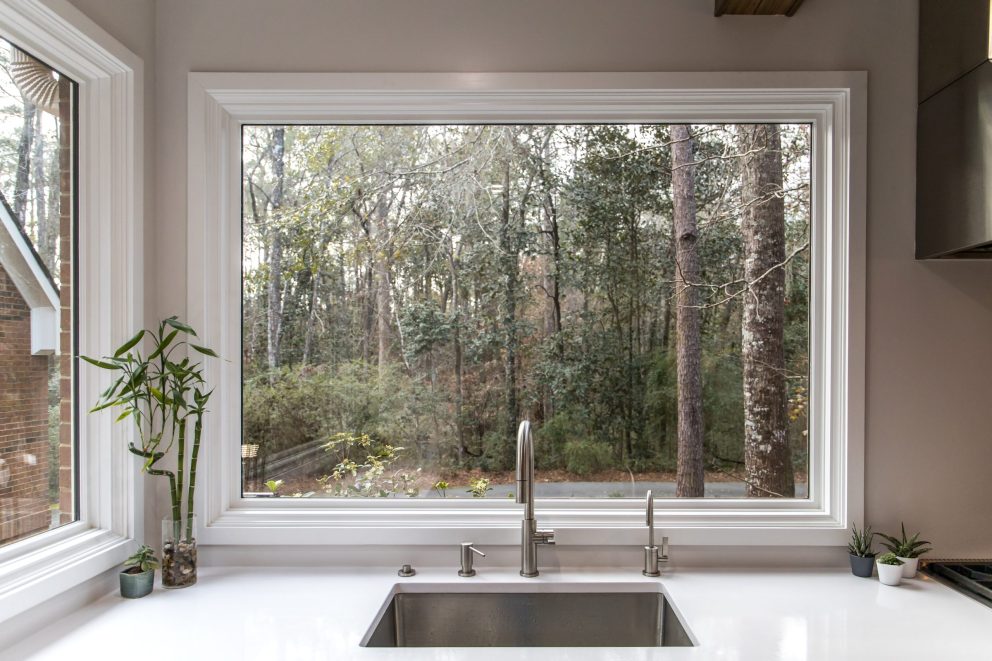
IRC Section R308.4.3 requires tempered safety glazing for any individual pane larger than 9 square feet with its bottom edge less than 18 inches above the floor, top edge more than 36 inches above the floor, and a walking surface within 36 inches of the glass – four conditions a large picture window frequently meets at once. A typical picture window sized to showcase a view easily exceeds 9 square feet and often extends close to floor level by design, which means tempered glass is the norm rather than the exception for this window type, not an upgrade.
Tempered glass carries a permanent manufacturer designation – acid-etched, sandblasted, or laser-etched – confirming the glass type and safety standard, visible somewhere on the installed unit. Laminated glazing, which OKNOPLAST also uses to achieve its higher STC 47 acoustic rating, separately satisfies most safety-glazing code paths since a plastic interlayer holds fragments in place if the glass breaks. Confirming with a local building official whether a specific opening meets the R308.4.3 hazardous-location criteria – rather than assuming a large window automatically requires tempering, or that a smaller one is automatically exempt – is a standard step before finalizing a picture window order.
Custom Shapes and Oversized Configurations
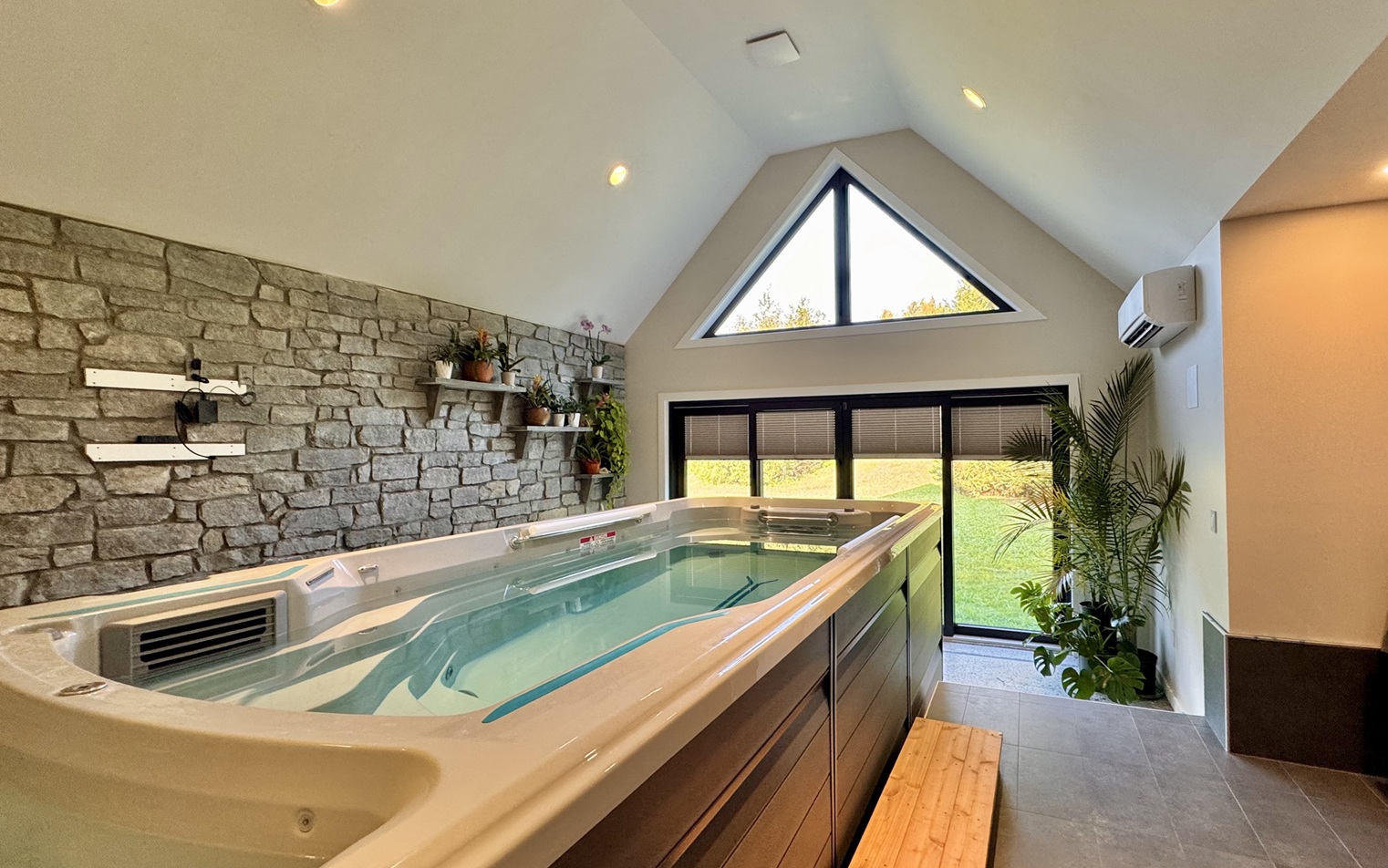
OKNOPLAST PAVA and PIXEL both support custom shapes and flexible dimensions beyond a standard rectangle, including arched tops, angled geometric panes, and oversized single-pane configurations sized to a specific opening. Custom shapes carry the same certification framework as standard rectangular units – U-Factor, STC, and design pressure ratings still apply to the glazing and frame package selected – but very large or unusually shaped panes may require the DP rating and safety-glazing review covered above to be reconfirmed for that specific geometry.
Custom-shaped picture windows are most often specified for architectural focal points – an arched transom above a standard rectangular picture window, a trapezoidal pane following a roofline, or a single oversized pane replacing what would otherwise be several smaller units – where a standard size would compromise the sightline the window is meant to create.
Ventilation Without Opening the Glass: EffiAir on Flanking Sashes
A picture window cannot include EffiAir ventilation on its own, since EffiAir works by offsetting an operable sash roughly 1/4 inch from the frame – a fixed pane has no sash to offset, so EffiAir has to come from the operable tilt and turn units flanking it. EffiAir is available on OKNOPLAST PAVA and PIXEL tilt and turn units, which creates a continuous perimeter gap for ventilation without fully opening the sash.
In the EffiAir position, used air exits through the upper part of the window while fresh air enters through the bottom, without fully opening the sash, and the hardware maintains secure closure rather than leaving the window in an unlocked tilt position. Per a Technical University of Münster study cited in OKNOPLAST product documentation, a room ventilated through a fully tilted window loses roughly 35.6°F of heat over 10 minutes, compared to roughly 32.9°F over the same period through the EffiAir position – a meaningful difference in a heating-dominated climate zone, though both figures represent a substantial heat loss and neither substitutes for closing the window when ventilation is not needed.
Practically, that means a wall combining a large fixed PAVA or PIXEL picture window with one or two flanking tilt and turn units in the same system gets the unobstructed view and acoustic benefit of fixed glass, plus ventilation control through the operable units, without needing to fully open a sash for routine air exchange.
Egress Code and Bedroom Applications: Why a Picture Window Needs an Operable Partner
IRC Section R310 requires an operable emergency escape and rescue opening of at least 5.7 square feet, with a net clear height of 24 inches, a net clear width of 20 inches, and a sill no higher than 44 inches above the floor, in every sleeping room – a requirement a fixed picture window can never satisfy on its own. That makes the operable-partner pattern already common for ventilation – pairing a fixed picture window with flanking tilt and turn units – a code requirement rather than just a design preference in any bedroom application, since at least one window in the room has to open to the R310 dimensions regardless of how much fixed glass surrounds it.
In practice, a bedroom wall built around a large PAVA or PIXEL picture window needs at least one flanking or nearby tilt and turn unit sized and positioned to meet the full R310 requirements on its own. The picture window’s square footage does not count toward satisfying egress, no matter how large the fixed pane is. Confirming that the intended operable unit meets all four R310 dimensions simultaneously, in the fully open position, is a standard step before finalizing a bedroom layout built around a picture window.
Design Applications: Scenic Views, Open Interiors, and Accent Walls
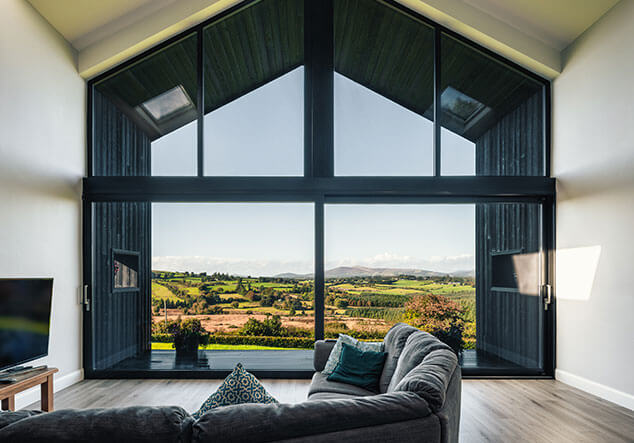
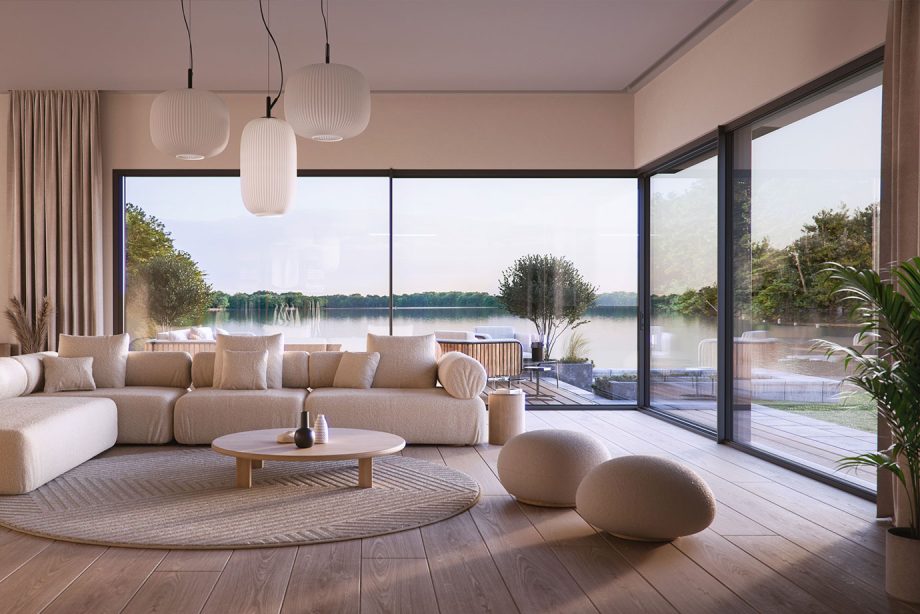
Picture windows suit scenic-view openings, open interior layouts, and accent walls alike – a great room facing a backyard or scenic lot, a stairwell or two-story wall, or a living area where broad glass visually opens up the room, all share the same fixed-pane logic. Because a fixed pane has no minimum clearance requirement for a swinging or tilting sash, picture windows also work in tighter interior layouts where furniture or built-ins would otherwise conflict with an operable unit’s swing radius.
A common configuration pairs a large central PAVA or PIXEL picture window with narrower tilt and turn units on one or both sides, within the same frame system and sightline – giving a continuous glass wall appearance while keeping ventilation and emergency egress available through the operable flanking units. That combination is also the practical answer to the most common picture-window objection: the fixed pane itself will never provide airflow, but it does not need to, since the units beside it can.
FAQ
A picture window is a large, fixed pane of glass built without a sash or operable hardware, glazed directly into the frame so it cannot be opened, typically installed to maximize an unobstructed view.
No, a picture window has no sash or operating hardware, so it provides no ventilation on its own – airflow in a picture-window installation comes from operable units, such as flanking tilt and turn windows, installed alongside it.
No, not the fixed pane itself. EffiAir works by offsetting an operable sash from the frame, which a fixed picture window does not have; EffiAir is available on the OKNOPLAST PAVA and PIXEL tilt and turn units typically installed alongside a picture window.
OKNOPLAST PAVA achieves a U-Factor of 0.14-0.26 BTU/hr·ft²·°F and PIXEL achieves 0.16-0.28 BTU/hr·ft²·°F on operable configurations, per OKNOPLAST product data sheets; a fixed picture window in the same frame and glazing package is not expected to perform worse on either metric.
OKNOPLAST PAVA and PIXEL both achieve STC 47 with laminated double glazing or STC 40 with standard double glazing, as assessed by Group Of Testing Laboratories Gryfitlab.
Generally, yes. Fixed glass has no sash-to-frame gasket line, which is one of the weaker acoustic paths in an operable window, so a fixed picture window in a given glazing package typically performs at least as well acoustically as the same glass in an operable sash.
No, OKNOPLAST’s confirmed insulating gas fill is argon, standard at no separate charge, in double- or triple-pane glazing configurations.
OKNOPLAST PAVA is rated to 30-80 psf and PIXEL to 30-90 psf; the design pressure needed for a specific opening depends on pane size and local wind-load requirements, which should be confirmed before finalizing a large picture window specification, particularly on coastal or upper-story installations.
Most picture-window installations pair the fixed pane with one or more flanking tilt and turn units in the same frame system, which provide EffiAir perimeter ventilation and full opening for airflow, cleaning access, and emergency egress.
Likely, yes. IRC Section R308.4.3 requires tempered glass for any individual pane larger than 9 square feet with its bottom edge under 18 inches from the floor, top edge over 36 inches, and a walking surface within 36 inches – conditions most large picture windows meet.
Yes, but IRC Section R310 requires at least one operable emergency escape opening of 5.7 square feet in every sleeping room, which the fixed picture window cannot satisfy – a nearby or flanking operable window must meet that requirement on its own.
Yes, OKNOPLAST PAVA and PIXEL support custom shapes, including arched and angled geometry, and oversized single-pane configurations, though very large or unusually shaped panes may need their design pressure and safety-glazing requirements reconfirmed for that specific size.
A fixed window has simpler hardware than an operable unit of the same size, since it has no sash, hinges, or multi-point lock mechanism to manufacture and install, though overall project cost depends on glazing package, size, and the operable units typically paired with it.



Let’s talk about your project!
Request a quote, discuss specifications, or get help choosing the right system
Send a request
"*" indicates required fields