


STV in Hurricane Impact Windows: Why Sash Stability Defines Real Performance in HVHZ Conditions


In High Velocity Hurricane Zones (HVHZ), where impact certification is mandatory, survival isn’t the metric—stability is. The engineering approach to the blind spot in standard testing is STV (Static Dry Glazing), a European-engineered technology that replaces discrete mechanical fasteners with a continuous structural bond between the glass and the sash.
- Where impact windows begin to lose stability under cyclic wind load
- Why cyclic loading is the real driver of window performance in HVHZ
- What actually moves first: glass, frame, or glazing interface
- Engineering comparison: glazing methodology
- How STV changes load transfer behavior in the sash
- Why large-format windows amplify sash instability
- How STV fits into PAVA Impact windows
- Where STV comes from: european static dry glazing engineering
- What architects and contractors should actually evaluate in HVHZ projects
- FAQ
Key Takeaways:
- The Repetition Factor: HVHZ performance is governed by repetition, not peak force; a storm can generate on the order of 200 to 400 pressure reversals, depending on exposure, duration, and building geometry.
- Interface Stability: STV reduces micro-movement at the glass-to-sash interface, where performance divergence first appears in the field.
- Distributed Load Path: Instead of discrete point-based retention, STV uses a continuous bonding layer to distribute stress evenly across the full perimeter.
- Sash Geometry: The system does not just “hold more” in a single event—it “moves less” across many events, maintaining long-term squareness.
- The PAVA Standard: The PAVA Impact system integrates STV as a structural layer to achieve certified DP80 performance in Miami-Dade and Broward, meeting the most stringent hurricane impact and cyclic load requirements in the U.S.
Where impact windows begin to lose stability under cyclic wind load
Impact systems are engineered for extreme pressures, but hurricane conditions are defined by oscillation between positive and negative states that repeat throughout the storm. During an event, the façade is subjected to alternating pressure states ranging from roughly +40 psf to -70 psf depending on building geometry.
The result is rarely immediate structural failure, but rather gradual micro-movement at the glazing interface, especially in larger window units where stiffness-to-span ratios are reduced.
Field note: A window that passes a lab test can still underperform in the field due to progressive seal relaxation under repeated cyclic loading. Laboratory assumptions may begin to diverge from real-world behavior at relatively small deflection levels, sometimes on the order of 1–2 mm, depending on system design and scale.
This movement leads to:
- Localized relaxation of gasket compression after repeated cycles
- Corner zone stress concentration under suction reversal
- Subtle changes in operational resistance and alignment post-event
This is where STV improves load transfer continuity at the glass-to-sash interface during repeated cyclic wind loads.
Why cyclic loading is the real driver of window performance in HVHZ
Let’s be honest: wind speed is for the brochure, psf and cycle consistency are for the job site. Design pressure (DP) defines resistance under uniform static load, but hurricane exposure is never uniform. Instead, the system is subjected to rapid pressure reversals and localized corner suction intensification.
Each reversal re-applies load in alternating directions across the same interface zones, creating a repetitive stress condition at the glazing perimeter and frame corners.
Over a single event, this results in hundreds of load cycles acting on the same system boundaries. Individually, these effects remain within elastic limits. Accumulated over time, they begin to shift system behavior – first at the interface level, then in overall sash response.
Stability – not just compliance – keeps the system functional and airtight after repeated exposure.
What actually moves first: glass, frame, or glazing interface
In most cases, the interface is the weakest behavioral link – not the primary frame structure. In impact window systems, the earliest movement typically occurs at the interface level where the glass is retained within the sash.

Mechanical glazing systems rely on point-based retention – beads, pressure plates, and setting blocks – meaning load transfer is inherently discontinuous. Under cyclic exposure, these discrete points allow micro-movement at the glass edge, which contrasts with continuous load transfer approaches such as STV systems.
Over time, this leads to:
- Uneven gasket compression distribution
- Stress concentration at laminated glass edges
- Gradual loss of sash squareness in larger units
- Redistribution of load toward discrete mechanical anchors
Engineering comparison: glazing methodology
This isn’t about product tiers—it’s about how the glass is held, and how it behaves over time.
| Performance Variable | Traditional Mechanical Glazing | STV Bonded Glazing (PAVA Impact) |
| Load Transfer | Point-based (setting blocks/beads) | Full-perimeter continuous bond |
| Cyclic Movement | Allows micro-shift at glass edge | Reduces micro-movement and long-term geometric drift |
| Sash Rigidity | Relies on frame corner strength | Glass and sash behave as a structurally coupled assembly |
| Stress Distribution | Concentrated at retention points | Uniformly distributed along perimeter |
| Long-term Geometry | Susceptible to sagging in large units | Improves long-term geometric stability under repeated loading |
How STV changes load transfer behavior in the sash
STV (Static Dry Glazing) replaces point-based mechanical retention with a continuous bond around the full perimeter of the glass. This shifts system behavior: Instead of load sitting at discrete mechanical points, it spreads out across the full sash-glass interface.
Field note: It’s not about holding more in one event – it’s about moving less over time.
The result is significantly reduced micro-movement, helping maintain consistent sash geometry and edge-zone stability after repeated load reversals. In practice, this translates into more stable long-term alignment in large-format units and reduced variability after cyclic wind exposure. That’s what you see in the field over time.
Why large-format windows amplify sash instability
Once window widths exceed 72 inches, structural sensitivity becomes non-linear rather than linear. Wider spans reduce stiffness efficiency and increase bending moments across sash profiles under suction load. Even minor deviations in alignment or installation tolerances become amplified in larger openings.
Field behavior in large units often shows:
- Reduced perceived tightness after seasonal exposure
- Uneven compression recovery after storm cycles
- Minor operational variation across repeated loading seasons
STV is specifically designed to mitigate these scaling effects by stabilizing the glass-to-sash interface, where point-based retention systems become increasingly sensitive to tolerance accumulation in large-format openings.
How STV fits into PAVA Impact windows
In PAVA Impact system, STV is an integrated structural component – not an add-on. PAVA is engineered for impact resistance and DP80 compliance, meeting the demands of HVHZ jurisdictions such as Miami-Dade and Broward. While certification ensures compliance under standardized testing, STV addresses how the system behaves beyond those test conditions—supporting long-term stability under repeated load cycles.
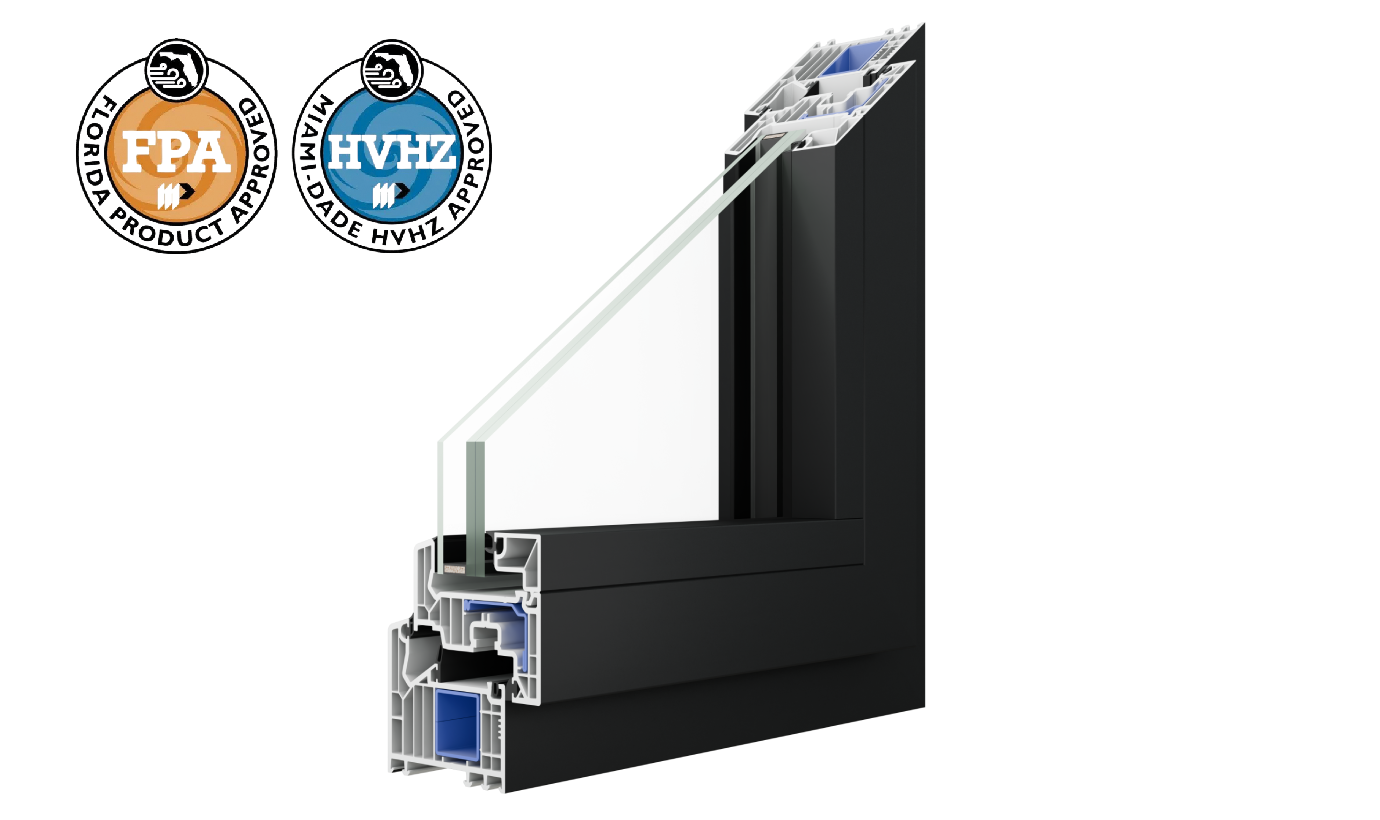
- HVHZ Zone 4 Compliance: Meets Florida’s most demanding coastal requirements
- DP80 Rating: Certified structural performance with a tested load of 120 psf
- Maximum Capability: Fixed units up to 60″ x 120″; operable units up to 41″ x 96″
- Air/Water Defense: Triple gasket system with water resistance up to 12 psf
- Mounting Versatility: Supports nailing fin, fixing clips, and direct bolt installation methods
In the PAVA system, STV keeps the glass-to-sash interface stable under cyclic loading. It works alongside the frame design by reducing edge-zone movement and helping preserve long-term geometric consistency in large-format units.
Where STV comes from: european static dry glazing engineering
STV originates from European static dry glazing principles developed within long-term performance validation frameworks such as IFT Rosenheim, where systems are evaluated not only for peak structural resistance, but for dimensional stability and cyclic load behavior over time.
That’s how coastal U.S. projects are actually evaluated in the field – repeated hurricane load cycling, not just single-event resistance, drives long-term performance.
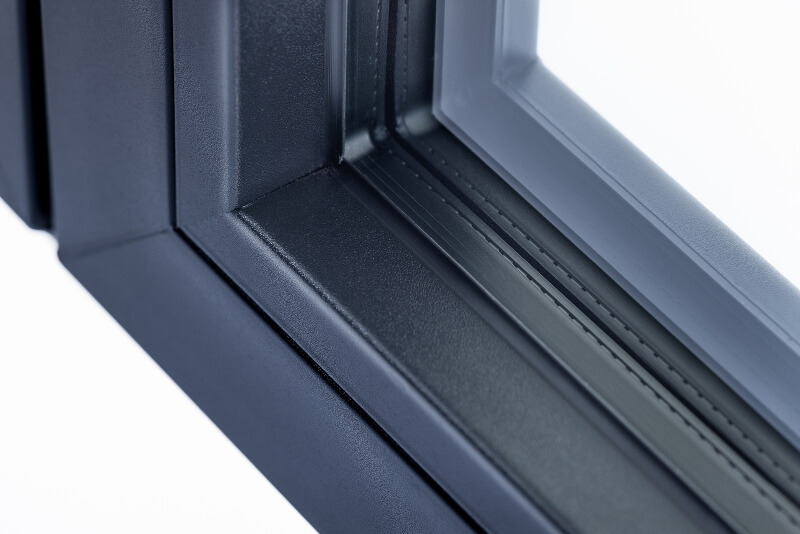
The objective is straightforward: replace discrete mechanical retention with a controlled, continuous load transfer system that remains predictable under repeated stress conditions.
What architects and contractors should actually evaluate in HVHZ projects
DP ratings and impact certifications define compliance thresholds – but not long-term field behavior. In real coastal performance, the critical questions are:
- How does the sash behave after approximately 300–500 wind load cycles?
- Where is load transfer concentrated – at discrete points or continuously distributed?
- Does geometry remain consistent after repeated storm exposure?
- How stable is gasket compression in large-format units over time?
Ready to secure your envelope? If your next coastal project requires the long-term stability of a DP80 system combined with European sash engineering, explore the PAVA Impact system. Let’s talk about your project! Contact us.
FAQ
No. It doesn’t replace the DP rating. It just helps the system hold up under repeated cycling.
No. It is code-compliant. The difference is in long-term behavior, specifically micro-movement under repeated load cycles rather than immediate structural performance.
Nailing fin, fixing clips, and direct bolt methods—supporting load transfer into the rough opening.



Let’s talk about your project!
Request a quote, discuss specifications, or get help choosing the right system
Send a request
"*" indicates required fields