


Black Windows Are The Perfect Match For Modern Houses. Style Guide
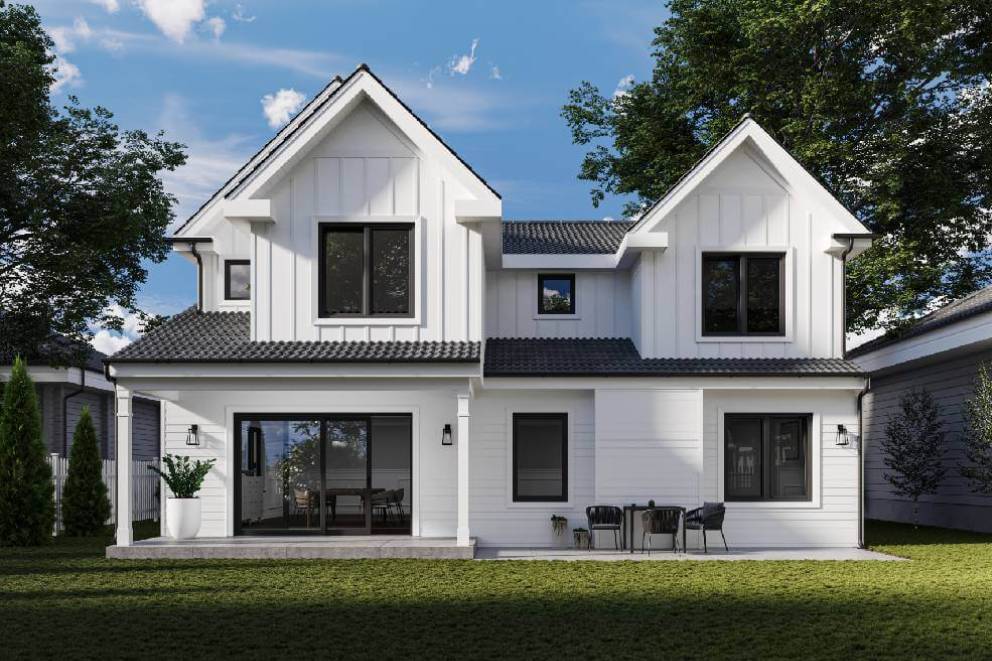

Black window frames – whether uPVC in Black Jet Matt or aluminum in RAL 9005 – carry the same NFRC-rated U-Factor as identical units in white. NFRC 100 measures whole-window thermal transmittance under fixed laboratory conditions that exclude solar input entirely, so frame color has no mathematical role in the result. Four variables do drive the specification decision: finish technology (coextrusion vs. lamination film vs. PVDF fluoropolymer), climate zone UV exposure, frame material, and how the color reads against the exterior assembly. This guide covers all four, with grille patterns by architectural style, exterior color pairings, and full specs for the OKNOPLAST systems available in black.
What you'll learn from this guide:
- Black window frames carry the same NFRC-certified U-Factor as identical units in white – frame color has no effect on thermal performance because NFRC 100 runs under zero solar input.
- Whether a black finish lasts 12 years or 25+ depends entirely on finish technology: coextrusion uPVC, lamination film, or PVDF fluoropolymer coating each have different UV durability profiles and different climate zone requirements.
- Each major U.S. architectural style – farmhouse, Craftsman, Colonial, industrial – has a specific grille pattern and sight line width that makes black frames read as designed rather than retrofitted.
- The right siding color pairing matters as much as the frame color itself: three competing contrast layers (dark siding + white trim + black frames) consistently produce visual noise, not the definition black frames are chosen for.
- Black frames on south- and west-facing exposures in Climate Zones 1-3 require closer attention to perimeter gap specification and sealant flexibility than the same frames on north or east walls – not because of energy performance, but because of wider thermal expansion cycling.
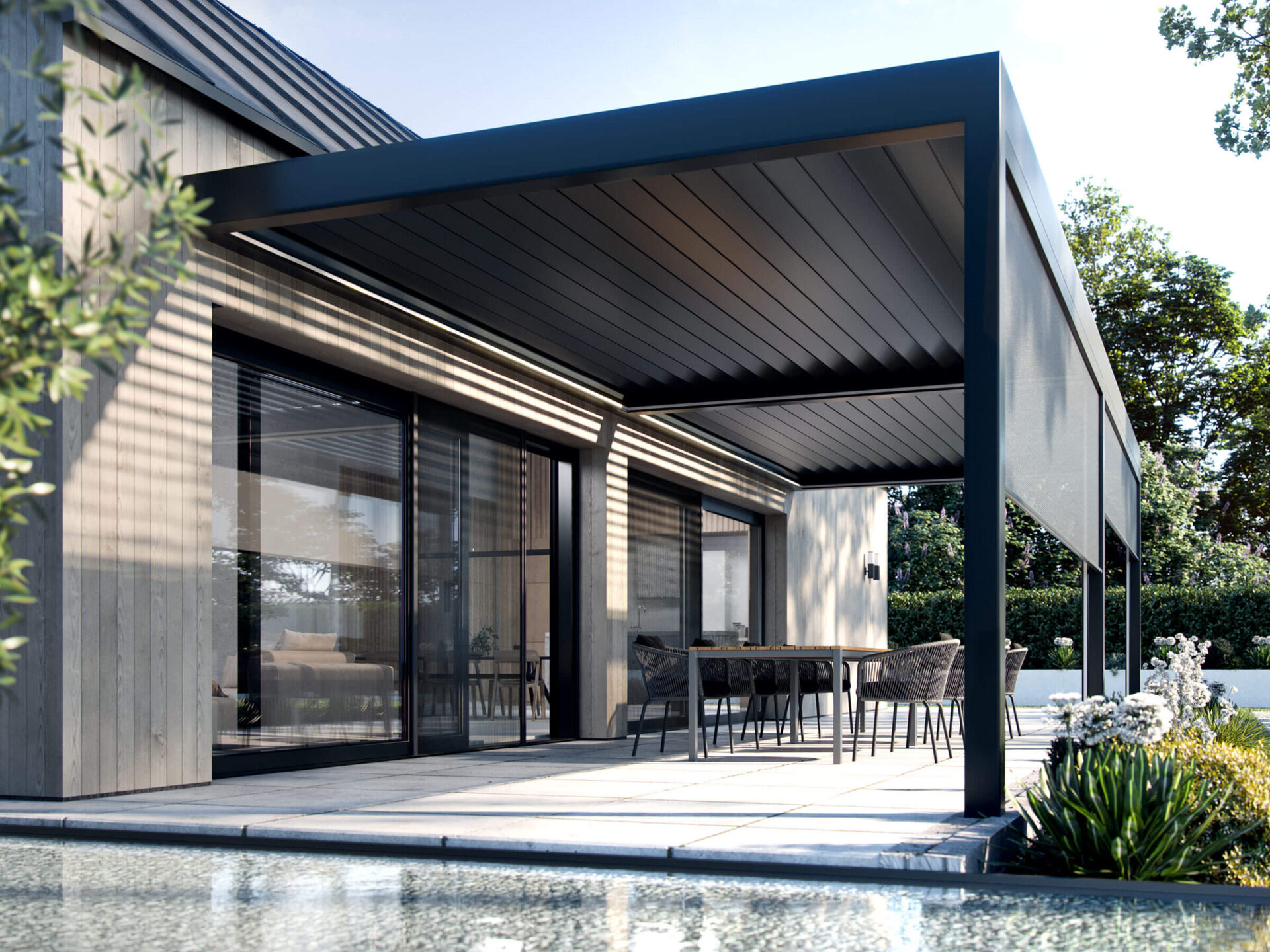
Does Black Frame Color Affect U-Factor or SHGC?
Windows account for 25-30% of residential heating and cooling energy use, per the U.S. Department of Energy (DOE Energy Saver). The DOE Building Technologies Office further notes that windows can account for 30-40% of a home’s heat loss in winter specifically. That’s what makes frame and glazing specification consequential – not just aesthetic. But frame color isn’t the variable that determines thermal performance. The NFRC-rated U-Factor and SHGC of a window are determined by the glass package and profile construction – not surface finish. Frame color plays no role in either rating.
How NFRC 100 Measures U-Factor
ANSI/NFRC 100 (Procedure for Determining Fenestration Product U-Factors) uses two-dimensional finite element software – THERM and WINDOW, developed by Lawrence Berkeley National Laboratory (LBNL) and publicly available through the LBNL Windows Group at windows.lbl.gov – to calculate heat transfer through three zones simultaneously: frame, edge-of-glass, and center-of-glass. The simulation runs under fixed boundary conditions: 0°F exterior, 70°F interior, standardized exterior convective film coefficient, and zero solar irradiance. Because solar input is explicitly excluded, surface absorptance – and therefore frame color – has no mathematical role in the result.
The whole-window U-Factor on the NFRC label is a weighted average across those three zones:
| Zone | Approximate share of whole-window heat loss | Governed by |
|---|---|---|
| Center-of-glass | 60-75% | Glass pane count, Low-E coating, gas fill |
| Edge-of-glass (outer ~2.5 in. of IGU) | 10-15% | Spacer material – aluminum vs. warm-edge |
| Frame | 15-25% | Profile depth, chamber count, thermal break, steel reinforcement |
A uPVC profile’s thermal conductivity is approximately 0.16-0.17 W/m·K whether the surface is white or black. An aluminum profile’s thermal break – the polyamide or polyurethane strut separating interior and exterior sections – functions identically at any paint color.
One note for specifiers: marketing materials sometimes cite center-of-glass (COG) U-Factor rather than the NFRC whole-window value. COG excludes frame and edge-of-glass heat transfer, so it’s consistently lower than the whole-window figure. IECC compliance and ENERGY STAR qualification require the whole-window NFRC rating. Using COG figures for code compliance is an error.
What Black Frames Do Affect: Surface Temperature
Dark surfaces absorb approximately 90% of incident solar radiation, compared to roughly 15% for white frames – a difference that drives the thermal expansion and surface temperature effects discussed below. (DOE Building Technologies Office research on window envelope performance, energy.gov/eere/buildings.) Under direct summer sun, a black frame can reach surface temperatures 36-72°F higher than an equivalent white unit. Two consequences follow – neither of which appears on the NFRC label.
Secondary frame heat conduction. The NFRC SHGC value captures solar heat gain through the glass. Black frames add a secondary, smaller heat load: radiant energy absorbed by the frame surface and conducted inward. In most residential applications, this effect is small relative to glass-area solar gain. On glass-heavy south- and west-facing facades in Climate Zones 1-3 (Florida, Gulf Coast, Southern California), specifying a low-SHGC glass package remains the primary thermal management tool regardless of frame color.
Thermal expansion cycling. uPVC expands at approximately 0.06-0.08 mm per degree Celsius per meter (per ISO 11359 / ASTM D696), or roughly 3.3-4.4 × 10⁻⁵ in/in per °F. A 32-inch (810 mm) wide frame cycling between winter baseline and black-frame peak summer temperature – a delta of roughly 90°F (50°C) in Climate Zones 1-3 – expands approximately 0.11 inch (2.8 mm) on the horizontal member. A white frame in the same installation moves roughly 0.10 inch (2.5 mm), because white surfaces reach approximately 36-40°F (20-22°C) above ambient compared to 72-79°F (40-44°C) for black under the same solar load. The 0.3 mm difference is manageable in a correctly installed window; it becomes significant on wide multi-unit configurations and south exposures where black frames hit peak temperature every clear day.
The takeaway: choose frame color based on aesthetics, architectural context, and finish durability. Choose the glass package based on climate zone and orientation. The NFRC-rated U-Factor of any OKNOPLAST unit in black is identical to the same unit in white.
How Long Will the Black Finish Last? Coextrusion, Lamination Film, and PVDF
Whether a black frame fades depends on finish technology – not color. The same dark pigment applied through different manufacturing processes produces UV durability that differs by a factor of two or more.
The Three Finish Technologies
RAL coextrusion (uPVC). The black pigment – combined with heat-reflective additives and UV stabilizers – is fused into the outer skin of the uPVC profile during extrusion itself. The colored layer exits the die as part of the profile; there’s no adhesive layer, so delamination isn’t possible. Heat-reflective additives in the coextruded layer reduce peak surface temperature compared to standard black pigment alone. UV durability: 15-20 years. Standard technology for OKNOPLAST PAVA and PIXEL black configurations.
RAL lamination film (uPVC). A pre-colored acrylic or polyurethane film bonds to the finished white uPVC profile via hot-roll adhesive. The film delivers color and UV protection over the white substrate. Lamination film is the standard method for dual-color configurations – black exterior, different interior – because coextruding two colors in a single profile requires more complex tooling. UV durability: 12-18 years, depending on film grade. High-grade acrylic films (RENOLIT EXOFOL MX and equivalent) approach the upper end.
PVDF fluoropolymer coating (aluminum). Polyvinylidene fluoride (PVDF) – the Kynar 500 brand is the most widely specified – is a liquid spray-applied finish requiring a minimum 70% PVDF resin content by weight, per AAMA 2605 and the Kynar 500 licensing agreement. The coating is factory-applied by spray gun and cured at approximately 450°F (232°C) per FGIA guidance. It resists UV degradation, chalking, and color shift at sustained high surface temperatures. UV durability: 25+ years per AAMA 2605. The right choice for commercial curtainwall and any premium residential aluminum application where south or west exposure in Climate Zones 1-3 is involved.
Standard polyester powder coat (aluminum). Electrostatic application of polyester resin, cured at approximately 390°F. Less UV-resistant than PVDF at high surface temperatures. UV durability: 10-15 years in high-sun exposure. Adequate for Climate Zones 4-8 residential; not the right call for south- and west-facing frames in Zones 1-3.
Validation Testing: ASTM D4803 and AAMA 1506
Two test standards govern dark-finish uPVC window performance:
- ASTM D4803 – small-scale heat buildup test under controlled IR energy, measuring dimensional stability of dark-colored PVC profiles.
- AAMA 1506 (Voluntary Test Method for Laboratory Heat Build-Up Effects on Fenestration Products) – full-scale thermal cycling of complete window units at IR angles simulating summer outdoor exposure in hot, dry U.S. climates.
Manufacturers of coextrusion or lamination-finish dark frames should confirm AAMA 1506 compliance on request. Field-painted uPVC – dark paint over a factory white frame – has no coverage under either protocol and shouldn’t be specified: standard black paint has been measured raising uPVC surface temperatures by roughly 42°C (76°F) above ambient, well into the 156-160°F range where uPVC begins to soften and distort under sustained load.
Climate Zone Specification Matrix
| Finish | Material | UV Rating | Climate Zones 1-3 (South) | Climate Zones 4-8 (North) |
|---|---|---|---|---|
| RAL coextrusion | uPVC | 15-20 yr | Acceptable; not ideal for south/west | Recommended |
| RAL lamination film | uPVC | 12-18 yr | Not recommended for direct south/west | Acceptable |
| Polyester powder coat | Aluminum | 10-15 yr | Not recommended for south/west | Recommended |
| PVDF fluoropolymer / Kynar 500 | Aluminum | 25+ yr | Recommended – all exposures | Recommended |
| Field-applied paint | uPVC or aluminum | Not rated | Never – voids warranty | Never – voids warranty |
For coastal Zones 1-2, PVDF also resists the corrosion that salt air causes at fasteners and frame-to-sill junctions on standard powder coat.
Dual-Color Configuration: Black Outside, White Inside
OKNOPLAST PAVA and PIXEL are both available with a different color on the exterior face than on the interior – black exterior / white interior is the most common pairing. It’s a standard factory option, not a special order, and it resolves a real specification conflict: black reads well on the facade against light siding; white integrates better inside against drywall and millwork.
Why White-Core / Colored-Exterior Works
The exterior face uses lamination film in the specified RAL or OKNOPLAST color; the interior face is the standard white uPVC substrate. That white core matters thermally. White uPVC has a Vicat softening temperature of approximately 181°F (83°C, per ISO 306 / material test data). The black exterior film absorbs solar radiation; the white core – with its higher reflectance – distributes that heat load more stably. This keeps the structural core of the profile well below the 156-160°F range where uPVC softens under sustained load.
White interior frames also reflect more ambient light back into the room – worth noting on north-facing or otherwise light-limited spaces where window-to-floor area ratios fall below roughly 15%.
Dual-Color: Practical Notes
Dual-color is a factory finish, not a field modification. Field-applied paint voids the OKNOPLAST 10-year guarantee. Confirm the color combination at order – changing it after manufacture isn’t possible.
On cost: dual-color adds approximately 15-25% over standard white, reflecting the extra lamination step. Single-color black exterior (same inside and out) adds roughly 5-10%.
For HOA-restricted or historic district properties: dual-color lets you run black on street-facing elevations while the interior stays neutral. Some HOAs that reject all-black exterior windows accept dual-color units with white interiors.
MIRU EVO aluminum systems support contrasting powder coat colors on interior and exterior – the same principle, different application method.

Thermal Expansion and Installation: What Changes With Black Frames
Black frames move more than white frames in the same installation. Their surface temperatures peak higher under direct sun, and that wider temperature cycle means wider dimensional movement. Installers working south- and west-facing facades in Climate Zones 1-3 need to account for this.
The Numbers
uPVC expands at 0.06-0.08 mm per degree Celsius per meter (ISO 11359 / ASTM D696), equivalent to roughly 3.3-4.4 × 10⁻⁵ in/in per °F. For a 32-inch (810 mm) frame on a south exposure in Climate Zones 1-3 – a peak-to-winter temperature delta of roughly 90°F (50°C):
0.07 mm/°F/m × 0.81 m × 90°F ≈ 2.8 mm (about 0.11 in.) total horizontal expansion
White frames in the same climate cycle over roughly 45°C (81°F) because white uPVC surfaces reach approximately 36-40°F (20-22°C) above ambient, versus 72-79°F (40-44°C) for black under the same solar conditions. That puts white-frame expansion at approximately 2.5 mm (0.10 in.) – a difference of about 0.3 mm on a standard-width unit. Not dramatic, but it adds up on wide multi-unit assemblies and shared jambs.
Aluminum 6063 expands at roughly 0.013 mm/°F/m (0.023 mm/°C/m) – about one-third of uPVC’s rate. Black aluminum frames on south exposures in Zone 1-3 reach higher absolute surface temperatures, and the practical expansion on a 36-inch aluminum frame can still approach 1.5-2 mm (0.06-0.08 in.) over the full seasonal temperature range.
Installation: What to Do Differently
Perimeter gap. Standard practice is 3-5 mm around the frame within the rough opening. On black frames at south and west exposures in Climate Zones 1-3, use the upper end – 5 mm minimum – with backer rod and sealant that accommodate the full movement range. Undersized gaps on dark frames cause buckling, impede multi-point lock operation, and transfer stress to the glazing unit. In documented cases, insufficiently reinforced dark-colored uPVC frames on south exposures have warped enough to prevent sash closure (Glass Times UK industry data on colored uPVC). PAVA’s steel reinforcement in all load-bearing chambers significantly reduces this risk compared to unreinforced profiles.
Sealant flexibility. Silicone perimeter sealants rated ±25% or better handle the expansion cycle. Polyurethane sealants rated ±12% are marginal for black-frame south exposures in hot climates. Confirm compatibility with frame material and wall assembly substrate.
Fastener torque. Overtightened frame-to-jamb anchors prevent movement and concentrate thermal stress at the fastener point. Fasteners should be snug, not rigid – the frame needs room to expand within the gap. On a black aluminum MIRU EVO Steel frame on a south-facing Phoenix facade, surface temperatures of 140-160°F are plausible in July. Standard zinc anchors handle that range without issue. The sealant and backer rod are the components to specify carefully, not the hardware.
See the products

Black Windows by Architectural Style: Grille Patterns and Proportions
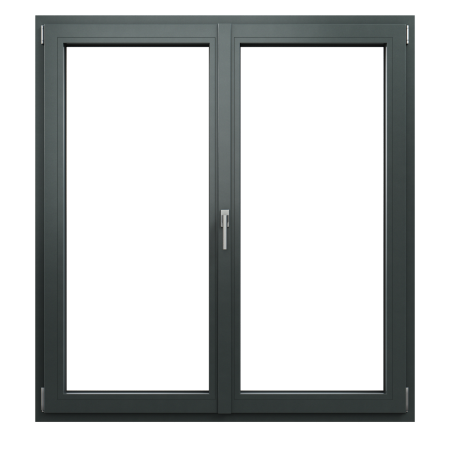
Black works across more architectural styles than any single alternative because it reads as definition – it outlines the opening rather than competing with the facade’s material palette. The decision within each style comes down to two variables: grille pattern and sight line width. Getting both right is what separates a window that looks designed from one that just happens to be black.
Modern and Contemporary
No grilles. Large-format fixed and Tilt and Turn units, flush or near-flush installation, slim aluminum or uPVC profiles. PIXEL in Black Jet Matt or MIRU EVO Standard in RAL 9005 are the right specifications – their narrower sight lines reinforce the horizontal and vertical geometry that defines this style. Floor-to-ceiling windows, corner configurations, and grouped-unit assemblies all read correctly without grilles.
The siding pairing that actually works on contemporary: white stucco, light gray fiber cement, raw concrete, or dark charcoal cladding. Contemporary is one of the few styles where dark siding with dark frames makes sense – the frame disappears into the facade plane and the glass becomes the element.
OKNOPLAST systems: MIRU EVO Standard (narrowest sight line), MIRU EVO Hidden (concealed hardware, flush sash), PIXEL (slim uPVC).
Modern Farmhouse
Four-over-one or six-over-one colonial grille in the upper sash only, undivided lower sash. Board-and-batten or shiplap in white or off-white. The grille in the upper sash carries the historic divided-light reference; the clear lower sash preserves the view. Prairie grilles – large open center field with smaller panes at the perimeter, from Frank Lloyd Wright’s Prairie School – also work on horizontal-emphasis farmhouse facades.
One proportion rule that matters: grille bars should match or run slightly narrower than the frame width. On PIXEL’s 70 mm (2¾ in.) profile, thick grille bars create a visual mismatch. On PAVA’s 82 mm (3¼ in.) profile, a slightly wider grille bar reads correctly.
Black front door and gutters completing the three-element repetition is what gives farmhouse facades their coherence. Windows alone don’t get you there.
OKNOPLAST systems: PAVA (depth supports grilles well), PIXEL (where maximum glass area matters more than grille weight).
Craftsman / Arts and Crafts
Three to four vertical bars in the upper sash only – lower sash undivided. The bars are vertically proportioned and reference the style’s emphasis on structural, hand-crafted detail. Craftsman also calls for dark trim – deep brown, forest green, navy – not white trim. Against cedar siding and clinker brick, black frames read as part of the trim system. Against white trim, they create a three-layer contrast that fights the organic material palette.
Match the frame color to the darkest trim element. Black frames as the only dark element on a Craftsman exterior look like a retrofit, not a design.
OKNOPLAST systems: PAVA or PIXEL; confirm grille availability with OKNOPLAST US at specification stage.
Colonial and Georgian
Six-over-six divided-light sash – six equal panes in each sash – is the historically accurate pattern for Colonial. Symmetrical 9-over-9 or 12-over-12 configurations appear on larger windows in formal Georgian work. The key is symmetry: grille bars divide each sash into equal panes.
Black-painted sash on white-painted trim is historically documented in 18th-century American Colonial and Georgian buildings. The contemporary version in factory-applied uPVC or aluminum black replicates the same visual logic: maximum contrast between sash and surrounding trim, with the frame reading as the structural boundary of the opening.
OKNOPLAST systems: PAVA (the 82 mm / 3¼ in. profile suits the heavier frame character of Colonial architecture).
Industrial and Warehouse-Conversion
No grilles, or steel divided-light sash. Black is the default for industrial and adaptive-reuse projects. The visual reference is the Crittall-style steel warehouse sash – narrow sight lines, squared profile edges, strong corner joints – common in American industrial buildings from the 1900s through the 1950s.
OKNOPLAST MIRU EVO Steel replicates those proportions in thermally broken aluminum. Genuine cold-rolled steel profiles achieve their narrow sight lines because steel’s yield strength of approximately 36,000 psi (ASTM A36) allows structurally thin sections – but the price is thermal conductivity. Unbroken steel produces whole-unit U-Factors of 1.0-2.0 BTU/hr·ft²·°F, which no current U.S. climate zone accepts under IECC 2021. MIRU EVO Steel’s 4½ in. thermally broken aluminum frame eliminates that penalty while keeping the squared-edge, narrow-profile geometry. It’s the code-compliant specification for adaptive-reuse projects where the existing steel window pattern needs to be matched or referenced.
OKNOPLAST systems: MIRU EVO Steel (primary). MIRU EVO Standard for cleaner contemporary industrial aesthetic.
Coastal
White, pale gray, or blue-gray fiber cement or cedar shingle siding, generous overhangs, breezy porches. Black frames against those palettes create clean definition of the openings without fighting the light, airy material character of the style. No grilles or simple farmhouse pattern.
The critical specification note for coastal: finish durability, not aesthetics. Climate Zones 1-2 (coastal Florida, Gulf Coast, Atlantic seaboard south of Virginia) combine UV exposure, salt air, and humidity that accelerate degradation of standard finishes. PVDF-coated aluminum is the right finish specification for any south- or west-facing black frames in those zones. The cost difference between standard powder coat and PVDF is modest relative to a 10-15 year difference in durability.
Exterior Color Pairings: What Works, What Doesn’t, and Why
Black frames work best when they clearly mark the glass-to-wall boundary – which requires enough contrast for that boundary to read. Pairings that blur the frame into the facade lose the visual reason for choosing black.
Siding Color Matrix
| Exterior Siding Color | Black Frame Read | Works For |
|---|---|---|
| Bright white | Maximum contrast | All styles |
| Warm off-white / cream | High contrast, softer | Traditional, farmhouse |
| Light warm gray | Strong contrast | Modern, farmhouse, colonial |
| Cool light gray | Good contrast | Modern, contemporary |
| Warm beige / pale stone | Moderate contrast | Craftsman, colonial |
| Warm medium gray | Low-moderate contrast | Modern, transitional |
| Dark charcoal gray | Very low contrast – frame disappears | Contemporary only |
| Dark navy blue | Low contrast | Colonial revival with white trim accent |
| Warm brick (red-orange range) | High contrast – historically accurate | Colonial, Georgian, Craftsman |
| Natural cedar / warm wood | High contrast | Modern farmhouse, contemporary |
| Dark brown siding + dark trim | Near zero contrast | Avoid |
The three-element problem. One pairing that consistently fails: dark siding + white trim + black windows. Three competing contrast layers create visual hierarchy confusion – the eye doesn’t know where to stop. If the siding is dark, the trim needs to be dark too, so the black frame reads as the dominant dark element against a lighter glass plane.
Roof shingles as the third variable. Dark charcoal shingles with black frames and white siding create a coherent dark-light-dark composition. Warm brown shingles with black frames against gray siding produce a three-way color conflict. Before locking in black frames, check whether the shingle color sits within a step or two of the frame in value.
Interior Color Interactions
Against white drywall and light wood trim, a black frame creates a picture-frame effect that draws the eye to the view. Against dark accent walls, the frame disappears – which can be deliberate in contemporary interiors where the goal is to foreground the glass, not the frame.
In rooms with limited natural light and window-to-floor area below roughly 15%, dual-color units with white interior frames reflect measurably more ambient light inward than black-interior units.

OKNOPLAST Black Window Systems: Specifications
All OKNOPLAST window systems are available in black configurations. Finish technology, available color names, and product performance differ by system.
PAVA – uPVC Tilt and Turn, 82 mm Profile
| Attribute | Value |
|---|---|
| Profile depth | 82 mm / 3¼ in. |
| Frame construction | 7-chamber uPVC with steel reinforcement in all load-bearing chambers |
| U-Factor range | 0.14-0.26 BTU/hr·ft²·°F (NFRC-certified, Keystone Certifications USA) |
| Air infiltration | 0.10 CFM/ft² at 75 Pa / 1.57 psf (ASTM E283) |
| DP rating | ±80 psf |
| Glazing | Triple glazing standard; STV (Static/Dry Glazing) technology |
| Available black finishes | Black Jet Matt, Kitami Dark Matt, Umbragrau, Anthracite Quartz |
| Finish technology | RAL coextrusion (standard); lamination film (dual-color) |
| Warranty | 10 years |
PAVA’s STV dry glazing technology bonds the insulating glass unit to the sash structurally using a dry gasket system rather than wet-set compound. This transfers load from glass directly to frame, increases unit rigidity, and allows larger glass formats without increasing frame depth – relevant for projects where large-format black-framed windows are a design requirement. The stiffer sash-glass assembly also maintains more consistent compression on perimeter seals through the wider thermal cycles that black frames see in hot climates.
At U-Factor 0.14 BTU/hr·ft²·°F, PAVA meets the technical U-Factor threshold for ENERGY STAR Most Efficient in the Northern zone, which requires U-Factor ≤ 0.20 per EPA’s 2025 Most Efficient recognition criteria (energystar.gov) – confirm current certification status with OKNOPLAST US at time of specification.
PIXEL – uPVC Tilt and Turn, Slim Profile
| Attribute | Value |
|---|---|
| Profile depth | 70 mm / 2¾ in. |
| Frame construction | 6-chamber uPVC |
| U-Factor range | 0.16-0.28 BTU/hr·ft²·°F (NFRC-certified) |
| Air infiltration | 0.01 CFM/ft² at 75 Pa / 1.57 psf |
| STC (with laminated glazing) | 47 |
| Available black finishes | Black Jet Matt, Kitami Dark Matt, Anthracite Quartz, Smooth Anthracite Grey |
| Finish technology | RAL coextrusion; dual-color lamination available |
| Warranty | 10 years |
PIXEL’s movable mullion is 33% narrower than a standard uPVC Tilt and Turn sash, with a symmetrically centered handle. In black, this produces a visual result closer to steel-look aluminum than most uPVC systems reach. For contemporary residential and mid-century modern projects where slim black sightlines are the design intent but aluminum thermal performance isn’t required, PIXEL in Black Jet Matt is the uPVC alternative to MIRU EVO.
MIRU EVO Steel – Aluminum Tilt and Turn, Steel-Look
| Attribute | Value |
|---|---|
| Frame/sash depth | 4½ in. |
| Installation depth | 4⅛ in. |
| Profile height | 3¼ in. |
| Maximum sash | 5’3″ × 9’6″ |
| Frame construction | Thermally broken aluminum (polyamide strut) |
| Available black | RAL 9005 (Jet Black), RAL 9004 (Signal Black), RAL 7016 (Anthracite) |
| Finish technology | Polyester powder coat (standard); PVDF on request |
| Warranty | 10 years |
Aluminum alloy 6063 – the standard architectural extrusion alloy – has a thermal conductivity of approximately 201-218 W/m·K (per ASTM B221 alloy data), roughly 1,200 times higher than uPVC’s 0.16-0.17 W/m·K. MIRU EVO Steel’s polyamide thermal break interrupts that conductive path the same way PAVA’s multi-chamber uPVC construction does – different material, same principle.
Genuine cold-rolled steel profiles (Crittall W20, W40 and equivalents) achieve narrow sight lines because steel’s yield strength of approximately 36,000 psi (ASTM A36) allows structurally thin sections. The thermal price is 1.0-2.0 BTU/hr·ft²·°F for the whole unit – beyond what IECC 2021 accepts in any climate zone. MIRU EVO Steel replicates the squared-edge, narrow-profile geometry in thermally broken aluminum. For adaptive-reuse projects where the existing steel window pattern needs matching, it’s the code-compliant substitute.
MIRU EVO Standard – Aluminum Tilt and Turn
| Attribute | Value |
|---|---|
| Frame/sash depth | 3 5/16 in. |
| Installation depth | 2 15/16 in. |
| Frame construction | Thermally broken aluminum |
| Available black | Full RAL palette; PVDF on request for Climate Zones 1-3 |
| Warranty | 10 years |
Where steel-look proportions aren’t required, MIRU EVO Standard offers a narrower contemporary sight line with the same thermally broken construction. It handles larger spans and commercial-grade structural loads that uPVC systems can’t.
MIRU EVO Hidden – Aluminum Tilt and Turn, Concealed Hardware
| Attribute | Value |
|---|---|
| Maximum sash | 4’1″ × 8’8″ |
| Frame construction | Thermally broken aluminum |
| Visual character | Concealed hardware; flush sash – reads as fixed glazing from exterior |
| Available black | Full RAL palette including RAL 9005, RAL 9004, RAL 7016 |
| Warranty | 10 years |
For high-end residential and hospitality projects where the exterior must present a uniform glazing plane without visible hardware: MIRU EVO Hidden in black achieves the appearance of fixed-frame glazing while retaining Tilt and Turn operation. The flush sash and concealed mechanism in black against a glass-dominant facade is the right specification for contemporary luxury applications where the window should disappear into the glass field.
Black Color Options Across Systems
| OKNOPLAST Color Name | RAL / Spec | Character | Available On |
|---|---|---|---|
| Black Jet Matt | OKNOPLAST spec | Deep matte black; most popular residential choice | PAVA, PIXEL |
| Kitami Dark Matt | OKNOPLAST / Mattex | Very dark brown-black; warm undertone | PAVA, PIXEL |
| Umbragrau | RAL 7022 range | Dark warm gray; reads near-black in shade | PAVA |
| Smooth Anthracite Grey | RAL 7016 range | Standard anthracite; clearly gray in direct light | PIXEL |
| Anthracite Quartz | OKNOPLAST spec | Textured anthracite; matte finish | PAVA, PIXEL |
| RAL 9004 (Signal Black) | RAL 9004 | Standard black for aluminum | MIRU EVO line |
| RAL 9005 (Jet Black) | RAL 9005 | Deepest standard black for aluminum | MIRU EVO line |
| RAL 7016 (Anthracite) | RAL 7016 | Standard anthracite on aluminum | MIRU EVO line |
ENERGY STAR v7.0 window thresholds by climate zone (EPA, energystar.gov, effective October 23, 2023):
| Climate Zone | ENERGY STAR U-Factor | ENERGY STAR SHGC | Most Efficient U-Factor |
|---|---|---|---|
| Northern | ≤ 0.22 | ≥ 0.17 | ≤ 0.20 |
| North-Central | ≤ 0.25 | ≤ 0.40 | ≤ 0.20 |
| South-Central | ≤ 0.28 | ≤ 0.23 | ≤ 0.20 |
| Southern | ≤ 0.32 | ≤ 0.23 | ≤ 0.21 |
Frame color has no effect on whether a unit meets any of these thresholds – the glass package determines compliance.
One note on color matching across systems: RAL 7016 on a uPVC PAVA profile won’t be a visual match to RAL 7016 on MIRU EVO aluminum – coextruded uPVC and powder-coated aluminum produce different surface sheens and undertones from the same RAL code. For projects where windows, front doors, and patio doors need to match: specify all from the same system family where possible, or request physical sample chips from OKNOPLAST before ordering.
What to Consider Before Specifying Black Windows
Five factors beyond aesthetics determine whether black frames are the right call.
Orientation. South- and west-facing facades in Climate Zones 1-3 are the most demanding environment for black frames – direct sun at high solar angles for sustained periods. North- and east-facing exposures in any climate zone are the least demanding. The same finish specification performs differently depending on which wall it’s on.
Frame material. uPVC (PAVA, PIXEL) is the right primary choice for residential in Climate Zones 4-8. Thermally broken aluminum (MIRU EVO) works in all climate zones, with PVDF finish for Zone 1-3 south and west exposures.
Finish grade. Within each material, confirm whether the specified configuration uses coextrusion, lamination film, or PVDF. Ask for the UV durability rating and warranty coverage for the specific finish in writing – not just “powder coat” or “laminated.”
Installation. Dark frames need attention to perimeter gap – 5 mm minimum on south and west exposures in hot climates – and sealant flexibility rating. Installers who work primarily with white frames may default to tighter installation conditions.
Maintenance. Black frames show water spots, mineral deposits, and dust more visibly than white. In urban environments, two to three cleanings per year. Coastal properties: monthly. Use a damp microfiber cloth and mild pH-neutral soap. Work top to bottom. Never use abrasive cleansers, acetone, bleach, ammonia, or dry scouring pads – each degrades either the coextrusion surface or the lamination film.
FAQ
No, NFRC 100 measures U-Factor under zero-solar-radiation laboratory conditions – exterior color has no mathematical role in the result. OKNOPLAST PAVA in Black Jet Matt and the same system in white carry identical NFRC-certified U-Factor ranges: 0.14-0.26 BTU/hr·ft²·°F depending on glazing package. U-Factor is determined by the glass package and profile construction, not surface finish.
No, NFRC 100 uses fixed boundary conditions – 0°F exterior, 70°F interior, no solar input – that exclude surface color from the calculation. A manufacturer doesn’t need to submit separate tests for each color. The U-Factor label applies to all color configurations of the same glazing and profile combination. Per EPA and ENERGY STAR guidance (energystar.gov), “U-Factor measures the rate of heat transfer and tells you how well the window insulates” – a property of the assembly, not the paint.
Fade resistance depends on finish technology. OKNOPLAST PAVA and PIXEL black finishes use RAL coextrusion – pigment fused into the outer profile skin during manufacturing, no adhesive layer. Rated UV durability: 15-20 years. Dual-color configurations use lamination film: 12-18 years depending on film grade. For Climate Zones 1-3 on south and west exposures, spec MIRU EVO aluminum with PVDF (Kynar 500) coating: 25+ years per AAMA 2605. Don’t specify field-applied paint: it voids the 10-year OKNOPLAST warranty and has no verified UV durability rating.
Yes – dual-color is a standard factory option on PAVA and PIXEL. The exterior face uses lamination film in the specified black; the white uPVC core stays on the interior. Specify at order stage – it can’t be changed post-manufacture. MIRU EVO aluminum systems support contrasting interior and exterior powder coat colors. Dual-color carries a premium of approximately 15-25% over equivalent single-color white units.
A 4-over-1 or 6-over-1 colonial pattern in the upper sash is the most historically consistent choice – divided panes above, clear view below. Prairie grilles (open center field with small perimeter panes) work well on wide horizontal windows. No grilles on picture or large fixed units is also correct. Grille bar width should be proportional to frame depth: narrower bars on PIXEL’s 2¾ in. profile, slightly wider on PAVA’s 3¼ in. profile.
All of them, with different grille conventions. Modern and contemporary: no grilles, MIRU EVO Standard or PIXEL. Modern farmhouse: 4-over-1 or 6-over-1 colonial grille, PAVA or PIXEL. Craftsman: upper-sash vertical grilles, dark trim. Colonial and Georgian: 6-over-6 colonial grille, white clapboard siding. Industrial and adaptive-reuse: MIRU EVO Steel in RAL 9005, no grilles or steel divided-light. The match depends on grille pattern and sight line width, not just color.
High contrast is where black frames read best: bright white, off-white, cream, or light gray against black frames. Brick facades – red-orange to warm brown – work on Colonial and Craftsman with historical precedent. Avoid medium-dark siding with white trim and black windows: three competing contrast layers produce visual confusion. If the siding is dark, keep the trim dark too.
Yes, with the right finish. The glass package – not the frame color – controls south-facing solar heat gain; specify low-SHGC glazing for south and west exposures in Climate Zones 1-3 regardless of frame color. Per EPA ENERGY STAR v7.0 (energystar.gov), the Southern zone maximum SHGC for certification is 0.23; South-Central is 0.23. For the frame finish on those exposures: PVDF-coated aluminum (MIRU EVO) or coextrusion uPVC (PAVA, PIXEL), not lamination film. Perimeter installation gap: 5 mm minimum. Sealant: ±25% movement capability.
Lead time is 8-10 weeks from order confirmation: 4-5 weeks production at OKNOPLAST’s five facilities near Kraków, Poland, followed by 4-5 weeks ocean freight to the U.S. Black color configurations are factory-set at the profile level – they don’t add to production lead time. Shipping costs are quoted individually; contact OKNOPLAST US for a freight estimate to your location.
Black frames show water spots, mineral deposits, and dust more visibly than white because of the contrast between deposits and the dark surface. Clean with a damp microfiber cloth and mild pH-neutral soap, working top to bottom. In urban environments, two to three times per year; on coastal properties, monthly. Abrasive cleansers, acetone, bleach, and ammonia all degrade either the coextrusion surface or the lamination film – avoid them.
All main window systems: PAVA (uPVC, 82 mm / 3¼ in., 7-chamber, U-Factor 0.14-0.26 BTU/hr·ft²·°F), PIXEL (uPVC, 70 mm / 2¾ in., 6-chamber, U-Factor 0.16-0.28), MIRU EVO Standard (thermally broken aluminum, 3 5/16 in. depth), MIRU EVO Steel (steel-look aluminum, 4½ in. depth, max. sash 5’3″ × 9’6″), MIRU EVO Hidden (concealed hardware, max. sash 4’1″ × 8’8″), and MIRU EVO Storefront (commercial-grade, curtainwall integration). Patio door systems – COMPACT, HORIZON, and Aluview Sky+ – are also available in black. Confirm current color availability with OKNOPLAST US.



Let’s talk about your project!
Request a quote, discuss specifications, or get help choosing the right system
Send a request
"*" indicates required fields