


Which type of window screen is best for pet owners?
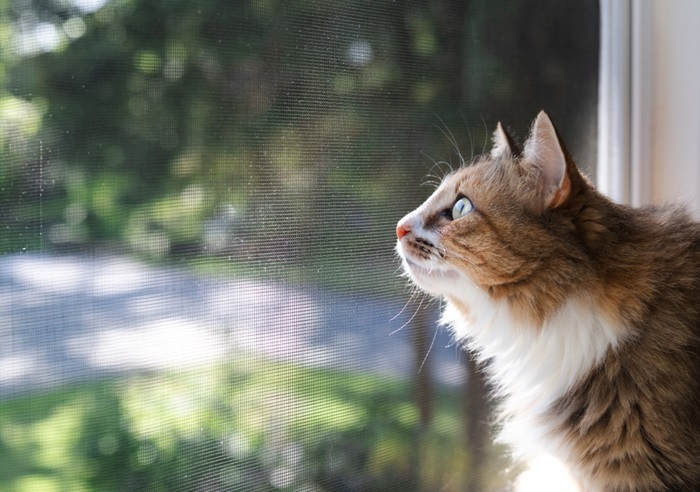

Vinyl-coated polyester mesh is the most durable window screen material for pet owners, withstanding roughly seven times the tear resistance of standard fiberglass screening according to independent screen material testing. Dogs that jump at windows and cats that claw or climb at screening destroy lightweight fiberglass and aluminum mesh within months; a heavier, PVC-coated weave holds up to daily wear without tearing, stretching, or popping out of the frame.
Key Takeaways:
-
- Vinyl-coated polyester mesh resists tearing at roughly seven times the rate of standard fiberglass screening, making it the most durable choice for pet owners.
-
- Material costs vary significantly: standard fiberglass runs $15-$25 per window, vinyl-coated polyester $30-$50, and stainless steel mesh (best for large, determined dogs) an estimated $60-$150.
-
- Cats and dogs damage screens differently – cats stress the full height of the screen while climbing, while dogs concentrate impact on the lower third – which determines whether full-panel mesh, a grill guard, or both are needed.
-
- Pet-resistant screens for tilt and turn windows must clear both the tilt and turn sash positions without binding on the multi-point lock hardware, and OKNOPLAST’s 10-year Limited Warranty excludes insect/pet screens from coverage.
-
- Proper custom sizing (measuring at three points per dimension) and climate-driven material choice (UV, salt air, humidity) are as important to screen longevity as pet-resistance itself
What Makes a Window Screen Pet-Resistant?
A pet-resistant window screen is built from vinyl-coated polyester mesh, a three-layer construction of a woven polyester scrim, a bonding adhesive, and an exterior PVC coating, that resists tearing at roughly seven times the rate of the uncoated fiberglass strands used in standard screening. The scrim provides tensile strength, elongation resistance, and dimensional stability, so the mesh holds its shape instead of stretching permanently when a paw pushes against it. The PVC coating adds waterproofing, UV resistance, and resistance to mildew, oil, salt spray, and household cleaning chemicals on top of the added mechanical strength.
Standard fiberglass screening has no scrim and no coating. A single claw strike can pierce individual fiberglass strands, and once one strand fails, the surrounding weave unravels quickly, which is why fiberglass mesh in pet households often needs replacing within a single season.
The frame and track holding any of these mesh types is almost always extruded aluminum, whether the panel uses standard fiberglass or upgraded pet-resistant mesh. Upgrading to a tougher mesh material does not change the surrounding frame, which is why a bent or corroded aluminum frame can still force a screen replacement even when the mesh itself is undamaged.
Climate affects screen material choice independently of pets. In the arid Southwest, prolonged UV exposure breaks down uncoated fiberglass and, more slowly, degrades PVC coatings as well. Along the Gulf and Atlantic coasts, salt air corrodes uncoated aluminum framing and accelerates wear on any mesh left in direct salt spray. In humid Southeast climates, screens see more sustained moisture and mildew exposure, one of the specific resistances the PVC coating on vinyl-coated polyester is built to handle. Installers working in these markets often note that uncoated fiberglass degrades from UV and salt exposure independently of any pet-related wear, so screen failure in these climates is rarely a pet-only problem.
Do Cats and Dogs Damage Window Screens Differently?
Cats and dogs stress a window screen through different mechanical patterns: cats apply repeated puncture and shear forces across the full height of the screen while climbing or perching, while dogs concentrate blunt impact and sustained push force in the lower third of the frame, where they stand, lean, or jump.
That distinction affects which upgrade matters more for a given household. A cat-only household benefits most from tear-resistant mesh across the entire screen surface, since damage can occur at any height the cat can reach. A dog-heavy household often sees damage concentrated at the bottom rail and lower corners, which is where a screen door grill guard adds the most protection without upgrading the full mesh panel. Households with both cats and dogs typically need both fixes: full-panel pet-resistant mesh plus reinforcement at the lower panel of any screen door pets pass through daily.
Vinyl-Coated Polyester vs. Standard Fiberglass and Aluminum Mesh: What’s the Difference?
Vinyl-coated polyester mesh resists tearing at up to roughly seven times the force required to puncture standard fiberglass screening, while aluminum wire mesh falls in between, harder to tear than fiberglass but prone to permanent denting and to popping out of its frame track under sustained pressure from a large dog.
| Material | Tear Resistance | Typical Cost (per window) | Common Failure Mode |
| Standard fiberglass mesh | Baseline (1x) | $15-$25 | Punctures and shreds under claws within weeks to months |
| Aluminum wire mesh* | Moderate – more tear-resistant than fiberglass | $20-$30* | Dents permanently; can be pushed out of the frame track |
| Vinyl-coated polyester (pet mesh) | Up to 7x fiberglass | $30-$50 | Frame or spline wear is more common than mesh failure |
*Aluminum wire mesh pricing is an estimated market range, not independently verified against a manufacturer or retailer source.
Fiberglass remains the standard choice for pet-free homes because of its low cost and easy field-cutting during installation. Aluminum wire mesh sits in the middle of the range: it resists claws better than fiberglass but bends and dents under repeated impact, and a bent aluminum frame section typically has to be replaced rather than reshaped. Vinyl-coated polyester is the only one of the three materials engineered specifically to resist both puncture and permanent deformation under sustained pet pressure.
How Mesh Density Affects Airflow, Visibility, and Durability
Pet-resistant mesh trades a small amount of airflow and outward visibility for the denser weave needed to close the gaps a claw or tooth could otherwise catch. Loosely woven solar or decorative screening sits at one end of that trade-off, prioritizing airflow and view over durability; heavy-gauge security mesh sits at the other end, blocking significantly more airflow and visibility in exchange for maximum puncture resistance.
Vinyl-coated polyester pet screening is built to sit closer to standard screening on that spectrum than to security mesh: the coating adds strength to the fiber itself rather than relying on a tighter weave, so airflow and visibility stay close to what a standard fiberglass screen provides. Stainless steel mesh, by contrast, achieves its added durability partly through a tighter, more reflective weave, which is why it reduces outward visibility more noticeably than polyester mesh.
Are there any eco-friendly options for window screens?
How Much Do Pet-Resistant Window Screens Cost?
Vinyl-coated polyester screening typically costs $30 to $50 per window, roughly double the $15 to $25 charged for standard fiberglass screening. In an active multi-pet household, that upfront premium is usually offset within one to two seasons by avoiding the repeat mesh replacement, and the labor or DIY time that comes with it, that standard screening requires.
The cost comparison changes with household composition. A single, calm indoor cat with no window-perching habit may never damage standard fiberglass screening; a household with two dogs that both react to the doorbell or passing wildlife will typically replace fiberglass screens more than once per year, at which point the higher per-window cost of pet-proof mesh is recovered quickly.
Is Stainless Steel Mesh a Better Option for Large or Determined Pets?
Stainless steel mesh resists punctures and bending better than any polyester or aluminum screening. It commonly runs $60 to $150 per window in the broader screening market, an estimated range roughly two to three times the $30 to $50 cost of vinyl-coated polyester. In practice, that premium often buys only incremental added protection for pets that haven’t already defeated a polyester screen – our assessment, not a measured performance figure.
That premium is generally justified only in cases where vinyl-coated polyester has already failed, for example a large dog that bends the aluminum screen frame itself and not just the mesh, since stainless steel is also harder to install without professional tools, and its metallic weave is more reflective, which can reduce outward visibility compared to polyester mesh.
What to Check Before Installing a Pet-Resistant Screen in a Tilt and Turn Window
Tilt and turn windows operate through a single handle that shifts the sash between a tilt position for controlled ventilation and a full turn position for cleaning and full sash access, so any pet-resistant screen fitted to one must clear both sash positions without interfering with the multi-point lock hardware that engages three to five compression points around the sash perimeter.
Before ordering a replacement screen for a tilt and turn window, measure the frame in both the tilt and turn positions, confirm whether the screen mounts to the interior or exterior of the frame on your specific system, and check that the added thickness of a heavier pet-proof mesh and frame does not bind against the handle or the gearbox mechanism when the sash is closed. Because frame depth and mounting details vary by manufacturer and product line, confirming exact compatibility with your window dealer or installer before ordering custom screening avoids a mesh that fits the opening but interferes with the operating hardware.
Installers commonly report a mismatched frame depth issue with tilt and turn systems. Mesh and frame stock built for a standard fiberglass thickness is sometimes ordered without adjustment for the heavier PVC-coated weave, so the extra gauge can keep the sash from seating fully in the tilt position.
What Screen Colors and Finishes Are Available to Match Your Window Frame?
OKNOPLAST window frames are available in more than 50 color and finish options, and window screening is matched to the frame’s type and exterior color so the mesh does not stand out as a mismatched afterthought. Because interior and exterior frame colors can be specified independently, a screen finish that matches the exterior tone can be selected even when the interior color differs.
| Attribute | Value |
| OKNOPLAST window frame colors | 50+ options |
| Interior / exterior color match | Interior and exterior frame color can be specified independently |
| Screen-to-frame color matching | Screening is matched to the frame’s type and exterior color |
| Common pet-resistant mesh colors (market-wide) | Black, bronze/brown, and neutral gray tones are the most widely available |
In the pet-resistant screening market more broadly, black, bronze or brown, and neutral gray tones are the most widely available finishes, which line up well with the darker exterior frame colors that have become common on modern homes, such as black or bronze-toned finishes.
Screen Door Grill Guards: Extra Protection for High-Traffic Entry Points
A screen door grill guard is a rigid metal overlay commonly installed over an existing screen to stop a pet’s paws or a child’s hand from pushing through the mesh at a patio or entry door, typically the highest-traffic point for screen failure in most households.
A grill guard is worth adding when a screen door sees frequent pet traffic even after upgrading to pet-resistant mesh, or as a lower-cost interim fix before a full mesh replacement. It does not replace the need for tear-resistant mesh underneath: the guard prevents the screen from being pushed out of its frame, but it does not stop clawing damage to unprotected sections of the mesh.

Installation, Maintenance, and Warranty Considerations for Window Screens
Insect and pet screens are treated as a wear item, not a structural component, in many manufacturer limited warranties. OKNOPLAST’s 10-year Limited Warranty on window color finish explicitly excludes insect screens from coverage, which is a common practice across the fenestration industry given how much more exposure and physical contact screening receives compared to the frame and glazing.
Routine maintenance extends the life of any screen material: brush or vacuum accumulated pet hair regularly, since a hair-clogged mesh restricts airflow and traps moisture against the coating; rinse the mesh periodically to remove dust and salt buildup; check spline tension each season, since a loosened spline is the most common reason a screen pops free even when the mesh itself is undamaged; and reseat the screen fully into its frame track after removing it for cleaning, since a partially seated edge is the first point a pet will find and push through.
Color fading is a separate failure mode from mechanical wear, driven primarily by UV exposure rather than pet contact. PVC-coated mesh resists color fade better than uncoated fiberglass, but no coating is permanent: screens facing direct south or west sun exposure will fade faster than shaded openings regardless of material. Fading and pet damage also progress on different timelines, so a screen replaced early for tearing may still look newer than an undamaged screen on a sun-facing window that has simply faded. Both factors are worth checking on their own schedule, since intact mesh does not necessarily mean the screen still looks new.
How to Measure and Size a Custom Pet-Resistant Screen for Windows and Patio Doors
A custom pet-resistant screen requires the frame’s exact width and height at three points (top, middle, and bottom for width; left, middle, and right for height) because openings that look square on a window or patio door frame are frequently off by a fraction of an inch, and the smallest of the three measurements is the one to order against.
Sizing differs by opening type. On a tilt and turn window, measure the fixed frame opening rather than the sash itself, and account for clearance in both the tilt position (ventilation gap at the top of the sash) and the full turn position (the entire sash swings clear of the frame). On a sliding patio door such as COMPACT or a lift and slide system such as HORIZON, measure the full track length the screen panel will travel, plus the height of the door’s screen channel, since patio door screens typically run substantially longer than a single window screen and see more repeated pet traffic at the base rail. In both cases, ordering a custom-cut, scratch-resistant panel to the frame’s actual dimensions, rather than a standard stock size, avoids the gaps at the edges that pets learn to exploit within the first few weeks.


Let’s talk about your project!
Request a quote, discuss specifications, or get help choosing the right system
Send a request
"*" indicates required fields
FAQ
Vinyl-coated polyester mesh is the best window screen material for pets, resisting tearing at up to roughly seven times the force required to puncture standard fiberglass screening. Its polyester scrim and PVC coating resist claws, teeth, and repeated pressure without stretching permanently or tearing, unlike uncoated fiberglass or aluminum wire mesh.
Pet-resistant vinyl-coated polyester screens typically cost $30 to $50 per window, compared to $15 to $25 for standard fiberglass screening, roughly double the upfront cost. The premium is usually recovered within one to two seasons in an active pet household by avoiding repeat mesh replacement.
It depends on your frame depth, mounting style, and hardware clearance in both the tilt and turn sash positions. Measure the frame in both positions and confirm compatibility with your window dealer before ordering, since a heavier pet-resistant mesh and frame can bind against multi-point lock hardware if sized incorrectly.
Insect and pet screens are typically excluded from a manufacturer’s limited warranty on the window frame and color finish, including OKNOPLAST’s 10-year Limited Warranty. Screens are considered a wear item, so replacing or upgrading one does not affect coverage on the window itself.
Vinyl-coated polyester screen kits are generally DIY-installable with basic tools (a spline roller and a utility knife), similar to standard fiberglass rescreening. Stainless steel mesh is harder to work with due to its rigidity and typically benefits from professional installation.
Pet-resistant mesh is most widely available in black, bronze or brown, and neutral gray finishes, which pair well with dark exterior frame colors. OKNOPLAST frames come in 50+ color options, and screening is matched to the frame’s type and exterior color.
Stainless steel mesh offers the highest puncture and bend resistance of any screen material, making it a better fit for large dogs that have already bent an aluminum frame. It costs more and is harder to install than vinyl-coated polyester, so it is typically used only after polyester or aluminum options have failed.
Brush or vacuum pet hair off the mesh regularly to keep airflow and the PVC coating clear, rinse the screen periodically to remove dust and salt buildup, and check the spline tension each season. A loose spline, not a torn mesh, is the most common reason a well-built pet screen eventually pops free.
Vinyl-coated polyester pet screens maintain airflow and visibility comparable to standard fiberglass screening because the weave density is similar; only the fiber material and coating differ. Stainless steel mesh is the exception: its reflective surface can noticeably reduce outward visibility compared to polyester mesh.
Vinyl-coated polyester screens generally outlast standard fiberglass by several years in active pet households, since the PVC coating resists UV degradation as well as mechanical wear. Actual lifespan varies with pet behavior, climate exposure, and how well the spline and frame are maintained.
Measure the frame opening at three points for width and three points for height, then order to the smallest of the three measurements, since openings that look square are frequently off by a fraction of an inch. On a tilt and turn window, measure the fixed frame rather than the sash; on a patio door, measure the full track length the screen panel will travel.