


Why Do American Homes Need European Tilt and Turn Windows? Five Key Takeaways from the Oknoplast & Matt Risinger Webinar

For decades, American residential construction has been dominated by so-called builder-grade solutions. These are windows designed to be inexpensive, mass-produced, and sufficient only for a short lifecycle, often no longer than the first mortgage. Durability, airtightness, and long-term performance have frequently taken a back seat to speed and cost.
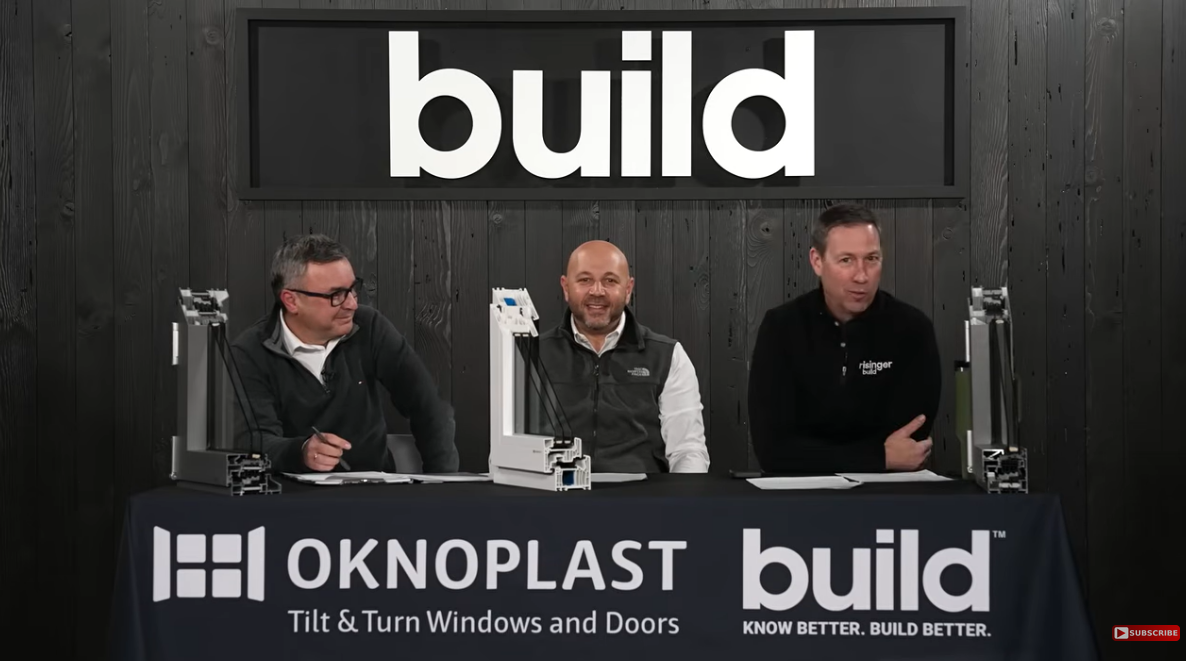
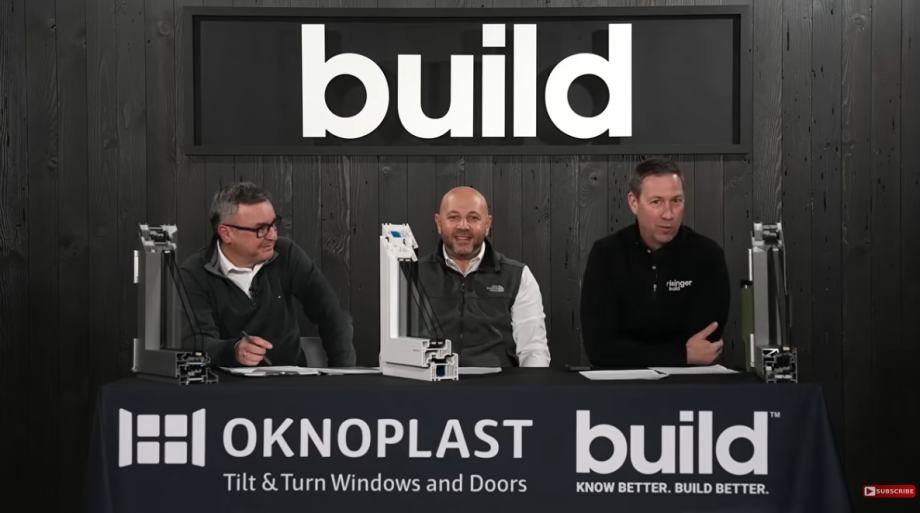
During a recent webinar, Matt Risinger, host of The Build Show and one of the most trusted voices in American construction, joined Oknoplast experts Dominic Mryczko and Tim Burbank to explain why European window technology is not a luxury upgrade, but a practical engineering response to climate, energy, and acoustic challenges. Here are five key lessons from that conversation.
- Intuitive Design and Micro-Ventilation: More Than Just Opening a Window
- The “Plastic Window” Myth: uPVC Is Not Vinyl
- Build Tight, Ventilate Smart: Airtightness as a System
- Installation Innovation: European Performance with an American Nailing Flange
- Acoustic Performance and Security: Real Savings in Real Projects
- FAQ
Key Takeaways:
-
American homes often rely on builder-grade windows designed for short lifespans, while European manufacturers like Oknoplast build for decades of performance under strict European standards.
-
Tilt and Turn windows offer intuitive operation, secure ventilation, and airtight locking that dramatically improves comfort, security, and ease of use.
-
Oknoplast’s uPVC is not comparable to low-cost U.S. vinyl—it uses advanced stabilizers, steel reinforcements, and full recyclability to ensure long-term rigidity and durability.
-
Superior airtightness and low U-factors (as low as 0.18 in entry systems) enable “build tight, ventilate right” construction that outperforms typical U.S. energy benchmarks.
-
Advanced acoustics and security features can eliminate the need for expensive specialty glass, saving builders and developers significant costs while improving overall performance.
1. Intuitive Design and Micro-Ventilation: More Than Just Opening a Window
For many American homeowners, Tilt and Turn windows are still unfamiliar. In practice, however, their operation is remarkably intuitive. A single handle controls three functions: full inward opening, secure top-tilt ventilation, and complete locking. The experience of closing the window is often described as a “bank vault click”. This sound signals precision, tight tolerances, and structural solidity.
One of OKNOPLAST’s signature innovations is micro-ventilation, which allows the sash to disengage by just 1/4 inch around the entire perimeter. This provides a continuous supply of fresh air without drafts and without any visible exterior opening, significantly increasing both comfort and security.
As Matt Risinger noted during the webinar, even first-time users immediately understand how the system works. This is clear proof that good engineering does not need complicated instructions.
2. The “Plastic Window” Myth: uPVC Is Not Vinyl
In the U.S., the term vinyl windows is often associated with flexible, low-end products that are prone to warping and air leakage. OKNOPLAST windows, however, are made from uPVC, a fundamentally different material in which cheap plasticizers are replaced with advanced stabilizers.
These stabilizers protect the window profiles from UV exposure and infrared heat reflection. As a result, the windows can withstand over 100 test cycles in extreme temperatures ranging from minus 20 to 180 degrees Fahrenheit. This durability eliminates the so-called emoji effect, meaning the sagging, smile-shaped deformation commonly seen in low-quality vinyl windows.
Key technical advantages include:
- Steel reinforcement not only in the frame and sash, but also inside the structural mounting flange
- Long-term rigidity, ensuring the window maintains its shape for decades
- Full recyclability, aligning with modern sustainability and circular building standards
3. Build Tight, Ventilate Smart: Airtightness as a System
A core principle of high-performance construction is often summarized as “build tight, ventilate right”. A well-designed home should behave like a modern vehicle. Once closed, it isolates occupants from outside noise, pollution, and uncontrolled air movement, while indoor air quality is managed deliberately through ventilation systems.
OKNOPLAST windows provide the airtightness required for this level of control. They eliminate the uncontrolled drafts that are still common in many American homes, improving comfort, energy efficiency, and indoor air quality.
The performance gap is significant. While U.S. standards typically accept a U-factor of 0.32, even OKNOPLAST’S entry-level Pixel system achieves 0.18. This represents roughly 50 percent better thermal performance. In Poland, regulatory expectations are often even higher, with values around 0.15. This explains why OKNOPLAST windows consistently outperform many domestic alternatives.
4. Installation Innovation: European Performance with an American Nailing Flange
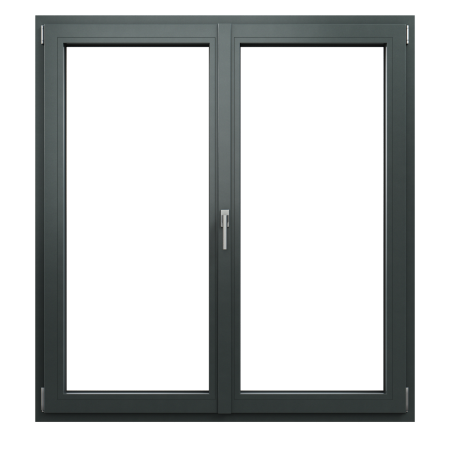
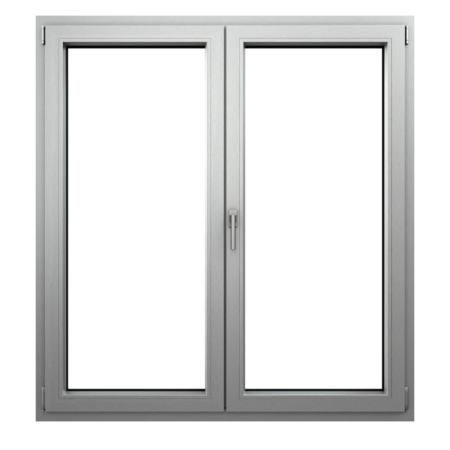
To adapt European technology to U.S. construction practices, OKNOPLAST developed an integrated, steel-reinforced nailing flange. This allows installers to work seamlessly within standard American wood-frame construction without compromising airtightness or structural integrity.
Additional installer-friendly features include a dry glaze system and quick sash removal achieved by removing a single hinge pin. This approach delivers two major benefits.
First, installation is easier. Crews can install a lightweight frame first, avoiding the need for large teams to handle heavy glazed units.
Second, service is simplified. In the event of glass breakage, insulated glass units can be replaced on-site using locally sourced glass. There is no need to ship an entire sash from Europe.
5. Acoustic Performance and Security: Real Savings in Real Projects
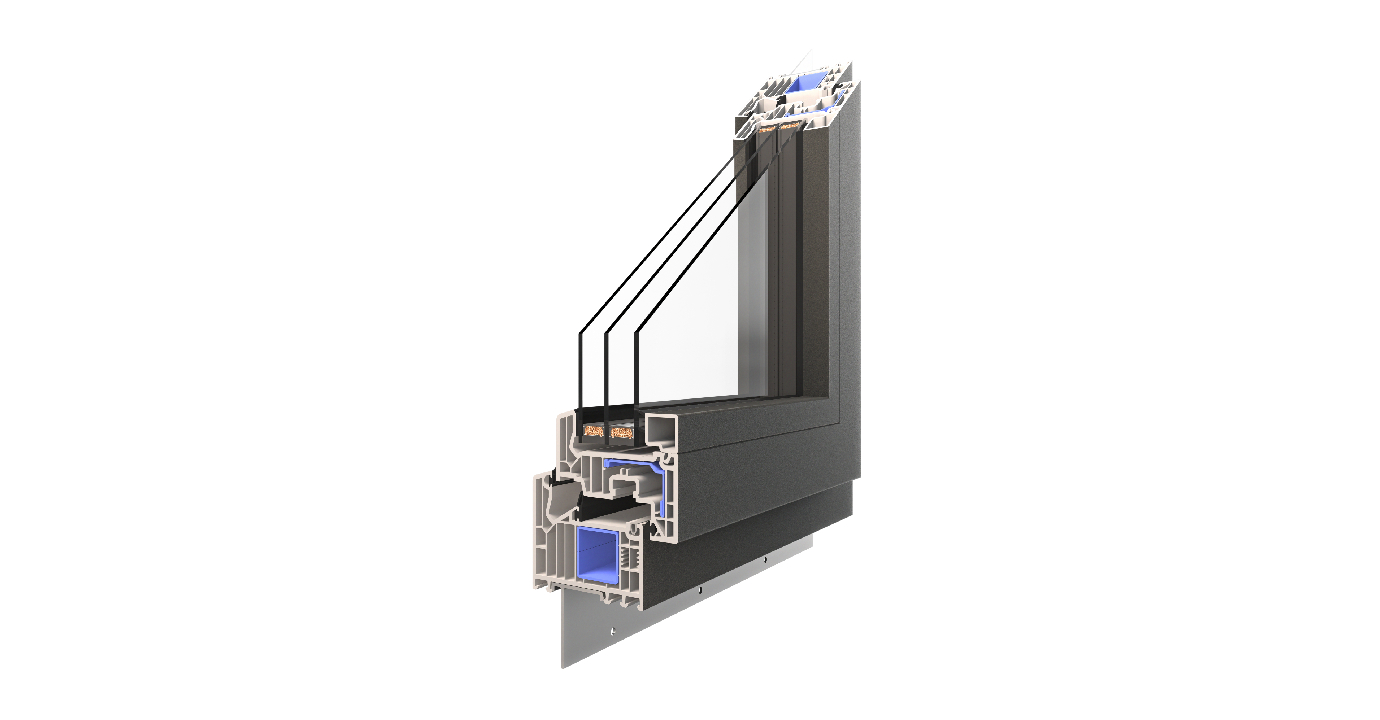
Exceptional acoustic performance in OKNOPLAST windows is not achieved through glass thickness alone. It results from a combination of rigid frames, multiple perimeter gaskets, and a multi-point locking system that compresses the sash evenly around its entire circumference.
This construction creates a level of sound insulation that traditional American single-hung windows simply cannot match.
During the webinar, Dominic Mryczko shared an example of a U.S. developer who saved 100,000 dollars on a single project by choosing standard Oknoplast windows. Thanks to the airtight frames, the developer avoided the need for costly specialty acoustic glazing while still meeting strict noise-reduction requirements. Importantly, both security and sound insulation remain effective even in the tilt position due to active locking points.
Conclusion: From Short-Term Building to Long-Term Thinking
Choosing high-performance windows represents a shift away from short-term, cost-driven construction toward the European tradition of multi-generational homes. In this model, durability and material longevity are essential. Materials such as copper, ceramics, and uPVC are selected not for convenience, but for performance over decades.
The growing success of European windows in the U.S. market signals a broader change. American construction is beginning to prioritize efficiency, comfort, and long-term value.
As architect Steven Baczek aptly summarized, “It’s not that high-performance homes cost too much. It’s that our expectations of price are based on a long history of building to embarrassingly low performance standards.”
European window technology proves that those standards can and should be raised..
Watch full webinar here:
FAQ
Tilt and Turn windows use a single handle to control three functions: full opening, secure top ventilation, and locking. This design improves ventilation, simplifies cleaning, and delivers a much tighter seal than single- or double-hung windows.
No. Oknoplast’s uPVC replaces cheap plasticizers with advanced stabilizers, includes extensive steel reinforcement, resists UV and temperature extremes, and remains structurally stable for decades.
Yes. Oknoplast integrates a steel-reinforced nailing flange designed specifically for U.S. wood-frame construction, allowing easy installation without sacrificing European airtightness standards.
No. While the upfront cost may be higher than builder-grade options, their performance can reduce long-term energy costs, avoid expensive upgrades like specialty glass, and deliver better overall value across the lifespan of the home.


Let’s talk about your project!
Request a quote, discuss specifications, or get help choosing the right system
Send a request
"*" indicates required fields