


Are European Windows Hard to Install in a US-Framed Home?

European windows aren't harder to install in a US-framed home-they just require a different installation approach.
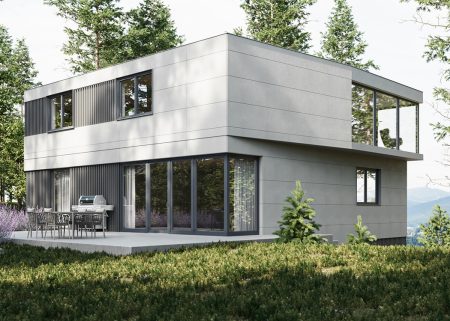
Exterior Insulation and Finish Systems (EIFS), sometimes called synthetic stucco, typically cost $8 to $14 per square foot installed in the US, or roughly $16,000 to $28,000 for a 2,000-square-foot home, according to contractor-reported market data.

Windows and doors account for 3.7% of the total cost to build a new single-family home, or about $15,990 on a home costing the 2024 national average of $428,215 to construct, according to the National Association of Home Builders.
A tilt and turn window combines two distinct opening modes in a single frame: a tilt position that vents from the top like an awning window, and a turn position that swings fully inward like a casement.

uPVC and aluminum windows and doors differ at the material level in ways that show up directly in published performance data: OKNOPLAST's uPVC systems (PAVA, PIXEL, COMPACT, HORIZON) carry published U-Factor and, in the case of the two patio doors, DP rating figures, while the aluminum line (MIRU EVO windows and the Aluview patio door family) does not currently carry published U-Factor or DP data in US technical documentation.

Patio doors with a Design Pressure (DP) rating of 30 to 60 psf - the range tested for the OKNOPLAST HORIZON Lift and Slide Patio Door - are engineered to resist the structural wind loads typical of coastal residential construction.
The pull toward natural light and open air isn't a passing preference. It's one of the oldest instincts in how people choose to live, and it shows up in small decisions long before it shows up in a finished room: which wall gets the window, how wide a door swings, whether a threshold interrupts the floor or lets it run straight through to the patio.

OKNOPLAST's US door line covers three materials-and-operation categories: uPVC entry doors in Basic and Premium tiers, uPVC and aluminum sliding and lift-and-slide patio doors, and an aluminum bi-fold system supporting up to 9 moving sashes.
RC1 and RC2 burglary-resistance hardware is confirmed and documented for PAVA and PIXEL tilt and turn windows and for HORIZON, OKNOPLAST's uPVC lift and slide patio door - but not for every product in the US catalog.

PAVA and PIXEL support round, trapezoidal, triangular, and arched window configurations within the same profile families as their standard rectangular units, with published dimension limits, angle calculations, and radius constraints - data that competing manufacturers publishing custom shape windows generally do not disclose at this level of detail.